Showing posts with label COGNITION. Show all posts

Tuesday, 18 August 2020

Musings On Music: Seven Insights From Psychology

By Emma Young

Music and humans go back a very long way. The earliest accepted instruments, made from bones, appear on the European scene about 40,000 years ago. But for perhaps at least a million years before that, our ancestors had the throat architecture that in theory would have allowed them to sing.

All kinds of ideas have been put forward for why and how music came to matter so much to us. But what’s abundantly clear is that it does matter; there isn’t a society out there that doesn’t make and listen to music. And new research is now revealing all manner of psychological and neurological effects…

But what about people who don’t like music?

Music is a human universal, but it’s true — not everyone enjoys music. In fact, as a 2014 paper published in Current Biology revealed, some perfectly healthy people can perceive music just like anybody else, but their reward-related neural circuits don’t respond to it. (These circuits do still respond to food or money, for example, so it’s not that they’re generally defective).

In fact, an estimated 3-5% of people experience “musical anhedonia”, and get no pleasure from music. (To find out where you sit on the music reward spectrum, you could fill in the team’s questionnaire, available here.) Last year, a team that included some of the same researchers published a follow-up study in the Journal of Neuroscience. They found a neurobiological basis for their earlier observations: differences in the white matter “wiring” that connects the auditory cortex and the ventral striatum, a key part of the reward system. What causes these differences is not yet clear.

For the rest of us, what is it about a piece of music that gives us pleasure?

Last year, a team led by Vincent Cheung at the Max-Planck Institute for Human Cognitive and Brain Sciences in Germany published an analysis of responses to 745 US Billboard pop songs. They found that expectancy is key. When listeners were pretty certain about which chord to expect next (based on what had come before), they found it pleasurable to be surprised. When they weren’t sure what to expect, though, more predictable subsequent chords were pleasing.

Popular songs strike a good balance between both subverting expectation and reassuring listeners, the team concluded. “It is fascinating that humans can derive pleasure from a piece of music just by how sounds are ordered over time,” Cheung commented. It is also important for understanding how music influences our emotional state…

Why do we like listening to sad music?

The first point to stress is that we don’t all necessarily like it. In 2016, a team led by Tuomas Eerola at the University of Durham reported on the emotional experiences connected with sad music of 2,436 people in the UK and Finland. The majority said they enjoyed sad music, and that this pleasure boosted their mood. “However, there are people who absolutely hate sad-sounding music and avoid listening to it,” notes Eerola. The study revealed that for these people, sad music was associated with painful personal experiences, such as loss.

Still, the reports of mood-boosting effects from the majority is important. In 2015, a paper titled “Sad as a Matter of Choice?” reported that people with depression were more likely to listen to sad songs — which the team controversially took to imply that they were maintaining or even worsening their own low mood. Last year, however, a study published in Emotion found that depressed people prefer sad music because it is calming and even uplifting. As some participants in another recent study commented, when you’re feeling low, sad music can seem like a supportive friend.

Extreme emotions

Some pieces of music have dramatic effects on us. “Peak emotional states” involve powerful physical responses, such as tears, or feeling “the chills”, and often extreme sadness or joy. They can be triggered by something inherently deeply meaningful — such as childbirth — but also by a beautiful view, or piece of music. A 2017 study published in Scientific Reports explored these reactions, and found that song-induced tears were associated with subsequent calming — they seem, then, to have a cathartic, relieving function.

Some people, though, are more prone than others to feeling goosebumps or a shiver down the spine in response to a piece of music. And as a paper recently published in Social Cognitive and Effective Neuroscience has revealed, such people have stronger connectivity between auditory processing and social and emotional processing areas of the brain. These same connectivity differences have also been linked to greater empathy. As the researchers write in their paper: “Perhaps one of the reasons why music is a cross-culturally indispensable artifact is that it appeals directly through an auditory channel to emotional and social processing centers of the human brain.” Only, it does this more for some of us than others.

Connecting brains

One proposed adaptive function for music is that it unites individuals. With music, we can march together, dance together, and express emotions as one. And there’s now growing evidence that this unity can occur right down at the neural level.

Back in 2009, Ulman Lindenberger at the Max Planck Institute for Human Development in Berlin and colleagues reported that when two guitarists play the same piece of music together, their brainwaves synchronise. Big deal, you might think: they’re processing and playing identical notes, so why shouldn’t there be similarities in their brain activity? However, in 2012, the team reported a follow-up involving duets with different guitar parts. When these pairs had to actively coordinate their playing, there was a synchronisation in activity in some regions between the two. This, the team concluded, was evidence of “inter-brain networks”. “When people coordinate actions with one another, small networks within the brain and, remarkably, between the brains are formed,” noted Johanna Sänger, lead author of this study.

Since then, more evidence of inter-brain synchronisation during musical experiences has emerged. It’s known that when audience members are enjoying a piece of live music, their brainwaves tend to synchronise. And, earlier this year, a team led by Yingying Hou at East China Normal University revealed that when a musician is playing a piece, and the audience is enjoying it, a synchronisation in brain activity develops. The team were even able to use the strength of this “inter-brain coherence” to predict how much the audience reported enjoying a piece.

Use the beat

Humans are unique as a species in being able to perceive beat. And there’s all kinds of evidence that the tempo of a piece of music affects our behaviour. A classic study, published back in 1986, found that diners in a Dallas restaurant ate significantly faster when faster tempo (more beats per minute) music was played, compared with slow tempo music. These findings went on to influence the choice of soundtracks in restaurants the world over. But there’s also recent evidence that listening to high-tempo music while exercising can increase heart rate more than slow-tempo music and also make the exercise feel less difficult. “This means that the exercise seemed like less effort but it was more beneficial in terms of enhancing physical fitness,” commented researcher Luca P. Ardigò of the University of Verona in Italy.

Background effects

If you’re the kind of person who likes to have background music playing while you work, there are a couple of studies worth bearing in mind.

Listening even to music that you enjoy can interfere with working memory, which could impair mental arithmetic, a study published in Applied Cognitive Psychology has found. And though it has been suggested that music can encourage creativity, in fact it “significantly impairs” it, according to a 2019 paper published in the same journal. The researchers, from the UK and Sweden, gave participants verbal insight problems, which are meant to tap into creativity. (For example, they were given the words “dress”, “dial”, and “flower”, and asked to identify a single word that could be combined with each — “sun”). Background music with foreign lyrics, instrumental music without lyrics and music with familiar lyrics all made the participants worse at this. Again, the researchers think that this is because music disrupts working memory; in this case, verbal working memory. “To conclude, the findings here challenge the popular view that music enhances creativity, and instead demonstrate that music, regardless of the presence of semantic content, consistently disrupts creative performance in insight problem solving,” they write.

It’s worth noting that the negative impact of familiar music was observed even when a participant said it boosted their mood, reported liking the song, or said that they typically studied with background music playing. So if you do typically work with music, and think it helps, surely it’s worth at least trying to go without.


SOURCE:

https://digest.bps.org.uk/2020/08/18/musings-on-music-seven-insights-from-psychology/#more-40074(accessed 18.8.20)

Monday, 27 July 2020

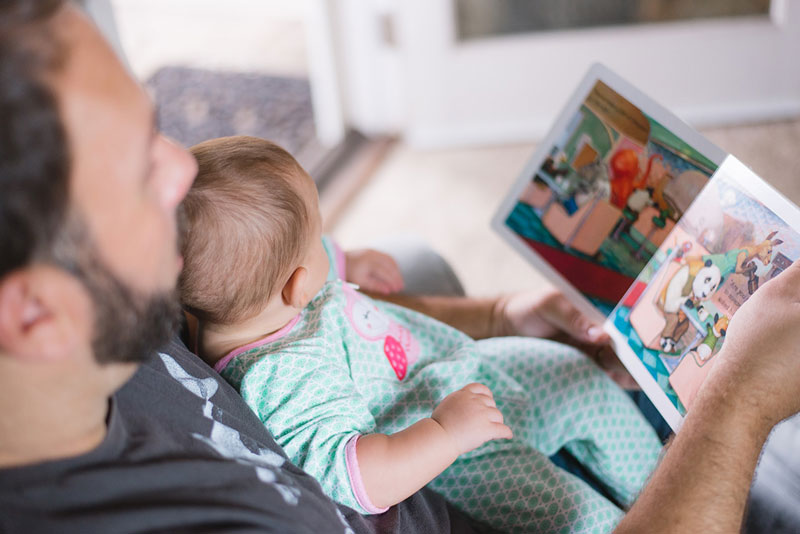
Πώς η σχέση με τον πατέρα μπορεί να αλλάξει τη ζωή ενός παιδιού


Όλγα Ψωμιάδη Ψυχοθεραπεύτρια - Σύμβουλος Οικογένειας 


Τα ερευνητικά δεδομένα δείχνουν ξεκάθαρα ότι η ενεργή και συνεπής θετική παρουσία του πατέρα κάνει μεγάλη, θετική διαφορά στην ανάπτυξη και την κοινωνικοποίηση των παιδιών.

Όταν ασχολείσαι με τον γιο ή την κόρη σου, τους στέλνεις ένα ξεκάθαρο μήνυμα: Θέλω να είμαι ο πατέρας σου. Ενδιαφέρομαι για σένα. Απολαμβάνω την παρέα μαζί σου. Εσύ και εγώ έχουμε μία σχέση που είναι σημαντική για μένα.

Βεβαίως, το πώς συμπεριφέρεται ο πατέρας ως γονιός επιδρά σημαντικά στον τρόπο με τον οποίο κοινωνικοποιούνται τα παιδιά του. Οι μπαμπάδες που έχουν μία λογική, συνεπή, τρυφερή και συναισθηματική προσέγγιση όταν καθοδηγούν τα παιδιά τους, μεγαλώνουν παιδιά με ανεπτυγμένες ικανότητες, σωματικές, πνευματικές και συναισθηματικές. Μπαμπάδες που δεν δείχνουν αγάπη στα παιδιά τους και είναι απόμακροι ή/και αυταρχικοί μαζί τους, μεγαλώνουν παιδιά που είναι εξαρτημένα, απομονωμένα, και αγχωτικά.


Τα οφέλη της συμμετοχής του πατέρα

Η ενεργή συμμετοχή του πατέρα στη ζωή του παιδιού βελτιώνει την πνευματική και συναισθηματική ανάπτυξη του παιδιού. Τα παιδιά μπορούν να «δεθούν» με τους μπαμπάδες τους όσο και με τις μαμάδες. Το δέσιμο με τους γονείς παρέχει στο παιδί μία δυνατή σχέση για όλη του τη ζωή και μία ασφαλή βάση για να αντιμετωπίσει τον έξω κόσμο.

Ο ρόλος του πατέρα είναι σημαντικός και έχει βαθιά επιρροή στην κοινωνική, συναισθηματική και νοητική ανάπτυξη του παιδιού. Οι μπαμπάδες δεν πρέπει να συγκρίνονται με τις μαμάδες, ούτε να θεωρούνται «αναπληρωματικοί» της μητέρας. Οι μαμάδες και οι μπαμπάδες αλληλεπιδρούν με τα παιδιά με διαφορετικούς και μοναδικούς τρόπους. Αυτοί οι ρόλοι δεν είναι ίδιοι, ούτε εναλλασσόμενοι. Ο κάθε ένας έχει την δική του συνεισφορά.

Έρευνες καταδεικνύουν ότι τα παιδιά που μεγαλώνουν με ένα πατέρα που συμμετέχει ενεργά στη ζωή τους απολαμβάνουν πολλά οφέλη, τα οποία συνεχίζονται για όλη τους τη ζωή:
Έχουν καλύτερες επιδόσεις στο σχολείο
Δημιουργούν καλύτερες σχέσεις
Έχουν μεγαλύτερη αυτοπεποίθηση
Όταν ενηλικιωθούν, έχουν καλύτερες δουλειές και πιο επιτυχημένες καριέρες
Είναι συναισθηματικά πιο ώριμα και ισορροπημένα
Έχουν λιγότερο παραβατική συμπεριφορά
Πατέρας και παιχνίδι

Οι μπαμπάδες παίζουν διαφορετικά με τα παιδιά τους, με πιο έντονες δραστηριότητες που απαιτούν μεγαλύτερη συμμετοχή του σώματος. Χρησιμοποιούν περισσότερη σωματική επαφή και αφιερώνουν περισσότερο από τον χρόνο με τα παιδιά στο παιχνίδι (κατά μέσο όρο 40% σε σχέση με 20% των μαμάδων). Οι μαμάδες συνήθως εντάσσονται αυτόματα στο επίπεδο του παιχνιδιού του παιδιού, αφήνοντας το να διευθύνει εκείνο το παιχνίδι. Αντίθετα, οι μπαμπάδες είναι πιο πιθανό να αναλάβουν αρχηγικό ρόλο στο παιχνίδι.

Ενθαρρύνουν περισσότερο την ομαδικότητα και προτρέπουν τα παιδιά να πειραματιστούν με νέα παιχνίδια, να αναπτύξουν νέες δεξιότητες, να ανταγωνιστούν, και να επεκτείνουν τα όρια των γνώσεων και των δυνατοτήτων τους. Τα παιδιά χρειάζονται και τους δύο τρόπους παιχνιδιού και αλληλεπίδρασης: χρειάζονται την ευκαιρία να κατευθύνουν και να ηγούνται εκείνα, αλλά και την ώθηση να δοκιμάσουν τις δυνατότητες τους και να τις επεκτείνουν.

Όταν οι μαμάδες νουθετούν τα παιδιά, έχουν την τάση να προσαρμόζουν την τιμωρία στην παρούσα κατάσταση του παιδιού. Ένας πατέρας είναι πιο σύνηθες να εφαρμόζει την πειθαρχία με κανόνες. Οι μαμάδες προσφέρουν στα παιδιά μεγαλύτερη ευελιξία και διατρέχουν το ρίσκο να μπουν σε διαπραγμάτευση διαρκείας. Οι μπαμπάδες προσφέρουν στα παιδιά προβλεψιμότητα, αλλά διατρέχουν το ρίσκο να γίνουν άκαμπτοι. Οι μαμάδες -συνήθως- προσφέρουν περισσότερη κατανόηση, ενώ οι μπαμπάδες περισσότερη συνέπεια.
Τι σημαίνει να συμμετέχεις ενεργά;

Ορισμένα κοινά χαρακτηριστικά των μπαμπάδων που ασχολούνται ενεργά με την ανατροφή των παιδιών τους:
Συμμετέχουν στα μικρά, καθημερινά γεγονότα της ζωής των παιδιών τους
Δείχνουν την αδιαμφισβήτητη αγάπη τους, επικοινωνώντας με τα λόγια τους, την τρυφερότητα τους, το χαμόγελό τους και τις πράξεις τους σε κάθε παιδί πόσο μοναδικό είναι. Οι μπαμπάδες πρέπει να μεταδίδουν στα παιδιά τους το αίσθημα ότι η αγάπη τους προς αυτά είναι άνευ όρων και θα κρατήσει για πάντα, ό,τι και να γίνει.
Στηρίζουν τα παιδιά τους – οικονομικά, συναισθηματικά, πνευματικά, πρακτικά και κοινωνικά. Είναι περήφανοι που είναι μπαμπάδες των παιδιών τους.
Πειθαρχούν τα παιδιά τους κατάλληλα, λαμβάνοντας υπόψη την ηλικία και την προσωπικότητα του κάθε παιδιού. Με το να μαθαίνουν στα παιδιά τους την πειθαρχία, με αγάπη και σεβασμό, τα βοηθούν να κοινωνικοποιηθούν σωστά, με θετικό τρόπο.
Οργανώνουν το πρόγραμμα τους με τέτοιο τρόπο ώστε τακτικά να αφιερώνουν χρόνο αποκλειστικά στα παιδιά τους: είτε για να πάνε μαζί σε ένα θέαμα (αθλητικό, καλλιτεχνικό), είτε για να διαβάσουν μαζί ένα βιβλίο, να παίξουν, να κάνουν μαζί κάποιες δουλειές ή και απλά να χαλαρώσουν και να κάνουν παρέα.
Προσφέρουν συνέπεια και σταθερότητα στη ζωή των παιδιών τους, δημιουργώντας ένα σταθερό και ασφαλές περιβάλλον στο οποίο τα παιδιά μπορούν να βασίζονται κάθε μέρα.

Έχει σημασία ο χρόνος να είναι ποιοτικός. Η έμφαση δεν είναι μόνο στο πόσο χρόνο περνάς με το παιδί σου αλλά και στο τι κάνεις μαζί του. Όταν είστε μαζί, είναι το παιδί το κέντρο της προσοχής σου ή απλά προσπαθείς να το κρατήσεις απασχολημένο όσο εσύ ασχολείσαι με άλλα πράγματα; Κάνετε μαζί κάτι που αρέσει και στους δύο; Έχεις την απαραίτητη ενέργεια που χρειάζεσαι για τις ώρες που έχεις κανονίσει να περάσεις με τα παιδιά σου;

Εξίσου σημαντικό είναι να μην συγχέεται η προσφορά με την αγάπη. Παρόλο που, προφανώς, η παροχή κατάλληλης τροφής, ένδυσης και στέγης είναι απαραίτητα για να φροντίσει κανείς ένα παιδί, αυτό που το παιδί χρειάζεται περισσότερο από οτιδήποτε άλλο από τους γονείς του είναι η αγάπη, η ασφάλεια, το ενδιαφέρον και η υποστήριξή τους.


Εμπόδια στην ενεργή συμμετοχή του πατέρα

Εμπόδιο: Η πίεση της δουλειάς και οι απατήσεις της καριέρας μπορεί να αφήνουν λίγο χρόνο για τη «δουλειά του γονιού». Οι προσωπικές επιλογές καθώς και οι πολιτικές των διαφόρων εταιρειών επηρεάζουν τον διαθέσιμο χρόνο.

Προτροπή: Η διάθεση επαρκούς χρόνου στα παιδιά πρέπει να γίνει προσωπική σου προτεραιότητα.

Εμπόδιο: Ορισμένες μητέρες ανησυχούν, θέλουν να έχουν εκείνες τον έλεγχο και – συνειδητά ή μη - «σαμποτάρουν» την αυξημένη συμμετοχή του πατέρα στο μεγάλωμα των παιδιών.

Προτροπή: Προκειμένου οι μπαμπάδες να μπορέσουν να έχουν ενεργή συμμετοχή στις ζωές των παιδιών τους, πρέπει και οι μαμάδες να επιτρέψουν τη συνεργασία στο μεγάλωμα των παιδιών.

Οι μητέρες που βλέπουν θετικά τη συμμετοχή του πατέρα και μιλούν θετικά στα παιδιά για τον πατέρα τους δημιουργούν τις προϋποθέσεις για να έχουν έναν εξίσου συμμετέχοντα με αυτές γονιό. Οι άντρες που πιστεύουν ότι είναι καλοί μπαμπάδες και που πιστεύουν ότι και οι γυναίκες τους τους θεωρούν καλούς μπαμπάδες, ασχολούνται περισσότερο με τα παιδιά.

Εμπόδιο: Η έλλειψη προετοιμασίας και υποστήριξης στους άντρες –σε σχέση με τις γυναίκες – για τον ρόλο του πατέρα (κοινωνικά πρότυπα, πηγές πληροφόρησης, κλπ.)

Προτροπή: Σήμερα, υπάρχουν όλο και περισσότερες πηγές πληροφόρησης και υποστήριξης για τους μπαμπάδες. Διαβάστε βιβλία, συμβουλευθείτε έγκυρες πηγές στο internet, μιλήστε σε ειδικούς, αλλά και σε άλλους μπαμπάδες, προκειμένου να πάρετε πληροφορίες και να νιώθετε πιο σίγουροι για τη συμπεριφορά σας ως πατέρας.

Οι μπαμπάδες που αναλαμβάνουν όλο και περισσότερο την γαλούχηση και φροντίδα των παιδιών, ορίζουν εκ νέου την έννοια της πατρότητας.


ΠΗΓΗ:

Tuesday, 14 July 2020

Ο ρόλος της τέχνης στη ζωή του ανθρώπου


Η τέχνη συνίσταται από μια ποικιλία μορφών, από ένα σύνολο σύνθετων δραστηριοτήτων που απαντούν σε όλες τις κοινωνίες και τους πολιτισμούς. Η τέχνη και οι διάφορες μορφές της συνδέονται με στάσεις ζωής, με αξίες, με πρότυπα συμπεριφοράς μιας δεδομένης κοινωνικής ομάδας ανθρώπων σε μια συγκεκριμένη χρονική περίοδο.

Συνδέονται επιπλέον όχι μόνο με το παρόν, αλλά και με το παρελθόν και το μέλλον. Συνδέονται εν τέλει με τη ζωή μας με έναν ιδιαίτερο και μοναδικό τρόπο. Οι ψυχολογικές-ψυχοθεραπευτικές αλλά και ψυχοπαιδαγωγικές επιδράσεις-διαστάσεις της τέχνης έχουν κινήσει το ενδιαφέρον από τους αρχαίους ακόμα χρόνους και ιδίως από την εποχή του Πλάτωνα και του Αριστοτέλη. Έκτοτε απασχόλησε πολλούς μελετητές σε φιλοσοφικό και αισθητικό πλαίσιο αλλά και σε γνωστικό.

Όταν ήμασταν μικρά παιδιά αφιερώναμε μεγάλο μέρος του χρόνου μας στο να παίζουμε, να χορεύουμε, να πειραματιζόμαστε με τα χρώματα και τα υλικά της φύσης, να λέμε φανταστικές ιστορίες ή να υποδυόμαστε ρόλους έξω από εμάς χωρίς να φοβόμαστε την κριτική. Αυτές οι αυθόρμητες δραστηριότητες ήταν άρρηκτα συνδεδεμένες με την καθημερινότητά μας.

Από όλες αυτές τις δράσεις αντλούσαμε μεγάλη ευχαρίστηση και ικανοποίηση καθώς ανακαλύπταμε και αποκαλύπταμε τη δική μας δημιουργική επινόηση με αρκετή δόση μαγείας, ελευθερίας και παρόρμησης.

Ερχόμασταν συνεπώς σε καθημερινή βάση με ποικίλες μορφές τέχνης οι οποίες έπλαθαν την προσωπικότητά μας τόσο σε ψυχοσυναισθηματικό όσο και σε διανοητικό επίπεδο. Με σκοπό να αντιληφθούμε τη χρησιμότητα της τέχνης στη ζωή του ανθρώπου ας προσπαθήσουμε να την προσεγγίσουμε ως ένα εργαλείο, ένα μέσο άντλησης μιας πληθώρας δεξιοτήτων.

Διαβάστε σχετικά: 15 σπουδαία έργα τέχνης που συνδέονται με την ψυχολογία

Η τέχνη ως μέσο απόλαυσης και ευχαρίστησης. Η ηδονιστική αυτή προσέγγιση στο δυτικό πολιτισμό προκύπτει από την κυρηναϊκή φιλοσοφική σχολή των αρχαίων Ελλήνων και διαρκεί έως σήμερα. Οι άνθρωποι δημιουργούν έργα τέχνης εκφράζοντας σκέψεις και συναισθήματα καθώς και ενδόμυχες παρορμήσεις όπου λαμβάνουν μορφή, σχήμα, χρώμα και μέγεθος.

Το άτομο που δημιουργεί και βιώνει ένα έργο τέχνης έχει τη δυνατότητα να πολλαπλασιάζει τα βιώματα του πραγματικού κόσμου και συγχρόνως να απελευθερώνεται από το άγχος και την πίεση της καθημερινής του ζωής.

Η τέχνη ως μέσο για να αναπτυχθούν όλες οι εν δυνάμει νοητικές και σωματικές ικανότητες του ατόμου. Μέσω της τέχνης, διεγείρεται η φαντασία, η δημιουργικότητα, η μνήμη, η συγκέντρωση, η αντίληψη, γνωστικές λειτουργίες του ατόμου που είναι χρήσιμες σε ποικίλους τομείς της ζωής του όπως μαθησιακό, παιδαγωγικό, κοινωνικό, επαγγελματικό.

Η δημιουργική δραστηριότητα δεν οδηγεί πάντα στην παραγωγή έργων τέχνης με καλλιτεχνική αξία, ωστόσο μέσω της διαδικασίας αυτής το άτομο αποκτά ιδιαίτερες συγκινησιακές και γνωστικές εμπειρίες, γεγονός που από τη βάση του χαροποιεί, προκαλεί ενδιαφέρον και δημιουργεί ένα ευχάριστο περιβάλλον.

Η τέχνη ως μέσο για την αντιμετώπιση των προβλημάτων της ζωής με μια διαφορετική προσέγγιση. Ένας καλλιτέχνης προσεγγίζει τα ίδια δύσκολα ζητήματα μιας κοινωνίας ή ενός ατόμου με έναν ιδιαίτερο, δικό του τρόπο παράγοντας ευχαρίστηση και πολλές φορές ανακούφιση καθώς και μια τάση ελευθερίας και λύτρωσης. Χρησιμοποιώντας υλικά από το άμεσο περιβάλλον και με βάση τις προσωπικές του εμπειρίες τα μετασχηματίζει σε μια νέα πραγματικότητα πιο συμβατή με τις δικές του ανάγκες.

Η τέχνη ως μέσω δημιουργίας ενός ιδεώδους, αρμονικού εαυτού. Οι άνθρωποι, χρησιμοποιώντας τη φαντασία και τη δημιουργικότητά τους , επινοούν ιδεώδεις, φανταστικούς κόσμους στους οποίους συνδυάζουν ελεύθερα τα στοιχεία της πραγματικότητας που προσαρμόζονται στις βαθύτερες ανάγκες και επιθυμίες τους. Εκφράζουν κατ΄ αυτό τον τρόπο τις σκέψεις, τα συναισθήματα και τα προσωπικά τους θέλω και κινούνται προς μια προσπάθεια ευόδωσής τους.

Καταλήγουμε λοιπόν στο συμπέρασμα πως είναι επιτακτική η ανάγκη να εντάξουμε την τέχνη και την οποιαδήποτε μορφή της στην καθημερινή μας ζωή καθώς αποτελεί ένα είδος ανάπτυξης και προσωπικής καλλιέργειας αλλά και ένα φυσικό αγχολυτικό χωρίς παρενέργειες!


ΠΗΓΗ:


Growing Up With Grandparents In The House Can Lead To More Negative Attitudes Towards The Elderly


By Emma Young

What happens if you grow up with a grandparent living in your home? Does the prolonged contact counter prejudices, biases and stereotypes of the elderly? Or might it instead encourage negative perceptions of older people as being slow, angry or sickly, for example?

These are important questions, partly because in some countries, though not all, an increasing number of elderly people are moving in with family members. In the US, for example, 15% of older adults are now living in someone else’s household, up from 7% in 1995.

Now a new paper, published in Social Psychology, by Brian T Smith and Kelly Charlton at the University of North Carolina, suggests that this trend could be causing undesirable outcomes: people in the study who had grown up with an elderly person had significantly lower opinions of the elderly than those who had not. However, these respondents did at least report less anxiety around their own ageing process.

Smith and Charlton studied 309 Americans, all recruited online. Of these, 194 reported growing up with an older adult — and 80 of these people said that the older adult in their home had suffered from a serious illness.

All the participants completed a series of surveys that explored, among other things, their current levels of contact with elderly people, the positivity (or otherwise) of this contact, their general attitudes towards elderly people, and also their anxieties about growing old themselves.

The analysis revealed that people who’d grown up with elderly people had lower opinions of older adults (this was especially true of those who’d grown up with an older adult who had been sick). The analysis also revealed that people in this group had greater levels of current anxiety about interacting with older adults. Overall, “our findings indicate that even years after a young adult has presumably moved out of the home, growing up in that home with an older adult had a significant negative effect on opinions of the elderly,” the researchers write.

This finding contrasts with other work suggesting that contact with ‘out’-groups (such as minority groups) can counter prejudices. However, the researchers did observe that participants who had grown up with an older adult and who then managed to maintain frequent contact with elderly people did have more positive current opinions of older adults. Among this group, the older adult who’d lived at home was less likely to have suffered from an illness.

Living with someone with a mental or physical illness can cause chronic strain and impact the health of others in the house, the researchers note. It often means that everyone in the house becomes a caregiver and, as the pair writes, “the effects of being a caregiver are generally negative, associated with severe negative and physical outcomes”.

Given all this, it’s surprising that people who’d grown up with an elderly person also reported being less anxious about their own ageing. But the researchers suspect cognitive dissonance could be at work here: “Younger adults who are faced with the realities of ageing (even if the older adult in their life is not seriously ill) may feel threatened by this. To reduce their discomfort at the idea of becoming older, they may tell themselves that their aging outcomes will be different.”

There are various limitations to the study. All the participants were American, so whether the same results would apply elsewhere is not clear. Also, the researchers didn’t ask the participants directly about their opinions of the older adult that they grew up with.

Still, the work does suggest that if a grandparent — especially a sick one — moves in to a family home, this will not necessarily improve the attitudes of children in the house towards older people. Parents may need to consider the quality of the relationship their children have with older people in their lives, and do whatever they can to encourage a positive relationship — especially if a grandparent is sick.


SOURCE:

https://digest.bps.org.uk/2020/07/13/growing-up-with-grandparents-in-the-house-can-lead-to-more-negative-attitudes-towards-the-elderly/(accessed 14.7.20)


Wednesday, 1 July 2020

Why Do We Overestimate The Importance Of The Country We Live In?


By Matthew Warren

What proportion of world history is the United Kingdom responsible for? While it’s clearly hard to put an exact number on it, you might be surprised by the answers participants gave in a 2018 study: on average, Brits believed that the country has contributed a whopping 55% of the total history of the world. And they weren’t alone: participants from 34 other countries all rated their own nations as having outsized contributions, from 11% in Switzerland to 61% in Russia.

Other work has found that people make similar claims about the regions they live in: one study found that Americans believe their own state is responsible for 18% of the nation’s history, despite just being one of 50 in the country. Now a series of studies in Memory & Cognition has looked at exactly why people make these judgements, known as “collective overclaiming”.

In the new paper, Morgan Quinn Ross at The Ohio State University and colleagues studied the phenomenon through the lens of support theory. Simply put, this theory states that the way an event is described influences how likely we believe it is to occur. In particular, if an event is “unpacked” into its constituent parts, we generally see it as more likely. For instance, people believe that a plane crash is more likely when they think about the possible causes of plane crashes — human failure, terrorism, and so on — than when they just think about the likelihood of a plane crash in general.

Across a series of five studies, the team examined whether a similar kind of bias could account for our tendency to overclaim the contributions of a particular region. In the first, 302 participants read about a fictitious country, Oloram, and were asked how much the territory Adivigan was responsible for the historical developments of the country. Crucially, participants either learned that there were a total of 5, 20, or 50 territories, of which Adivigan was just one, and were told to keep in mind that the total contribution of all territories should equal 100%.

Without any other information to go on, it would seem to make sense simply to estimate the contribution of Adivigan as a proportion of the total number of territories (i.e. 20% for the 5 territory condition or 2% for the 50 territory condition). And in the 5 territory condition, participants weren’t far off: on average they estimated that Adivigan was responsible for 23% of the country’s history. But participants considerably overestimated the contribution for the 20 and 50 territory conditions (average responses were 16% and 12% respectively, while the mathematically correct responses would be 5% and 2%).

This study showed that the extent of overclaiming increased when there were more territories. The researchers suggest that this may be because with people’s focus concentrated on Adivigan, they tend to lump all the other regions together, rather than considering them as many individual territories (i.e. they don’t “unpack” them, in the language of support theory). This means people are prone to underestimate the role of these other regions — particularly when there are more of them.

To test this idea further, the team asked a separate set of participants to complete a similar task, except this time they all read that Oloram had 5 territories. Some participants again rated the contribution of just one region, while the others rated all five. As expected, when the participants had to “unpack” the scenario by rating all of the territories, they were spot on, rating the contribution of each as 20%. But when they rated just one of the territories, they again overestimated its contribution at 39%.

In a later study, the team looked at whether the amount of information given to participants influenced their judgements. In the “minimal content” condition, they simply read that Adivigan was one of Oloram’s 20 territories; in the “content” condition they were given facts about the territory (e.g. that it has prominent shipping and trade industries and boasts a popular forest); and in the “detailed content” condition they read more detailed information (e.g. that it has more than 30 financial institutions and several rare tree species).

In all conditions, participants once again overestimated Adivigan’s contributions to the history of the country. But participants who received more information overestimated these contributions the most: those in the detailed content condition rated the contribution at 36%, compared to 14% in the minimal content condition.

Overall, the results suggest that our tendency to overclaim may at least partly be the result of cognitive biases: we overestimate the contributions of the region that is most salient to us or that we know most about — whether that is Adivigan or the UK. And while in the real world there’s probably an element of nationalism at play as well, the fact that these biases were seen even for fictitious territories suggests that that can’t be the sole explanation.

Most importantly, the findings also suggest a way to overcome this bias: by “unpacking” all the other alternative regions, rather than considering them as one entity. So, suggest the authors, learning about the history of other countries could help reduce the “inflated perceptions” you might hold about your own nation.

SOURCE:

Friday, 22 May 2020

Memory Complaints Are More Common Among Older Adults With Particular Personality Traits


By Emma Young

Memory complaints are fairly common among elderly people. Together with low participation in cognitively demanding activities, such as reading or doing crosswords, they can predict future declines — including the risk of developing dementia.

It might seem likely, then, that people with poorer cognitive functioning may report more problems, and may be less able to engage in (and so benefit from) reading or other stimulating activities. However, a new paper, published in Psychology and Aging, suggests that another factor is more important in predicting both these complaints and engagement in stimulating activities: personality.

The researchers, led by Patrick Hill at Washington University in St Louis, analysed data from 136 Swiss older adults, with an average age of about 70. (The data came from a bigger study into how the everyday behaviour of older people is linked to maintaining or improving wellbeing and health). The participants first completed a series of lab-based cognitive tasks, including memory tests, and self-report questionnaires, which included an assessment of the “Big Five” personality traits. Then, at the end of each of the next ten days, they used smartphones to report on any cognitive complaints during that day (e.g. “I misplaced or lost an object such as keys or glasses”), and also instances of cognitive engagement (e.g. “I enjoyed thinking about a complicated problem”).

Taking into account each participant’s age, education level and subjective health, the team then looked at how initial cognitive task results and personality trait scores might relate to the subsequent smartphone data.

They found that the number of daily cognitive complaints was significantly correlated with scores on all of the personality traits, but just one of the measures of cognitive performance (processing speed). Strikingly, scores on the two initial specific memory tests did not correlate with daily cognitive complaints. (This somewhat surprising observation is in fact supported by recent work that suggests our cognitive self-perceptions are relatively distinct from our actual performance).

When all of these variables were put into a model, however, only one factor emerged as being key. This was openness to experience, a personality trait that entails a liking for intellectual and artistic pursuits, and a willingness to try new things. Participants who initially scored higher for openness went on to report, on average, fewer cognitive complaints each day, and also more, and more varied, cognitive engagement.

There may be two reasons for this, the researchers suggest. Firstly, measures of openness tap into a person’s self-perceptions of their intellectual ability and creativity. People with a stronger belief in their intellectual capacities may perceive fewer cognitive issues in daily life. Secondly, people who are more open are of course more willing to engage in varied novel experiences. Because they enjoy intellectual activities, they may be driven to think more, and in more different ways — and this could protect against cognitive decline. In fact, there are other recent findings that diversity in cognitive activity, rather than total time spent in these kinds of tasks, may be more beneficial for cognitive performance in older age.

The work also suggests that in understanding why some interventions work better for some older people than others, personality traits should be taken into account. Also, interventions that encourage openness may potentially be more effective.

However, as the researchers themselves add, all of the personality traits, demographic variables and initial cognitive performance measures only account for a small amount of the differences in the level of cognitive complaints and engagement between people. The team would like to see more work to drill into potential links with personality in finer detail. But other factors that are yet to be well-characterised — levels of stress, perhaps — may well turn out to be far more important.


SOURCE:

Thursday, 23 April 2020

Here’s How Long-Distance Runners Are Different From The Rest Of Us


By Emily Reynolds

For many, running a marathon is seen as the ultimate amateur athletic achievement; for others, it’s just the start. Ultramarathon runners often take on courses of incredibly impressive length, running 50 or 100 kilometres at one time or over several days.

Clearly this is physically demanding, and only those in seriously good shape will be able to take on such challenges — ultramarathon running involves stress on muscles and bones, blisters, dehydration, sleep deprivation and mental and physical fatigue, so it’s really not for the faint of heart.

But what about the psychological traits that make someone suitable for long-distance running? What kind of person can withstand this kind of physical stress, and how? A new study in the Australian Journal of Psychology takes a look.

Gregory Roebuck from Monash University and colleagues recruited 20 ultrarunners and 20 control participants aged between 18 and 70; runners were matched with non-runners by gender and age. Participants were asked about their exercise behaviours and running experiences before completing a number of questionnaires. These included a 25-item scale designed to measure resilience (with participants rating how much they agreed with statements such as “I am able to adapt when changes occur”), and two questionnaires that looked at emotion regulation — the ways a person moderates or expresses their emotion. Finally, a 155-item questionnaire looked at a range of personality traits across domains like well-being, achievement, stress reaction, and, aggression.

Next, participants took part in an emotion regulation task, viewing 36 neutral images (e.g. a sofa or chair) and 36 negative images (e.g. a bloody medical scene). Before viewing each image, participants were asked to either respond naturally to it (a “look” trial) or attempt to not have a negative reaction to it (a “decrease” trial), before rating the strength of their emotional response. Heart rate and skin conductance were measured during this section of the experiment.

Ultrarunners scored significantly higher on the resilience questionnaire than non-runners, and were more likely to indicate they used positive reappraisal when regulating their emotions — in other words, they were better able to reframe a situation with a positive angle. This may be down to the need to maintain high levels of motivation during races, attaching positive meaning to negative events in order to keep running.

There was also a physiological difference between ultrarunners and non-runners in the emotion regulation task, with ultrarunners showing reduced skin conductance and heart rate even when viewing unpleasant images. However, they didn’t show any differences in their ability to decrease their response to negative images.

There was one measure on which ultrarunners scored lower, however — affiliative extraversion, which measures how socially warm people are, which the team puts down to the high levels of solitude involved in long-distance running. There was no significant difference in any of the other measures.

The results suggest that ultrarunners are pretty similar to the rest of us — with some important differences. While it’s clear that ultrarunners are indeed more resilient than non-runners, and use different emotion regulation strategies, the direction of those relationships is not yet clear. It could be that training for ultramarathons makes people more resilient, or, on the other hand, it could be that people with higher levels of resilience are more likely to be attracted to the pastime.

It would be interesting to further explore how ultrarunners motivate themselves through many hours of pain and effort. Because even though most of us will never run 100 kilometres in one go (and may have no desire to, either), understanding how to tolerate pain, and cope with physical and mental fatigue, is a lesson we all could benefit from.


SOURCE: