Showing posts with label HEALTH. Show all posts

Monday, 9 March 2026

What's it like to live with alopecia?


A new paper takes a bird's-eye view on research into lived experiences of hair loss.

03 March 2026

By Emma Young


Alopecia is a term that covers several types of hair loss, which range in appearance from patchiness to complete bodily baldness. Many people with the condition find it distressing, and it's known to increase the risk of depression and anxiety as well as impair quality of life. Despite how closely linked appearance can be with mental health, a comprehensive understanding of how affected people feel about the condition and how they cope with it has been lacking.

In a bid to address this gap, Zoe Hurrell at Cardiff University and colleagues pored through 22 studies on a total of 990 people living with alopecia, looking for over-arching themes in their lived experience. In their paper, published in the British Journal of Health Psychology, the team reports finding five such themes.

The first theme was: who am I without hair? Participants across the studies described the loss of their hair as deeply traumatic, even akin to losing a limb. There also felt their hair loss dehumanised them, and made them feel unattractive and stigmatised. There were physical challenges, too: people who had lost eyelashes and eyebrows reported more sweat and dust getting into their eyes, causing irritation, and even leading them to avoid exercise.

Participants also talked about what the team characterise as a 'difficult journey to acceptance'. Many reported feeling shocked or fearful at first and they tried different ways to cope, with some seeking support and others hiding themselves away. With greater acceptance of their condition, though, some said they felt a sense of personal growth, and a new awareness of their strengths.

The way that society helped or hindered people with alopecia was another major theme that emerged from the analysis. Support from loved ones was crucial for some, while for those who didn't get this, support groups often helped. A general lack of public awareness of the condition contributed to feelings of shame and alienation however, and, the team reports, participants across the studies feared judgement and experienced negative reactions, including staring, jokes, bullying, and even physical abuse.

The fourth major theme to emerge was the complexity of concealing hair loss. "Participants described alopecia as a private issue that they felt compelled to conceal," the team writes. Many used wigs, or scarves, or hats or make-up, and talked about feeling more self-confident when their hair loss had been concealed.

The fifth theme focused on unmet needs. Participants felt that health care providers prioritised their medical treatment (though the team also notes that effective treatments for alopecia are lacking) over addressing the emotional toll of the condition, the researchers report. "There was a narrative across studies that people felt dismissed and let down by health care providers," they write.

Overall, the work reveals that alopecia has a profound impact on people's lives. It also suggests that there's a real need for effective psychological interventions to help anyone who is affected to cope better, the team writes, as well as to help them to accept what many people in these studies felt to be the forging a new personal identity — ideally while also experiencing feelings of personal growth.

Read the paper in full:
Hurrel, Z. et al. (2026). A systematic review and meta-synthesis of qualitative studies of alopecia: Managing identity and appearance changes. British Journal of Health Psychology, 31(1). https://doi.org/10.1111/bjhp.70048

SOURCE:

Friday, 13 June 2025

Making time for humanity in mental health care


Manuela Maletta, Mental Health Practitioner, looks to bridge some gaps.

15 May 2025


'Lara' was referred to me by her GP. She had struggled with mixed anxiety and depressive disorder for years and had gone through several antidepressants – each discontinued either due to intolerable side effects or a brief period of effectiveness. She had also completed two courses of Cognitive Behavioural Therapy with limited benefit. Her GP felt they had exhausted all alternatives available in primary care – therapy, medication – and believed Lara's case was not severe enough to meet the criteria for secondary care intervention, usually reserved for people who score high in risk assessments, or who present with eating or personality disorders and subsequently experience complex mental health issues.

This is a situation I see increasingly often in the course of my work as a Mental Health Practitioner. In my early years as a behavioural therapist working with neurodiverse clients, with a complementary career in the performing arts, I became quite sensitised to the matters of narratives, time, and dissonances. It is through this lens that I now observe people with complex and longstanding mental health difficulties, caught between the limitations of primary care and the thresholds of specialist services. People who don't quite 'fit' the system.
Lara

The NHS Long Term Plan (2019) called for the creation of integrated models of care, aiming to promote collaboration within Primary Care Networks (PCNs) and Community Mental Health Services. These models were designed to help people like Lara (all names here have been changed) – people whose needs fall in the gap between IAPT (Improving Access to Psychological Therapies) and secondary care. According to the King's Fund, between 2010/11 and 2014/15, referrals from primary care to community mental health teams in England increased by 19 per cent. During a similar time frame – from 2005 to 2015 – the British Medical Association reported that prescriptions for antidepressants doubled. This signals a system under pressure, where medication often becomes the default response to complex emotional distress.

In a 2018 survey by Mind, involving 1,000 GPs, around 40 per cent of respondents estimated that mental health was a significant component of their daily appointments. This aligns with what many practitioners experience: mental health now represents a substantial part of the GP caseload, and yet primary care is not always equipped with the time, training, or pathways to support these patients fully.

Long waiting times and stretched resources create bottlenecks. GPs are left managing patients with increasingly complex needs, often without access to timely support or clear clinical pathways. This results in fragmented care, where mental and physical health are rarely addressed in a coordinated way. Barriers to integration include logistical challenges, funding limitations, and the absence of shared systems or protocols. The result? Patients feel unsupported, GPs feel overwhelmed, and practitioners are left to try and bridge the gap, often without formal authority or structure to do so.

This is where the integration of Mental Health Practitioners (MHPs) into primary care comes into focus – not just as a theoretical improvement but as an urgent, practical solution. A shift towards compassionate, timely, and holistic care. Lara came to me with a deep sense of hopelessness and the belief that every option had already been tried and failed. She felt like a lost cause. But I believe mental health professionals are, at their core, creatures of hope (just like philosophers are 'functionaries of mankind'!).

And so, we began. Not with a new medication or a fresh referral, but with presence – with time. We were standing in front of a puzzle with scattered pieces and had been told perhaps they were the wrong ones. But no, Lara – these were your pieces. Our work was to look at them from the right angle.

This is the gift that working in primary care integration can offer: the gift of time. The time that GPs and many other professionals simply don't have. Unlike the strict 10-15 minute appointment slots common in general practice, MHPs are typically able to offer 30 or even 60 minute sessions. This extended time allows for deeper exploration – not just of symptoms, but of the stories, patterns, and social contexts behind them. We are positioned at the intersection of medicine, psychology, and community support, and often act as bridges across systems. In doing so, we have the potential to bring a uniquely integrative and human approach to care, one that values presence as much as intervention. And sometimes, this approach is what changes everything.
Joseph

Joseph had always found it hard to talk about his feelings. Stigma – especially around masculinity and mental health – was deeply embedded in his narrative. At one point, he had briefly mentioned his emotional struggles to his GP and had been given the link to self-refer to IAPT. But he never did. He felt like 'jumping in the dark'.

Joseph didn't know what to do with a self-referral link. He needed a person – someone to walk alongside him as he took the first steps. From our early sessions, it became clear he wasn't looking for therapy in the conventional sense. He needed human connection and validation. He needed someone who could listen without judgement and offer some structure and support for the isolation that was weighing on him.

As we explored his story, it also became clear that much of his discomfort stemmed not from generalised anxiety but from the internalised stigma of growing up as a gay man in an environment where this was not safe or accepted. This wasn't just about mental health – it was about identity, shame, and isolation.

We investigated LGBTQ+ community groups, connected him with our social prescriber, and explored opportunities for volunteering, so that Joseph could try to take a step outside of himself. These small but significant interventions helped Joseph begin to reconnect with others, and consequently with himself. His mental health improved not through clinical intervention alone, but through validation, connection, and a sense of belonging.
Craig

Craig was a young offender from an ethnic minority background. Recently released from prison, he had been issued several fit notes excusing him from probation appointments, though these were inconsistently granted by different clinicians, with varying descriptions of his symptoms. It raised an important question: what exactly was he being excused from?

When Craig came to see me, his presentation revealed layers of trauma that had never been named or supported. He described severe anxiety dating back to early childhood, significant behavioural issues at school that had led to exclusion, and clear symptoms of PTSD following his incarceration.

He hadn't shared any of this with his probation officer. He didn't know how to. He said he found it difficult to leave the house at all. The only reason he had made it to the appointment was because 'the GP practice is local, and the doctors are there to help'.

His PCL-5 scores indicated severe PTSD. He was supported to share these findings with probation, and adjustments were made to ease his attendance. We also referred him for trauma therapy while continuing to meet regularly while on the waiting list to maintain engagement.

Despite a history of reoffending, Craig became determined to break the cycle. He developed a new vision for his future.

What made this possible? A safe space, presence, and time.
Integration in practice

Integrated models of care have demonstrated improved outcomes for individuals with mental health conditions or long-term physical illnesses. Research shows that collaborative approaches within the NHS can reduce hospital admissions, increase patient satisfaction, and improve cost-effectiveness.

In my day-to-day work, integration means everything from supporting people on the SMI register to engage with annual health checks, to providing brief interventions such as grounding techniques and motivational interviewing. I refer patients to other services and advocate for patients with rejected referrals, attend MDTs and interface meetings, liaise with consultant psychiatrists and clinical psychologists, and work across both the GP practice and the Trust.

This dual-anchored role has its complexities. In the beginning, there was little clarity. I essentially have two managers, two sets of supervision, and often two conflicting sets of expectations. It took a few joint meetings and some honest conversations to clarify my remit and strike the right balance.

I now feel fortunate to work for an excellent trust and an equally nurturing and collaborative GP practice. Both are aligned with my values – patient-centred care, empathy, and teamwork. I've been granted a clear remit, along with the flexibility to adapt it to the needs of the people I support.

One of the most valuable aspects of this role is being able to choose the length of a session, whether 30 minutes or a full hour. While I technically offer a maximum of 4-5 sessions, I continue to see patients for longer when needed, if the intervention remains beneficial or if periodic welfare checks are part of the plan.

There have been times when admin has felt overwhelming, especially during referral surges, but honest communication led to increased protected time for documentation and referrals. Boundaries were also clarified around medication – I'm not trained to manage pharmacological care, and in such cases, I refer patients back to the GP.
Revisiting Lara

Returning to Lara, one of the key themes in our early sessions was the word 'overwhelm'. She often described feeling 'incapable of coping like other people'. Over time, I've come to recognise this word – overwhelm – as a flag. It's worth exploring deeply.

I began to ask about sensory sensitivities and social interactions. Lara gradually identified patterns that hinted at neurodiversity. We completed the AQ-10 screening tool for Autism and the ASRS for ADHD. Her scores were high enough, and with the Right to Choose, she accessed the appropriate diagnostic assessments relatively soon, which confirmed both ASC and ADHD.

This opened a new narrative for Lara – one that finally made sense. We discussed how unrecognised neurodivergence may have shaped her experiences of anxiety and low mood for years. We developed a sensory care plan, particularly around transitions and holidays, to prevent future overwhelm. She joined a support group and began reading about neurodivergence in girls. She later started supporting her younger brother through his own diagnostic journey.

Her life improved. Not overnight – but with time, patience, and validation.
Reflections on practical implementation

To strengthen this model, several practical elements need to be prioritised. First, co-location is vital. Physically embedding Mental Health Practitioners within GP practices enhances both access and visibility. When patients see that mental health care is a routine part of their local surgery, stigma is reduced and engagement increases.

Equally important would be ensuring that MHPs are included in the multidisciplinary discussions within both GP practices and Primary Care Networks. Being part of these integrated meetings not only improves continuity of care but would also allow for more nuanced and timely support across services.

Shared care pathways should also be clearly established. Patients, clinicians, and support staff need to understand when it's most appropriate to involve a Mental Health Practitioner, when a GP should take the lead, and when an urgent referral to secondary or specialist services is necessary. Without these guidelines, care can become inconsistent or delayed.

Finally, the principle of 'no wrong door' should underpin the entire system. No one should be turned away simply because they don't fit neatly into an existing category or meet arbitrary thresholds. If someone finds the courage to reach out – regardless of the severity or complexity of their presentation – they deserve to be heard, held, and supported.

The stories of Lara, Joseph, and Craig reflect the core truth of integrated care: healing happens when people feel seen, heard, and held, especially in systems where they've long been overlooked.

Integration is not just a buzzword. It is a necessary transformation. It calls for investment – not just in resources, but in relationships. In time. In presence. In human connection.

We must continue to build models that are flexible, collaborative, and above all, person-centred. The policy frameworks are there – the NHS Long Term Plan, the Community Mental Health Framework – but real integration happens in conversations. In listening. In adapting. In showing up.
Are we really making a difference?

Yes. When we're given the space and trust to do so, we make all the difference.

For Lara.
For Joseph.
For Craig.
And for everyone still waiting to be heard.
References

British Medical Association. (2024). "It's broken": Doctors' experiences on the frontline of a failing mental healthcare system. BMA. Retrieved from https://www.bma.org.uk

Department of Health and Social Care. (2019). The NHS Long Term Plan. NHS England. Retrieved from https://www.longtermplan.nhs.uk

King's Fund. (2017). Understanding NHS financial pressures: How are they affecting patient care? Retrieved from https://www.kingsfund.org.uk/publications/understanding-nhs-financial-pressures

Mind. (2018). GP mental health training survey summary. Retrieved from gp-mh-2018-survey-summary.pdf

NHS England. (2021). The Community Mental Health Framework for Adults and Older Adults. Retrieved from The Community Mental Health Framework for Adults and Older Adults | Royal College of Psychiatrists

NHS England. (2023). What are integrated care systems? Retrieved from NHS England » What are integrated care systems?

Royal College of Psychiatrists. (2021). Long Term Plan for the NHS in England. Retrieved from Long Term Plan for the NHS in England| Royal College of Psychiatrists

Thornicroft, G., Mehta, N., Clement, S., Evans-Lacko, S., Doherty, M., Rose, D., ... & Henderson, C. (2016). Evidence for effective interventions to reduce mental-health-related stigma and discrimination. The Lancet, 387(10023), 1123–1132. https://doi.org/10.1016/S0140-6736(15)00298-6


SOURCE:

Monday, 27 July 2020

Πώς η σχέση με τον πατέρα μπορεί να αλλάξει τη ζωή ενός παιδιού


Όλγα Ψωμιάδη Ψυχοθεραπεύτρια - Σύμβουλος Οικογένειας 


Τα ερευνητικά δεδομένα δείχνουν ξεκάθαρα ότι η ενεργή και συνεπής θετική παρουσία του πατέρα κάνει μεγάλη, θετική διαφορά στην ανάπτυξη και την κοινωνικοποίηση των παιδιών.

Όταν ασχολείσαι με τον γιο ή την κόρη σου, τους στέλνεις ένα ξεκάθαρο μήνυμα: Θέλω να είμαι ο πατέρας σου. Ενδιαφέρομαι για σένα. Απολαμβάνω την παρέα μαζί σου. Εσύ και εγώ έχουμε μία σχέση που είναι σημαντική για μένα.

Βεβαίως, το πώς συμπεριφέρεται ο πατέρας ως γονιός επιδρά σημαντικά στον τρόπο με τον οποίο κοινωνικοποιούνται τα παιδιά του. Οι μπαμπάδες που έχουν μία λογική, συνεπή, τρυφερή και συναισθηματική προσέγγιση όταν καθοδηγούν τα παιδιά τους, μεγαλώνουν παιδιά με ανεπτυγμένες ικανότητες, σωματικές, πνευματικές και συναισθηματικές. Μπαμπάδες που δεν δείχνουν αγάπη στα παιδιά τους και είναι απόμακροι ή/και αυταρχικοί μαζί τους, μεγαλώνουν παιδιά που είναι εξαρτημένα, απομονωμένα, και αγχωτικά.


Τα οφέλη της συμμετοχής του πατέρα

Η ενεργή συμμετοχή του πατέρα στη ζωή του παιδιού βελτιώνει την πνευματική και συναισθηματική ανάπτυξη του παιδιού. Τα παιδιά μπορούν να «δεθούν» με τους μπαμπάδες τους όσο και με τις μαμάδες. Το δέσιμο με τους γονείς παρέχει στο παιδί μία δυνατή σχέση για όλη του τη ζωή και μία ασφαλή βάση για να αντιμετωπίσει τον έξω κόσμο.

Ο ρόλος του πατέρα είναι σημαντικός και έχει βαθιά επιρροή στην κοινωνική, συναισθηματική και νοητική ανάπτυξη του παιδιού. Οι μπαμπάδες δεν πρέπει να συγκρίνονται με τις μαμάδες, ούτε να θεωρούνται «αναπληρωματικοί» της μητέρας. Οι μαμάδες και οι μπαμπάδες αλληλεπιδρούν με τα παιδιά με διαφορετικούς και μοναδικούς τρόπους. Αυτοί οι ρόλοι δεν είναι ίδιοι, ούτε εναλλασσόμενοι. Ο κάθε ένας έχει την δική του συνεισφορά.

Έρευνες καταδεικνύουν ότι τα παιδιά που μεγαλώνουν με ένα πατέρα που συμμετέχει ενεργά στη ζωή τους απολαμβάνουν πολλά οφέλη, τα οποία συνεχίζονται για όλη τους τη ζωή:
Έχουν καλύτερες επιδόσεις στο σχολείο
Δημιουργούν καλύτερες σχέσεις
Έχουν μεγαλύτερη αυτοπεποίθηση
Όταν ενηλικιωθούν, έχουν καλύτερες δουλειές και πιο επιτυχημένες καριέρες
Είναι συναισθηματικά πιο ώριμα και ισορροπημένα
Έχουν λιγότερο παραβατική συμπεριφορά
Πατέρας και παιχνίδι

Οι μπαμπάδες παίζουν διαφορετικά με τα παιδιά τους, με πιο έντονες δραστηριότητες που απαιτούν μεγαλύτερη συμμετοχή του σώματος. Χρησιμοποιούν περισσότερη σωματική επαφή και αφιερώνουν περισσότερο από τον χρόνο με τα παιδιά στο παιχνίδι (κατά μέσο όρο 40% σε σχέση με 20% των μαμάδων). Οι μαμάδες συνήθως εντάσσονται αυτόματα στο επίπεδο του παιχνιδιού του παιδιού, αφήνοντας το να διευθύνει εκείνο το παιχνίδι. Αντίθετα, οι μπαμπάδες είναι πιο πιθανό να αναλάβουν αρχηγικό ρόλο στο παιχνίδι.

Ενθαρρύνουν περισσότερο την ομαδικότητα και προτρέπουν τα παιδιά να πειραματιστούν με νέα παιχνίδια, να αναπτύξουν νέες δεξιότητες, να ανταγωνιστούν, και να επεκτείνουν τα όρια των γνώσεων και των δυνατοτήτων τους. Τα παιδιά χρειάζονται και τους δύο τρόπους παιχνιδιού και αλληλεπίδρασης: χρειάζονται την ευκαιρία να κατευθύνουν και να ηγούνται εκείνα, αλλά και την ώθηση να δοκιμάσουν τις δυνατότητες τους και να τις επεκτείνουν.

Όταν οι μαμάδες νουθετούν τα παιδιά, έχουν την τάση να προσαρμόζουν την τιμωρία στην παρούσα κατάσταση του παιδιού. Ένας πατέρας είναι πιο σύνηθες να εφαρμόζει την πειθαρχία με κανόνες. Οι μαμάδες προσφέρουν στα παιδιά μεγαλύτερη ευελιξία και διατρέχουν το ρίσκο να μπουν σε διαπραγμάτευση διαρκείας. Οι μπαμπάδες προσφέρουν στα παιδιά προβλεψιμότητα, αλλά διατρέχουν το ρίσκο να γίνουν άκαμπτοι. Οι μαμάδες -συνήθως- προσφέρουν περισσότερη κατανόηση, ενώ οι μπαμπάδες περισσότερη συνέπεια.
Τι σημαίνει να συμμετέχεις ενεργά;

Ορισμένα κοινά χαρακτηριστικά των μπαμπάδων που ασχολούνται ενεργά με την ανατροφή των παιδιών τους:
Συμμετέχουν στα μικρά, καθημερινά γεγονότα της ζωής των παιδιών τους
Δείχνουν την αδιαμφισβήτητη αγάπη τους, επικοινωνώντας με τα λόγια τους, την τρυφερότητα τους, το χαμόγελό τους και τις πράξεις τους σε κάθε παιδί πόσο μοναδικό είναι. Οι μπαμπάδες πρέπει να μεταδίδουν στα παιδιά τους το αίσθημα ότι η αγάπη τους προς αυτά είναι άνευ όρων και θα κρατήσει για πάντα, ό,τι και να γίνει.
Στηρίζουν τα παιδιά τους – οικονομικά, συναισθηματικά, πνευματικά, πρακτικά και κοινωνικά. Είναι περήφανοι που είναι μπαμπάδες των παιδιών τους.
Πειθαρχούν τα παιδιά τους κατάλληλα, λαμβάνοντας υπόψη την ηλικία και την προσωπικότητα του κάθε παιδιού. Με το να μαθαίνουν στα παιδιά τους την πειθαρχία, με αγάπη και σεβασμό, τα βοηθούν να κοινωνικοποιηθούν σωστά, με θετικό τρόπο.
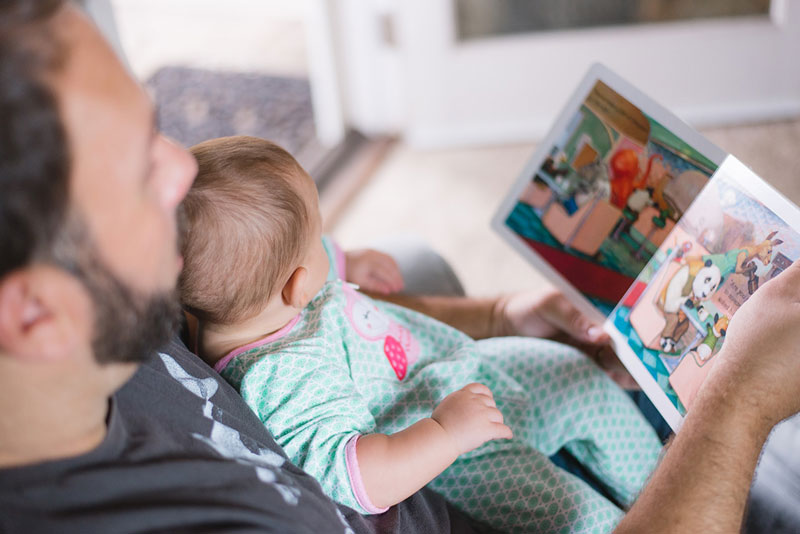
Οργανώνουν το πρόγραμμα τους με τέτοιο τρόπο ώστε τακτικά να αφιερώνουν χρόνο αποκλειστικά στα παιδιά τους: είτε για να πάνε μαζί σε ένα θέαμα (αθλητικό, καλλιτεχνικό), είτε για να διαβάσουν μαζί ένα βιβλίο, να παίξουν, να κάνουν μαζί κάποιες δουλειές ή και απλά να χαλαρώσουν και να κάνουν παρέα.
Προσφέρουν συνέπεια και σταθερότητα στη ζωή των παιδιών τους, δημιουργώντας ένα σταθερό και ασφαλές περιβάλλον στο οποίο τα παιδιά μπορούν να βασίζονται κάθε μέρα.

Έχει σημασία ο χρόνος να είναι ποιοτικός. Η έμφαση δεν είναι μόνο στο πόσο χρόνο περνάς με το παιδί σου αλλά και στο τι κάνεις μαζί του. Όταν είστε μαζί, είναι το παιδί το κέντρο της προσοχής σου ή απλά προσπαθείς να το κρατήσεις απασχολημένο όσο εσύ ασχολείσαι με άλλα πράγματα; Κάνετε μαζί κάτι που αρέσει και στους δύο; Έχεις την απαραίτητη ενέργεια που χρειάζεσαι για τις ώρες που έχεις κανονίσει να περάσεις με τα παιδιά σου;

Εξίσου σημαντικό είναι να μην συγχέεται η προσφορά με την αγάπη. Παρόλο που, προφανώς, η παροχή κατάλληλης τροφής, ένδυσης και στέγης είναι απαραίτητα για να φροντίσει κανείς ένα παιδί, αυτό που το παιδί χρειάζεται περισσότερο από οτιδήποτε άλλο από τους γονείς του είναι η αγάπη, η ασφάλεια, το ενδιαφέρον και η υποστήριξή τους.


Εμπόδια στην ενεργή συμμετοχή του πατέρα

Εμπόδιο: Η πίεση της δουλειάς και οι απατήσεις της καριέρας μπορεί να αφήνουν λίγο χρόνο για τη «δουλειά του γονιού». Οι προσωπικές επιλογές καθώς και οι πολιτικές των διαφόρων εταιρειών επηρεάζουν τον διαθέσιμο χρόνο.

Προτροπή: Η διάθεση επαρκούς χρόνου στα παιδιά πρέπει να γίνει προσωπική σου προτεραιότητα.

Εμπόδιο: Ορισμένες μητέρες ανησυχούν, θέλουν να έχουν εκείνες τον έλεγχο και – συνειδητά ή μη - «σαμποτάρουν» την αυξημένη συμμετοχή του πατέρα στο μεγάλωμα των παιδιών.

Προτροπή: Προκειμένου οι μπαμπάδες να μπορέσουν να έχουν ενεργή συμμετοχή στις ζωές των παιδιών τους, πρέπει και οι μαμάδες να επιτρέψουν τη συνεργασία στο μεγάλωμα των παιδιών.

Οι μητέρες που βλέπουν θετικά τη συμμετοχή του πατέρα και μιλούν θετικά στα παιδιά για τον πατέρα τους δημιουργούν τις προϋποθέσεις για να έχουν έναν εξίσου συμμετέχοντα με αυτές γονιό. Οι άντρες που πιστεύουν ότι είναι καλοί μπαμπάδες και που πιστεύουν ότι και οι γυναίκες τους τους θεωρούν καλούς μπαμπάδες, ασχολούνται περισσότερο με τα παιδιά.

Εμπόδιο: Η έλλειψη προετοιμασίας και υποστήριξης στους άντρες –σε σχέση με τις γυναίκες – για τον ρόλο του πατέρα (κοινωνικά πρότυπα, πηγές πληροφόρησης, κλπ.)

Προτροπή: Σήμερα, υπάρχουν όλο και περισσότερες πηγές πληροφόρησης και υποστήριξης για τους μπαμπάδες. Διαβάστε βιβλία, συμβουλευθείτε έγκυρες πηγές στο internet, μιλήστε σε ειδικούς, αλλά και σε άλλους μπαμπάδες, προκειμένου να πάρετε πληροφορίες και να νιώθετε πιο σίγουροι για τη συμπεριφορά σας ως πατέρας.

Οι μπαμπάδες που αναλαμβάνουν όλο και περισσότερο την γαλούχηση και φροντίδα των παιδιών, ορίζουν εκ νέου την έννοια της πατρότητας.


ΠΗΓΗ:

Tuesday, 16 June 2020

Struggling To Stick To A Workout Routine? Copying Your Friends Might Help


By Emily Reynolds

Keeping to goals or new habits is not easy — so much so that there’s a cottage industry of life coaches, motivational speakers and stationery companies offering you tricks, hints, motivational journals and other products apparently designed to keep you on the straight and narrow.

But there might be an easier — and considerably cheaper — way of doing things. Rather than trying to motivate ourselves alone, Katie S. Mehr and colleagues from the University of Pennsylvania argue in the Journal of the Association for Consumer Research, copying the strategies that our friends use may provide us with some much needed drive.


The team asked 1,028 participants, all of whom said they wanted to exercise more, how many hours they’d spent exercising in the previous week, before randomly assigning them to one of three conditions.

Participants in the “copy-paste” condition were asked to pay attention to how people they knew motivated themselves to work out, and were told they could ask them directly for strategies and tips. Those in the “quasi-yoked” control condition were told that the research team would “help [them] learn about an effective hack or strategy that motivates people to exercise” — no mention of friends. In another, simple control condition, there was no message.

Two days later, participants completed a second survey, describing what strategies they planned to use in the next week to exercise more. More specifically, those in the copy-paste condition were asked to summarise the strategy they’d copied from a friend, while those in the quasi-yoked condition were provided with one of 358 exercise strategies another participant had copy-pasted in a pilot study.

Finally, a week after the second survey, participants in all conditions were asked how many hours they had spent exercising in the last week and how motivated they had felt to exercise on a scale of one to five.

Those in the copy-paste condition — that is, those who had copied their friends’ fitness strategies — spent significantly more time exercising than those in the simple control (55.8 more minutes on average) and quasi-yoked control condition (32.5 more minutes). They were also more motivated to exercise.

What made copy-paste prompts so effective? To figure this out, the team also asked participants nine questions about the strategies they used, such as how useful, new or appealing the strategies were, and how committed they felt to them. The team found that, compared to the quasi-yoked condition, those in the copy-paste condition found the strategies more useful, were more committed to them, and had more social interactions with others who exercise — and these differences could explain why these participants in turn spent more time exercising.

This makes sense: general advice about exercise or habit-forming may not particularly resonate with someone, while finding appealing strategies from one’s own social circle could be more personally relevant. Further research could look at the nature of the strategies participants “copied and pasted” from their friends: is the motivation of seeking and applying strategies from friends enough to keep somebody interested in their new habit, or do particular types of strategy work better or worse?

Whether copy-paste strategies would work in the long-term is also not yet clear — it’s easy to start a new lifestyle with good intentions and high levels of motivation, but not so easy to keep it up. If you’re looking to change a habit, however, you could do a lot worse than looking to a friend for advice.


SOURCE:

Thursday, 2 May 2019

Could Your Immune System Be Making You Impulsive?


You can have £10 today or £12 next week. Which do you go for?

Being able to forego a reward now in favour of gaining something better later is known to be important in determining all kinds of desirable outcomes in life, including greater educational attainment, social functioning and health.

However, choosing to delay gratification won’t always be the best option. If you’re in desperate circumstances – you badly need money to buy food, for example – taking the £10 today could be sensible. But this isn’t necessarily an entirely conscious judgment – there may be biological systems that automatically shift your decision-making priorities according to what is most likely to enhance your survival. A new open-access study published in Scientific Reports provides evidence that having raised levels of inflammation in your body, which is generally caused by the immune system’s response to infection or injury, can skew your judgment to focus more on present rewards, and on instant gratification. If further research backs this up, there could be wide-ranging implications not only for understanding why some people are more impulsive than others, but even for treating substance abuse.


Jeffrey Gassen and colleagues at the Texas Christian University, US, reasoned that inflammation should enhance a person’s desire for immediately available resources, as the body’s response to sickness requires extra energy, and, for a sick person, their future is less certain. To explore whether this is actually the case, they recruited 159 healthy, non-obese, young college students who abstained from behaviours that can cause an acute increase in inflammation, such as smoking, exercise, sex and drinking alcohol, for two days prior to the study.

The participants completed a widely-used impulsiveness scale, an instant gratification inventory, as well as two behavioural assessments – one of which explored their preferences for smaller and immediate vs. larger, delayed rewards. The participants also reported their body mass index, physical activity levels, smoking, alcohol consumption, sleep quality, stress and other variables (all of which relate to having a greater focus on the present, to inflammation levels, or both).

The participants then gave blood samples, which were checked for levels of three pro-inflammatory cytokines (proteins that indicate greater inflammation). The researchers found that participants with higher levels of inflammation also tended to have a style of decision-making characterised by impulsivity, a focus on the present, and an inability to delay gratification.

This analysis alone of course cannot indicate the direction of the relationship. Might it rather be the case that harmful, present-focused behaviours were driving higher levels of inflammation? The researchers explored this possibility by looking to see whether particular behaviours – usual levels of smoking, alcohol intake and risky sexual behaviours, for instance – predicted greater inflammation. But none did.

This might sound surprising (as smoking, for example, has been clearly associated with inflammation in past studies). But these participants were chosen on purpose to be healthy and young. They were also instructed to avoid such behaviours for 48 hours prior to the study, in theory to make it easier to isolate any effects of inflammation on decision-making.

All in all, “these results suggest that the activities of the immune system may play an important role in shaping decision-making preferences,” Gassen and his colleagues write. In doing so, they add “…to the growing body of research demonstrating that the internal, physiological condition of the body plays an important role in modulating decision-making and behaviour.”

If further experimental work can firm up this link, there could be “exciting new possibilities” for treating substance abuse disorders, the researchers suggest, and there could be implications for people who have experienced early life stress, who are known to be more prone to inflammation. Drug-based or behavioural interventions targeted at reducing circulating levels of pro-inflammatory cytokines might possibly “sever the link between an individual’s propensity to inflammation and undesirable behaviours, improving outcomes for those from disadvantaged backgrounds.”

As the researchers themselves point out, clearly a lot more work has to be done. But as they also note, this study was on healthy young people, with relatively low levels of inflammation. People with chronic illness or obesity have persistently high levels and the activity of their immune system may then have an even greater effect on the way that they behave and even think.

SOURCE: