Νεότερα Δεδομένα στην Άνοια
Νέα εποχή στη διαχείριση και στη θεραπεία της Νόσου Alzheimer
Μέχρι πριν από λίγα χρόνια, η άνοια ήταν ταυτισμένη με μία αναπόφευκτή πορεία προοδευτικής απώλειας των νοητικών λειτουργιών και της αυτονομίας των πασχόντων η οποία οδηγούσε τελικά σε πλήρη εξάρτηση από τη φροντίδα των οικείων τους. Σήμερα, βιώνουμε μία συστημική αλλά και πολιτισμική αλλαγή στο τρόπο που αντιμετωπίζουμε την άνοια και την νόσο Alzheimer που αποτελεί και την συχνότερη μορφή της. Οι επιστημονικές εξελίξεις των τελευταίων ετών, που παρουσιάστηκαν στο Διεθνές Συνέδριο της Alzheimer’s Association (ΑΑΙC, 2026) στο Λονδίνο, υποστηρίζουν ότι η διάγνωση της νόσου μπορεί να γίνει έως και 20 χρόνια πριν από την εμφάνιση των πρώτων κλινικών συμπτωμάτων με τη βοήθεια βιοδεικτών. Τότε μπορεί να ξεκινάει και η συσσώρευση του β-αμυλοειδούς και της πρωτεΐνης tau στον εγκέφαλο των ασθενών. Τα τελευταία χρόνια , η ακριβής διάγνωση της Νόσου Alzheimer απαιτούσε τη χρήση βιοδεικτών όπως οι παθολογικές πρωτείνες στο εγκεφαλονωτιαίο υγρό μετά από οσφυονωτιαία παρακέντηση ή η απεικόνιση του εγκεφάλου με PET αμυλοειδούς, εξετάσεις με υψηλό κόστος και περιορισμένη διαθεσιμότητα. Σήμερα όμως, οι νέοι βιοδείκτες στο αίμα, και ιδιαίτερα η πρωτεΐνη p-tau217, επιτρέπουν μια εύκολη, υψηλής ακρίβειας και ευρέως προσβάσιμη διάγνωση, ανοίγοντας τον δρόμο για την έγκαιρη ανίχνευση της νόσου.Η επιστημονική έρευνα έδειξε επίσης, ότι η πρόληψη της νόσου Alzheimer είναι δυνατή μέχρι και στο 45% των περιπτώσεων με τον έλεγχο των τροποποιήσιμων παραγόντων κινδύνου (αρτηριακή υπέρταση, σακχαρώδης διαβήτης, υπερχοληστερολαιμία, παχυσαρκία, σωματική και νοητική αδράνεια, κατάθλιψη, βαρηκοΐα, μείωση της όρασης, ατμοσφαιρική ρύπανση, χαμηλό επίπεδο εκπαίδευσης). Οι μεγάλες μελέτες πρόληψης FINGER και POINTER ανέδειξαν ότι οι παρεμβάσεις αυτές είναι περισσότερο αποτελεσματικές όταν εφαρμόζονται σε πρώιμα στάδια, πριν ακόμη εμφανιστούν τα πρώτα συμπτώματα, ξεκινώντας από τη μέση ηλικία.Μείζονα εξέλιξη στη θεραπεία της Νόσου Alzheimer αποτέλεσε η εισαγωγή στην κλινική πράξη των μονοκλωνικών αντισωμάτων έναντι του β-αμυλοειδούς πριν πέντε χρόνια στις ΗΠΑ και πριν λίγους μήνες και στη χώρα μας. Οι θεραπείες αυτές δεν υπόσχονται ίαση, αλλά στοχεύουν στην επιβράδυνση της εξέλιξης της νόσου όταν αυτή βρίσκεται σε αρχικό στάδιο, δίνοντας στους ασθενείς τη δυνατότητα να διατηρήσουν για περισσότερα χρόνια τις γνωστικές και λειτουργικές τους ικανότητες.Στο συνέδριο ΑΑΙC παρουσιάστηκαν επίσης τα αποτελέσματα της μελέτης LEADER σε 500 ασθενείς που έλαβαν το μονοκλωνικό αντίσωμα lecanemab στην καθημερινή κλινική πράξη, εκτός των κλινικών δοκιμών. Τα ευρήματα ήταν ιδιαίτερα ενθαρρυντικά: μετά από παρακολούθηση 18 μηνών, περίπου τα τρία τέταρτα των ασθενών παρέμειναν γνωστικά σταθεροί, ενώ ένα μικρότερο ποσοστό παρουσίασε ακόμη και βελτίωση των γνωστικών του επιδόσεων.Παράλληλα, νέα φάρμακα που στοχεύουν σε άλλους παθογενετικούς μηχανισμούς βρίσκονται σε προχωρημένο στάδιο δοκιμής. Η επικρατούσα πλέον επιστημονική άποψη είναι ότι η νόσος Alzheimer αποτελεί μια πολυπαραγοντική διαταραχή και ότι στο μέλλον η αποτελεσματικότερη αντιμετώπισή της θα βασίζεται σε συνδυαστικές θεραπευτικές παρεμβάσεις, προσαρμοσμένες στα ιδιαίτερα χαρακτηριστικά κάθε ασθενούς ιατρική ακριβείας .Συμπερασματικά, οι νέοι βιοδείκτες στο αίμα και οι νέες τροποποιητικές της νόσου θεραπείες αποτελούν ορόσημο στην ιστορία της νόσου Alzheimer. Προϋποθέτουν βέβαια οργανωμένα και αποτελεσματικά συστήματα υγείας και κοινωνικής φροντίδας. Εξίσου σημαντική είναι η ενημέρωση του κοινού και η υλοποίηση οργανωμένων προγραμμάτων πρόληψης, καθώς πολλοί εξακολουθούν να θεωρούν τη έκπτωση της μνήμης φυσιολογική συνέπεια της γήρανσης και καθυστερούν να αναζητήσουν ιατρική αξιολόγηση. Η έγκαιρη διάγνωση και η πρώιμη παρέμβαση μπορούν πλέον να αλλάξουν ουσιαστικά την πορεία της νόσου και να βελτιώσουν σημαντικά την ποιότητα ζωής των ασθενών και των οικογενειών τους.Επιπλέον υπάρχουν και οι ψυχοκοινωνικές παρεμβάσεις που παρέχονται στα Κέντρα Ημερήσιας Φροντίδας των μη κερδοσκοπικών οργανώσεων Alzheimer που υπάρχουν σε πολλές πόλεις της Ελλάδος και χρηματοδοτούνται από το Υπουργείο Υγείας ! Στη χώρα μας λειτουργούν 33 Κέντρα Ημερήσιας Φροντίδας που προσφέρουν μη φαρμακευτικές θεραπείες στους ασθενείς με άνοια και υποστήριξη και εκπαίδευση στους φροντιστές τους. Γραμμή Βοήθειας για την Άνοια 1102Εταιρεία Alzheimer Αθηνών 210-7013271 www.alzheimerathens.gr Το Ιατρείο Μνήµης του ΥΓΕΙΑ παρέχει έγκαιρη και έγκυρη διάγνωση καθώς και ολοκληρωµένη αντιµετώπιση της νόσου Alzheimer και των άλλων µορφών άνοιας. Στελεχώνεται από οµάδα ειδικών (νευρολόγους, ψυχιάτρους και γνωστικούς νευροψυχολόγους) και παρέχει τη δυνατότητα σφαιρικής κλινικής αξιολόγησης και παρακλινικής διερεύνησης των ασθενών µε νοητικά ελλείμματα. Υποστηρίζεται από τα τµήµατα του εργαστηριακού τοµέα του ΥΓΕΙΑ τα οποία προσφέρουν τις πλέον σύγχρονες µεθόδους διάγνωσης της νόσου Alzheimer με τη χρήση βιοδεικτών (PET αμυλοειδούς, προσδιορισμός πρωτεϊνών στο εγκεφαλονωτιαίο υγρό και στο αίμα). Το Ιατρείο Μνήμης του ΥΓΕΙΑ αποτελεί πιστοποιημένο κέντρο χορήγησης της νέας θεραπείας με το μονοκλωνικό αντισώμα donanemab που ενδείκνυται για τη θεραπεία της Ήπιας Νοητικής Διαταραχής και της ήπιας άνοιας που οφείλεται στη νόσο Alzheimer.
Σεπτέμβριος 2026
Δρ. Παρασκευή ΣακκάΝευρολόγος – Ψυχίατρος
Πρόεδρος της Εταιρείας Alzheimer Αθηνών και του Εθνικού Παρατηρητηρίου για την Άνοια
Μονοκλωνικά Αντισώματα κατά του β-Αμυλοειδούς – Νέες πλέον αποτελεσματικές θεραπείες για τη νόσο Alzheimer
Σήμερα στην Ελλάδα, περίπου 250.000 άνθρωποι πάσχουν από άνοια, με τη νόσο Alzheimer να είναι η πιο συχνή αιτία (60–70% των συνολικών περιπτώσεων άνοιας). Επιπλέον υπάρχουν 350.000 με Ήπια Νοητική Διαταραχή που είναι το προστάδιο της άνοιας. Οι οικογένειες επηρεάζονται ιδιαίτερα από τη νόσο Alzheimer: για κάθε ασθενή με άνοια χρειάζονται 2 έως 3 άτομα για τη φροντίδα του. Αυτό σημαίνει ότι, μέχρι το 2030, περίπου 1,5 εκατομμύριο άνθρωποι στη χώρα μας, θα επηρεάζονται καθημερινά από την άνοια, συμπεριλαμβανομένων ασθενών και φροντιστών. Η οικονομική επιβάρυνση είναι επίσης σημαντική. Με βάση πρόσφατες μελέτες στην Ευρωπαϊκή Ένωση, το ετήσιο κόστος της άνοιας μπορεί να φτάσει, σε σοβαρές περιπτώσεις, έως και τα 74.000 ευρώ ανά άτομο, με πάνω από το 90% αυτών των δαπανών να σχετίζονται με τη φροντίδα και τη μακροχρόνια περίθαλψη. Τα παραπάνω στοιχεία αναδεικνύουν την επείγουσα ανάγκη για αποτελεσματικές θεραπείες και συστήματα υποστήριξης για τη διαχείριση του αυξανόμενου επιπολασμού και των οικονομικών επιπτώσεων της άνοιας.
Με την έλευση των μονοκλωνικών αντισωμάτων, θεραπειών που στοχεύουν το β-αμυλοειδές, ως η πρώτη γενιά αιτιολογικών θεραπειών της νόσου Alzheimer, και των ταχέως εξελισσόμενων βιοδεικτών στο αίμα ο τομέας των νευροεκφυλιστικών ασθενειών εισέρχεται σε μια νέα εποχή, η οποία, για πρώτη φορά, υπόσχεται αποτελεσματική επιβράδυνση της εξέλιξης της νόσου και τελικά πρόληψη των σοβαρών σταδίων που αυξάνουν το κόστος περίθαλψης.
Η θετική γνωμοδότηση του ΕΜΑ (European Medicines Agency) τον Φεβρουάριο του 2025 για τη χορήγηση άδειας κυκλοφορίας του Lecanemab, καθώς και η πρόσφατη προ μηνών του Donanemab είναι ενθαρρυντικά βήματα για την αντιμετώπιση της νόσου Alzheimer. Τα δύο αυτά μονοκλωνικά αντισώματα θεωρούνται από τους ειδικούς ότι διαθέτουν σημαντική αποτελεσματικότητά και διαχειρίσιμες πιθανές παρενέργειες.
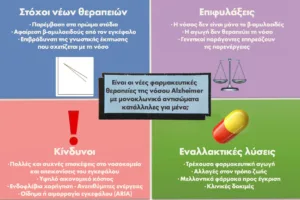
Τα μονοκλωνικά αντισώματα οδηγούν σε σημαντική μείωση του φορτίου των αμυλοειδικών πλακών στον εγκέφαλο των ασθενών, με συνέπεια σημαντική επιβράδυνση στην κλινική επιδείνωση της νόσου (~30%). Αποτελούν τις πρώτες εγκεκριμένες αιτιολογικές θεραπείες για την νόσο Alzheimer που δρουν επί των υποκείμενων παθοφυσιολογικών μηχανισμών της νόσου, σε αντίθεση με τις υπάρχουσες θεραπείες, οι οποίες προσφέρουν συμπτωματική μόνον αντιμετώπιση. Τα φάρμακα αυτά έχουν ένδειξη για τα πρώιμα στάδια και χορηγούνται δις ή άπαξ μηνιαίως ενδοφλεβίως με ημερήσια νοσηλεία. Η χρήση τους απαιτεί τεκμηριωμένη με βιοδείκτες διάγνωση της νόσου Alzheimer και στενή και αυστηρή τήρηση πρωτοκόλλου παρακολούθησης και διαχείρισης σοβαρών ανεπιθύμητων ενεργειών. Η χρήση των μονοκλωνικών αντισωμάτων στην κλινική πράξη προϋποθέτει τον καθορισμό κέντρων χορήγησης (Νευρολογικών Κλινικών και Ιατρείων Μνήμης) τα οποία διαθέτουν την απαιτούμενη εργαστηριακή υποδομή και έχουν το κατάλληλο ανθρώπινο επιστημονικό δυναμικό ώστε η χορήγηση τους να γίνεται με ασφάλεια.
Συμπερασματικά θεωρούμε ότι τα μονοκλωνικά αντισώματα κατά του β-αμυλοειδούς, Lecanemab και Donenemab , αποτελούν ένα κρίσιμο βήμα για την εφαρμογή προηγμένων θεραπειών στην αντιμετώπιση της νόσου Alzheimer, καθώς και για τη προσαρμογή των συστημάτων υγειονομικής περίθαλψης στη νέα θεραπευτική εποχή των νευροεκφυλιστικών παθήσεων.
Το κόστος των μονοκλωνικών αντισώματα κατά του β-αμυλοειδούς είναι υψηλό! Αναμφισβήτητα όμως αποτελούν μια από τις πρώτες αιτιολογικές θεραπείες για τη νόσο Alzheimer και παρά τους προαναφερθέντες περιορισμούς, μπορεί να θεωρηθούν ως ένα μεγάλο βήμα προόδου.
Σεπτέμβριος 2025
Φαίδρα Καλλίγερου – Νευρολόγος
Εταιρεία Alzheimer Αθηνών
Αιγινήτειο Νοσοκομείο
Pet/CT Αμυλοειδούς στη διάγνωση της νόσου Alzheimer
Η συχνότητα της νόσου Alzheimer στον γενικό πληθυσμό – δεδομένης της αύξησης του προσδόκιμου επιβίωσης – έχει αυξηθεί σημαντικά. Η πρώιμη διάγνωσή της αποτελεί μια μεγάλη πρόκληση, τόσο για το άτομο και την οικογένεια, όσο και για τον θεράποντα γιατρό. Εδώ και λίγο καιρό, έχουμε στην Ελλάδα διαθέσιμο ένα πανίσχυρο εργαλείο για τη διάγνωσή της: τη μελέτη απεικόνισης αμυλοειδούς εγκεφάλου με τη χρήση της τεχνολογίας PET/CT.
Η απεικόνιση αμυλοειδούς με PET/CT αποτελεί μία καινοτόμο τεχνική στη διάγνωση της νόσου Alzheimer, προσφέροντας τη δυνατότητα πρώιμης και ακριβούς εκτίμησης της παρουσίας αμυλοειδικών πλακών στον εγκέφαλο, οι οποίες είναι το κύριo χαρακτηριστικό της νόσου. Η διαδικασία αυτή χρησιμοποιεί ένα ραδιενεργό διαγνωστικό φάρμακο, που προσδένεται στις αμυλοειδικές πλάκες, επιτρέποντας την απεικόνισή τους μέσω της τομογραφίας εκπομπής ποζιτρονίων (PET). Η μέθοδος έχει αποδειχθεί ιδιαίτερα χρήσιμη για την πρώιμη διάγνωση της νόσου, καθώς και για τη διαφοροδιάγνωση της Alzheimer από άλλες μορφές άνοιας. Στην πράξη, η απεικόνιση PET/CT μπορεί να ανιχνεύσει την παρουσία του παθολογικού αμυλοειδούς με σημαντική ακρίβεια, ευαισθησία και ειδικότητα, η οποία μπορεί να φτάσει και το 90% και υψηλή αρνητική προγνωστική αξία, συμβάλλοντας στην εκτίμηση του κινδύνου εξέλιξης της νόσου και στη βελτίωση της διαχείρισης των ασθενών.
Η έγκαιρη διάγνωση είναι ιδιαιτέρως σημαντική στην εποχή μας, καθώς για πρώτη φορά έχουμε νέα αιτιολογικά φάρμακα με σημαντικά θεραπευτικά αποτελέσματα. Είναι, επιπλέον, σημαντική και από κοινωνική άποψη, τόσο για τον ίδιο τον ασθενή όσο και για το περιβάλλον του, καθώς μπορούν να εφαρμοστούν προληπτικές στρατηγικές και αλλαγές στον τρόπο ζωής, φυσική άσκηση, διατροφή, κατάλληλη πλαισίωση, με στόχο την καλύτερη ποιότητα ζωής. Η διάγνωση της νόσου Alzheimer γίνεται μέχρι σήμερα με οσφυονωτιαία παρακέντηση και προσδιορισμό παθολογικών βιολογικών δεικτών στο εγκεφαλονωτιαίο υγρό, όπως είναι το β-αμυλοειδές και η φωσφορυλιωμένη πρωτεΐνη Tau. Συνολικά, ένα ποσοστό 30% των υποψήφιων για οσφυονωτιαία παρακέντηση δεν μπορεί ή δεν θέλει να υποβληθεί σε αυτήν. Ιδίως στους ασθενείς αυτούς η εξέταση PET/CT αποκτά ιδιαίτερη σημασία.
Η διαδικασία της εξέτασης PET/CT αμυλοειδούς για τη διάγνωση της νόσου Alzheimer είναι εξαιρετικά απλή για τον ασθενή:
• Δε χρειάζεται κάποια ιδιαίτερη προετοιμασία πριν την εξέταση
• Στον ασθενή χορηγείται ενδοφλεβίως μέσα σε λίγα δευτερόλεπτα μια μικρή ποσότητα ραδιενεργού ουσίας. Η ουσία αυτή είναι ασφαλής και έχει σχεδιαστεί ειδικά για την απεικόνιση του αμυλοειδούς.
• Μετά τη χορήγηση, υπάρχει μια περίοδος αναμονής περίπου μίας ώρας, για να επιτραπεί στη ραδιενεργή ουσία να προσδεθεί στις αμυλοειδικές πλάκες.
• Στη συνέχεια, ο ασθενής τοποθετείται στο μηχάνημα PET/CT, όπου πραγματοποιείται η σάρωση. Η διαδικασία απεικόνισης διαρκεί συνήθως το πολύ 15 λεπτά.
• Ο ασθενής αποχωρεί από το τμήμα με οδηγίες για αποφυγή στενής επαφής με ευάλωτα άτομα (κυρίως παιδιά και εγκύους γυναίκες) για περίπου 6 με 8 ώρες.
Ιούνιος 2024
Θεόδωρος Πιπίκος
Διευθυντής Πυρηνικής Ιατρικής & PET CT
Νοσοκομείο Υγεία
Lecanemab – το νέο μονοκλωνικό αντίσωμα για τη νόσο Alzheimer
Η πλήρης έγκριση της λεκανεμάμπης (lecanemab) από τον FDA τον Ιούλιο του 2023 για την αντιμετώπιση της ήπιας νοητικής διαταραχής (mild cognitive impairment – MCI) και της ήπιας άνοιας (mild dementia) στο έδαφος της νόσου Alzheimer, σηματοδοτεί ορόσημο στη θεραπευτική του νοσήματος αυτού. Το lecanemab αποτελεί εξανθρωποιημένο μονοκλωνικό αντίσωμα, το οποίο συνδέεται με τα πρωτοϊνίδια του αμυλοειδούς και οδηγεί σε σημαντική μείωση του φορτίου των αμυλοειδικών πλακών στον εγκέφαλο των ασθενών με νόσο Alzheimer. Συνέπεια η σημαντική σημαντική επιβράδυνση στην κλινική επιδείνωση της νόσου (~27%). Αποτελεί την πρώτη εγκεκριμένη αγωγή για την νόσο Alzheimer, η οποία δρα επί των υποκείμενων παθοφυσιολογικών μηχανισμών της νόσου Alzheimer, σε αντίθεση με τις υπάρχουσες εγκεκριμένες θεραπείες (αναστολείς χολινεστεράσης, μεμαντίνη), οι οποίες προσφέρουν συμπτωματική μόνον αντιμετώπιση.
Το lecanemab έχει κατατεθεί και στον Ευρωπαϊκό Οργανισμό Φαρμάκων (European Medicines Agency – EMA) προς έγκριση, με την καταληκτική απόφαση να αναμένεται εντός του 2024. Το lecanemab χορηγείται 2 φορές τον μήνα ενδοφλεβίως, και η χρήση του, όπως προκύπτει από τα δεδομένα των κλινικών μελετών, απαιτεί την στενή και αυστηρή τήρηση πρωτοκόλλου παρακολούθησης και διαχείρισης ανεπιθύμητων ενεργειών, όπως τα ARIA (amyloid-related imaging abnormalities, ακτινολογικές διαταραχές σχετιζόμενες με το αμυλοειδές) και τις αντιδράσεις κατά την διάρκεια της έγχυσης. Για το λόγο αυτό, η χρήση του lecanemab στην κλινική πράξη, ειδικά στα αρχικά στάδια, πρέπει να γίνεται σε εξειδικευμένες ιατρικές δομές – κέντρα, τα οποία παρέχουν τις απαιτούμενες υπηρεσίες και έχουν το κατάλληλο ανθρώπινο δυναμικό για τη χορήγησή του. Η χορήγηση αυτή προϋποθέτει την θέσπιση τυποποιημένων διαδικασιών για την παρακολούθηση των ασθενών και την διαχείριση ενδεχόμενων ανεπιθύμητων ενεργειών.
Στη χώρα μας, σύμφωνα με πρόσφατη επιδημιολογική μελέτη, έχουμε 160.000 άτομα με άνοια και 280.000 με ήπια νοητική διαταραχή. Λαμβάνοντας υπόψιν τον υψηλό αριθμό ασθενών υποψήφιων για λήψη lecanemab και των ιδιαιτέρως αυξημένων αναγκών και απαιτήσεων στα αρχικά στάδια της χορήγησής του, κρίνεται σκόπιμη η εκ των προτέρων οργάνωση και θεσμοθέτηση του πλαισίου χορήγησής του. Οι οργανώσεις ασθενών ήδη πιέζουν για τη χορήγηση του φαρμάκου από τους ασφαλιστικούς οργανισμούς διεθνώς, όπως και στη χώρα μας. Το Εθνικό Παρατηρητήριο για την άνοια και τη νόσο Alzheimer έχει δεχθεί πάρα πολλά ερωτήματα και αιτήματα σχετικά με το ζήτημα αυτό. Για όλους αυτούς τους λόγους προτείνουμε τη δημιουργία ομάδας εργασίας με σκοπούς:Διαδικασία ορισμού από το Υπουργείο των νοσοκομειακών δομών (Νευρολογικές Κλινικές – Ιατρεία Μνήμης) που πληρούν τα κριτήρια για την ασφαλή χορήγηση του lecanemab
Καθορισμό των όρων χορήγησης και αποζημίωσης του lecanemab και επιλογή των ασθενών που πληρούν τα κριτήρια λήψης βάσει εθνικής ηλεκτρονικής βάσης καταγραφής (Registry- Μητρώο ασθενών)
Καθορισμό του κόστους του lecanemab μετά από διαπραγματεύσεις με τις φαρμακευτικέςεταιρείες – απαραίτητη προϋπόθεση η ύπαρξη επιδημιολογικών στοιχείων σχετικά με τον ακριβή αριθμό των επιλέξιμων ασθενών
Το μονοκλωνικό αντίσωμα Lecanemab σίγουρα δεν αποτελεί το φάρμακο που έφερε το θαύμα ή τη ριζική θεραπεία για τη νόσο Alzheimer, όπως περιεγράφηκε σε κάποια ΜΜΕ ή έγινε λανθασμένα αντιληπτό από κάποιες οικογένειες ασθενών. Aπευθύνεται σε επιλεγμένους ασθενείς με πρώιμη νόσο Alzheimer, η χορήγησή του απαιτεί τεκμηριωμένη διάγνωση με βιοδείκτες, γίνεται με νοσηλεία στο νοσοκομείο δύο φορές το μήνα και απαιτεί επαγρύπνηση για σοβαρές ανεπιθύμητες ενέργειες. Το κόστος δε είναι υψηλό! Εν τούτοις αποτελεί μια από τις πρώτες αιτιολογικές θεραπείες για τη νόσο Alzheimer και, παρά τους προαναφερθέντες περιορισμούς, μπορεί να θεωρηθεί ως ένα μεγάλο βήμα προόδου.
Μάρτιος 2024
Δρ. Παρασκευή Σακκά
Νευρολόγος – Ψυχίατρος
Πρόεδρος της Εταιρείας Alzheimer Αθηνών και του Εθνικού Παρατηρητηρίου για την Άνοια
Μονοκλωνικά αντισώματα, η νέα αιτιολογική θεραπεία της νόσου Alzheimer
Οι εγκεκριμένοι παράγοντες, που χρησιμοποιούνται μέχρι σήμερα στη θεραπεία της νόσου Alzheimer (ΝΑ), είναι οι αναστολείς της χολινεστεράσης (δονεπεζίλη, ριβαστιγμίνη, γκαλανταμίνη) και η μεμαντίνη (ρυθμιστής της γλουταμινεργικής μεταβίβασης), η οποία χρησιμοποιείται για το μέτριο-σοβαρό στάδιο της νόσου. Όλες οι παραπάνω θεραπείες θεωρούνται «συμπωματικές», καθώς η βασική τους λειτουργία είναι να βελτιώνουν τα συμπτώματα της νόσου, χωρίς να παρεμβαίνουν με κάποιο τρόπο στην παθολογική διαδικασία, που αναπτύσσεται στον εγκέφαλο των ασθενών με ΝΑ.
Η φαρμακευτική αντιμετώπιση της νόσου Alzheimer δεν έχει αλλάξει σημαντικά εδώ και 18 χρόνια. Διάφορες δοκιμές φαρμάκων τα τελευταία χρόνια, που στοχεύουν στους παθολογικούς μηχανισμούς της νευροεκφυλιστικής διαδικασίας της ΝΑ, έχουν αποτύχει, μέχρι σήμερα, να δείξουν αποτελεσματικότητα. Έτσι, παρά τις εκτεταμένες προσπάθειες, προς ώρας δεν είχε εμφανιστεί κάποια «αιτιολογική θεραπεία».
Τα παθολογικά χαρακτηριστικά της νόσου Alzheimer είναι η ενδοκυττάρια πρωτεΐνη tau, που σχηματίζει τις νευροινιδιακές βλάβες και η εξωκυττάρια εναπόθεση αμυλοειδούς, που σχηματίζει τις αμυλοειδικές πλάκες. Με βάση τα παραπάνω, τα αντισώματα έναντι του αμυλοειδούς θα μπορούσαν να αποτελέσουν μια αιτιολογική θεραπεία για τη νόσο, παρά το γεγονός ότι τα, μέχρι τώρα, αποτελέσματα από κλινικές μελέτες τέτοιων παραγόντων ήταν αρνητικά ή ασαφή.
Το aducanumab είναι το πρώτο μονοκλωνικό αντίσωμα έναντι του αμυλοειδούς, που εγκρίθηκε για τη θεραπεία της νόσου Alzheimer. Πραγματοποιήθηκαν δύο μελέτες «Φάσης 3», από τις οποίες προέκυψαν τα δεδομένα για την αποτελεσματικότητα του συγκεκριμένου φαρμάκου. Η μελέτη «Φάσης 3 EMERGE» είχε θετικό αποτέλεσμα, καθώς οι ασθενείς που συμμετείχαν είχαν σημαντικά κλινικά οφέλη. Από την άλλη, στη μελέτη «Φάσης 3 ENGAGE»
δεν παρατηρήθηκε το ίδιο θετικό κλινικό αποτέλεσμα. Και στις δύο περιπτώσεις, το φάρμακο κατάφερε να μειώσει σημαντικά το φορτίο του αμυλοειδούς στον εγκέφαλο, χωρίς όμως αυτό να μεταφραστεί σε κλινικό όφελος στους ασθενείς, καθώς τα κλινικά οφέλη του aducanumab αναδείχθηκαν στατιστικά σημαντικά μόνο κατά τη μελέτη EMERGE και όχι στην ENGAGE. Τα παραπάνω δεδομένα αποτελεσματικότητας, αν και οριακά επαρκή, οδήγησαν τον Ιούνιο του 2021 τον FDA στις ΗΠΑ στην έγκριση της χορήγησης aducanumab στη νόσο Alzheimer, κατά τον τρόπο του «accelerated approval pathway», που ακολουθείται όταν θεωρείται χρήσιμο να χορηγηθεί ένα νέο υποσχόμενο φάρμακο σε ένα μεγάλο αριθμό ασθενών, που πάσχουν από μια τόσο καταστροφική νόσο. Λίγο αργότερα το 2021, ο ΕΜΑ, στηριζόμενος στην έλλειψη πλήρους απόδειξης κλινικής αποτελεσματικότητας, απέρριψε το aducanumab για τη θεραπεία της νόσου. Πλέον, στις ΗΠΑ το aducanumab αποζημιώνεται σε πολύ συγκεκριμένες περιπτώσεις ασθενών και ουσιαστικά έχει «απαξιωθεί», αφού έχουν προκύψει αποτελεσματικότερες θεραπείες.
Το lecanemab είναι το δεύτερο μονοκλωνικό αντίσωμα έναντι του αμυλοειδούς, που εγκρίθηκε για τη θεραπεία της νόσου Alzheimer. Η μελέτη «Φάσης 3 CLARITY», που πραγματοποιήθηκε για την εκτίμηση της αποτελεσματικότητας του φαρμάκου, ανέδειξε θετικά αποτελέσματα, καθώς το lecanemab κατάφερε να μειώσει το φορτίο του αμυλοειδούς στον εγκέφαλο, αλλά και να προσφέρει σημαντικά κλινικά οφέλη στους ασθενείς. Με βάση αυτά τα αποτελέσματα, το lecanemab πήρε έγκριση από τον FDA στις ΗΠΑ τον Ιανουάριο του 2023, ενώ μέσα στον ίδιο χρόνο αναμένεται και η απάντηση του EMA.
Τέλος, πρόσφατα ολοκληρώθηκε η μελέτη για ένα τρίτο μονοκλωνικό αντίσωμα έναντι του αμυλοειδούς, το donamemab. Τα συνολικά αποτελέσματα της μελέτης «Φάσης 3 TRAILBLAZER-ALZ 2» δεν έχουν επίσημα ανακοινωθεί, ωστόσο μια σύντομη αναφορά τ ης φαρμακευτικής εταιρείας στα πρώτα αποτελέσματα φαίνεται πολλά υποσχόμενη. Συνολικά, είναι προφανές ότι υπάρχει πολύ μεγάλο ενδιαφέρον και προοπτική στις νέες θεραπείες της ΝΑ. Ωστόσο, θα πρέπει να γίνει σαφές πως όλα αυτά τα μονοκλωνικά αντισώματα δεν απευθύνονται δυστυχώς σε όλους τους ασθενείς με ΝΑ, καθώς οι συμμετέχοντες στις παραπάνω μελέτες ανήκαν σε συγκεκριμένες ηλικιακές ομάδες, είχαν επιβεβαιωμένη την παθολογία του αμυλοειδούς στον εγκέφαλο και όλοι βρίσκονταν σε αρχικά στάδια της ΝΑ.
Την ίδια ώρα, η έγκριση τέτοιων φαρμάκων δεν αποτελεί μόνο την πρώτη έγκριση φαρμάκου για την ΝΑ μετά από 18 χρόνια, αλλά σηματοδοτεί και την πρώτη έγκριση αιτιολογικής θεραπείας στην ιστορία για τη ΝΑ. Ένας νέος δρόμος ανοίγεται, που, προοδευτικά, θα οδηγήσει σε πολύ αποτελεσματικότερες θεραπείες, οι οποίες θα απευθύνονται στο σύνολο των ασθενών.
Ιούνιος 2023
Φαίδρα Καλλίγερου
Νευρολόγος
Εταιρεία Alzheimer Αθηνών
Aducanumab – Η πρώτη αιτιολογική θεραπεία για τη νόσο Alzheimer
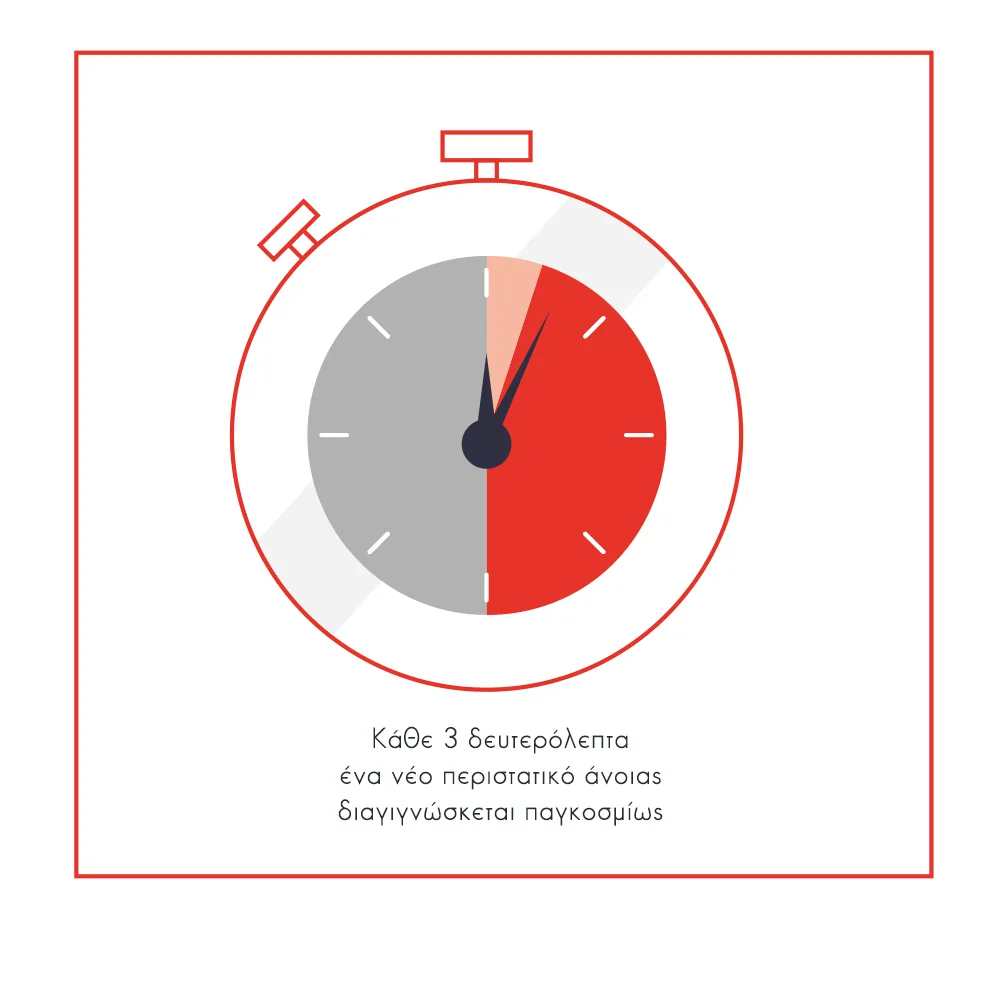
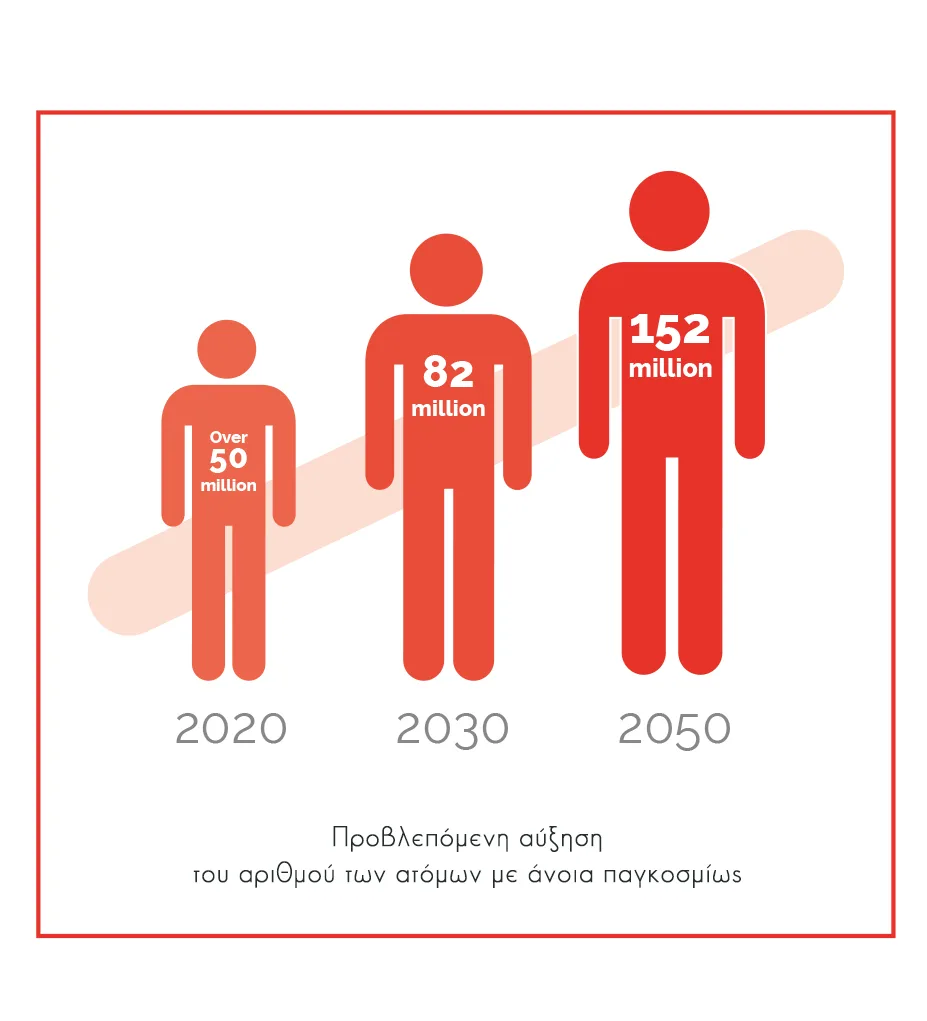
Τα άτομα που ζουν με άνοια σε παγκόσμια κλίμακα ανέρχονται στα 50 εκατομμύρια. Λόγω της αύξησης του προσδόκιμου επιβίωσης ο αριθμός αυτός αναμένεται να υπερτριπλασιαστεί φτάνοντας τα 152 εκατομμύρια το 2050. Το ετήσιο κόστος της άνοιας είναι πάνω από ένα τρισεκατομμύριο δολάρια και ανάμενεται να διπλασιαστεί το 2030 με 1 στους 10 ασθενείς που διαγιγνώσκονται με άνοια να ανήκουν σε χώρες χαμηλού και μεσαίου εισοδήματος. Παγκοσμίως, κάθε 3 δευτερόλεπτα καταγράφεται ένα καινούριο περιστατικό άνοιας.
Στην παρούσα φάση στη χώρα μας 250.000 άτομα πάσχουν από άνοια και 350.000 άτομα από Ήπια Νοητική Διαταραχή (προστάδιο της νόσου Alzheimer ). Αν συνυπολογίσουμε ότι για κάθε ασθενή με άνοια επηρεάζεται σημαντικά η ζωή 2-3 φροντιστών- μελών της οικογένειας, αντιλαμβανόμαστε ότι πρόκειται μια πάθηση που αφορά άμεσα σε 1,5 εκατομμύριο Έλληνες πολίτες. Το ετήσιο δε κόστος της πάθησης αυτής στη χώρα μας εκτιμάται σε 3 δισεκατομμύρια ευρώ.
Μελέτες πληθυσμών στην Ευρώπη και την Αμερική τα τελευταία χρόνια αποδεικνύουν ότι η επίπτωση της άνοιας μειώνεται ως αποτέλεσμα της αλλαγής του τρόπου ζωής και του ελέγχου των καρδιαγγειακών παραγόντων κινδύνου. Οι πολιτικές για τη δημόσια υγεία θα πρέπει να ενθαρρύνουν τους μεσήλικες να διακόπτουν το κάπνισμα, να ασκούνται σωματικά, να ακολουθούν διατροφή πλούσια σε φρούτα, λαχανικά και ψάρια (Μεσογειακή δίαιτα), να ελέγχουν την παχυσαρκία, το διαβήτη και την υπέρταση και να αποφεύγουν την υπερβολική κατανάλωση αλκοόλ. Επιπρόσθετα άνθρωποι με πολλά χρόνια εκπαίδευσης, απαιτητικά επαγγέλματα και περισσότερες δραστηριότητες ελεύθερου χρόνου (συμπεριλαμβανομένων πνευματικών, κοινωνικών, αλλά και φυσικών-σωματικών δραστηριοτήτων) έχουν μικρότερες πιθανότητες ανάπτυξης νόσου Alzheimer.
Η νόσος Alzheimer είναι μη αναστρέψιμη και εξελίσσεται με αργούς ρυθμούς σε βάθος χρόνου. Τα υπάρχοντα φάρμακα ανακουφίζουν τα συμπτώματα της νόσου χωρίς να αποτελούν ριζική θεραπεία. Οι μη φαρμακευτικές θεραπείες (νοητική ενδυνάμωση, εργοθεραπεία, θεραπείες τέχνης, κλπ) βοηθούν σημαντικά στην καλύτερη εξέλιξη όλων των μορφών άνοιας. Οι οργανώσεις Alzheimer παίζουν σημαντικό ρόλο στη συνολική διαχείριση της νόσου, παγκοσμίως και στη χώρα μας, προσφέροντας μη φαρμακευτικές θεραπείες στους ασθενείς και υποστήριξη στις οικογένειές τους.
Οι εγκεκριμένοι θεραπευτικοί παράγοντες που χρησιμοποιούνται σήμερα για τη θεραπεία της νόσου Alzheimer ( η πιο συχνή μορφή άνοιας, 70% του συνόλου των περιστατικών) είναι οι αναστολείς της χολινεστεράσης (δονεπεζίλη, ριβαστιγμίνη, γκαλανταμίνη) και η μεμαντίνη. Τα φάρμακα αυτά θεωρούνται συμπτωματικές θεραπείες και ελέγχουν μερικώς τα νοητικά και συμπεριφορικά συμπτώματα της νόσου χωρίς να επηρεάζουν τη νευροεκφυλιστική διεργασία στον εγκέφαλο των πασχόντων.
Τα τελευταία χρόνια πολλές δοκιμές φαρμάκων που στόχευαν σε θεμελιώδεις παθογενετικούς μηχανισμούς της νευροεκφυλιστικής διαδικασίας της νόσου Alzheimer απέτυχαν να δείξουν αποτελεσματικότητα ή συνοδεύονταν από ανεπιθύμητες ενέργειες απαγορευτικές για τη χρήση τους. Έτσι, παρά την εκτεταμένη ερευνητική δραστηριότητα, μέχρι τώρα δεν είχε εμφανιστεί κάποια αιτιολογική θεραπεία.
Τα νευροπαθολογικά χαρακτηριστικά της νόσου Alzheimer είναι η ενδοκυττάρια εναπόθεση πρωτεΐνης τ που σχηματίζει τα νευροϊνιδιακά συμπλέγματα και η εξωκυττάρια εναπόθεση β-αμυλοειδούς που σχηματίζει τις αμυλοειδικές πλάκες καταστρέφοντας έτσι τους φυσιολογικούς εγκεφαλικούς νευρώνες.
Μονοκλωνικά αντισώματα κατά του β-αμυλοειδούς θα μπορούσαν να αποτελέσουν μια αιτιολογική θεραπεία για τη νόσο, ωστόσο παρά την σημαντική μείωση στο αμυλοειδικό φορτίο του εγκεφάλου σε αρκετές κλινικές δοκιμές τέτοιων αντισωμάτων, τα κλινικά αποτελέσματα ήταν αντικρουόμενα ή αρνητικά .
Στις 7 Ιουνίου 2021 o FDA, o Αμερικανικός Οργανισμός Τροφίμων και Φαρμάκων ενέκρινε την κυκλοφορία του μονοκλωνικού αντισώματος Αducanumab για τη νόσο Alzheimer, κατά το πρότυπο του “accelerated approval pathway” που ακολουθείται όταν θεωρείται χρήσιμο να χορηγηθεί ένα νέο υποσχόμενο φάρμακο σε μεγάλο αριθμό ασθενών που πάσχουν από μια καταστροφική νόσο παρά την σχετική αβεβαιότητα ως προς την αποτελεσματικότητα. Ωστόσο, το FDA παρά την έγκριση, απαίτησε νέα μεγάλη μελέτη διάρκειας πολλών ετών για να επιβεβαιωθεί η αποτελεσματικότητα του φαρμάκου
Το Aducanumab είναι ένα ανθρώπινο μονοκλωνικό αντίσωμα τύπου IgG1 που συνδέεται με υψηλή εκλεκτικότητα με έναν επίτοπο του β- αμυλοειδούς και προκαλεί πολύ σημαντική μείωση του φορτίου αμυλοειδικών πλακών στο εγκεφαλικό παρέγχυμα, όπως έδειξαν οι μελέτες PRIME, EMERGE και ENGAGE. Η βελτίωση των κλινικών συμπτωμάτων δεν ήταν εξίσου σημαντική αλλά υπήρξαν οφέλη στους περισσότερους κλινικούς τομείς των ασθενών που συμμετείχαν. Ειδικότερα στη μελέτη φάσης 3 EMERGE οι ασθενείς που ελάμβαναν τη μεγίστη δόση 10 mg/kg είχαν στατιστικά σημαντικά οφέλη στις γνωστικές λειτουργίες και στις κλίμακες MMSE, ADAS-cog, ADCS-ADL-MCI, με μείωση του ρυθμού επιδείνωσης κατά 22%. Φαίνεται ότι το Aducanumab επιτυγχάνει μείωση του ρυθμού επιδείνωσης της νοητικής έκπτωσης σε ασθενείς με ήπια άνοια ή ήπια νοητική διαταραχή που οφείλεται σε νόσο Alzheimer επιβεβαιωμένη με ειδικούς βιοδείκτες στο ΕΝΥ ή με PET αμυλοειδούς/tau, όταν λαμβάνουν την μέγιστη δόση των 10 mg/kg για τουλάχιστον 10 εγχύσεις και πάνω.
Είναι σημαντικό να τονίσουμε ότι το aducanumab απευθύνεται σε επιλεγμένους πληθυσμούς γιατί επιβραδύνει την εξέλιξη της Ήπιας Νοητικής Διαταραχής και της πρώιμης νόσου Alzheimer και όχι της άνοιας μέτριου ή σοβαρού σταδίου. H εκτίμηση της βαρύτητας της νόσου πρέπει να γίνεται σε όλους τους ασθενείς και να παρακολουθείται με πλήρη νευροψυχολογικό έλεγχο. Επιπλέον η διάγνωση της νόσου Alzheimer πρέπει να επιβεβαιώνεται με βιοδείκτες και συγκεκριμένα στη χώρα μας με οσφυνωτιαία παρακέντηση για ανίχνευση βιοδεικτών στο ΕΝΥ.
Το Aducanumab χορηγείται με μια ενδοφλέβια έγχυση ~1 ώρας, κάθε 4 εβδομάδες, με σταδιακή τιτλοποίηση. Η έγχυση καλό είναι να γίνεται από εξειδικευμένο ιατρικό και νοσηλευτικό προσωπικό που παρακολουθεί τον ασθενή για τυχόν αντιδράσεις υπερευαισθησίας. Η σταδιακή τιτλοποίηση μειώνει τις ανεπιθύμητες ενέργειες. Το ετήσιο κόστος χρήσης του φαρμάκου για τις ΗΠΑ, υπολογίζεται σε $56.000, χωρίς να συμπεριλαμβάνεται το κόστος για το προσωπικό και τις υποδομές που απαιτούνται για τις εγχύσεις, το κόστος για το προσωπικό που θα πραγματοποιεί τους νευροψυχολογικούς ελέγχους, το κόστος προσδιορισμού των βιοδεικτών και των επαναλαμβανομένων μαγνητικών τομογραφιών εγκεφάλου.
Ωστόσο συνεχίζεται η έντονη συζήτηση σχετικά με το εάν το aducanumab ωφελεί πραγματικά την καθημερινή ζωή των ασθενών με νόσο Alzheimer και των φροντιστών τους. Τόσο οι επικριτές όσο και οι υποστηρικτές της έγκρισης του φαρμάκο συμφωνούν ότι το φάρμακο μειώνει σημαντικά τα επίπεδα β- αμυλοειδούς, ωστόσο είναι υπό συζήτηση αν η μείωση αυτή επηρεάζει ουσιαστικά και τα νοητικά συμπτώματα της άνοιας.
Οι οργανώσεις Alzheimer ανά τον κόσμο και στην Ελλάδα που αγωνίζονται για την καταπολέμηση όλων των μορφών άνοιας, χαιρετίζουν την έγκριση του Αducanumab, ως μια ιστορική στιγμή κι ένα θεμελιώδες βήμα στην επιστημονική έρευνα προς τη θεραπεία αυτής της σοβαρής πανδημικής νόσου. Δεν αποτελεί μόνο την πρώτη έγκριση φαρμάκου για τη νόσο Alzheimer μετά από 18 χρόνια, αποτελεί και την πρώτη στην ιστορία έγκριση αιτιολογικής θεραπείας της και υπό την έννοια αυτή, παρά τους προαναφερθέντες περιορισμούς, μπορεί να θεωρηθεί ως ένα μεγάλο βήμα προς τα εμπρός.
Σεπτέμβριος 2021
Δρ. Παρασκευή Σακκά
Νευρολόγος – Ψυχίατρος
Πρόεδρος της Εταιρείας Alzheimer Αθηνών και του Εθνικού Παρατηρητηρίου για την Άνοια

ΠΗΓΗ:


