Sunday, 14 September 2014

Happiness: 10 Fascinating New Psychology Studies Everyone Should Know


Where we feel happiness in the body, how it affects our genetic code, why it changes with age, unexpected pleasures and much more…


Here are 10 of my favourite recent psychology studies about happiness.

Hope you enjoy them!

(You can click the links for longer descriptions of the studies.)
1. Happiness activates the whole body

Unlike thoughts, the emotions don’t live entirely in the mind, they are also associated with bodily sensations.

Thanks to a new study, for the first time we now have a map of the links between emotions and bodily sensations.

Finnish researchers induced different emotions in 701 participants and then got them to colour in a body map of where they felt increasing or decreasing activity.

Below are the body maps for six basic emotions.

Yellow indicates the highest level of activity, followed by red. Black is neutral, while blue and light blue indicate lowered and very low activity respectively.
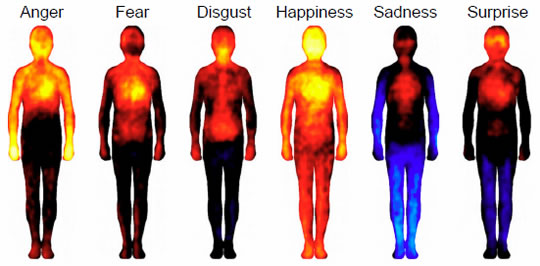


It’s fascinating that happiness is the one emotion that fills the whole body with activity, including the legs, perhaps indicating that happy people feel ready to spring into action, or maybe do a jig.
2. Happiness changes our genetic code
The right kind of happiness doesn’t just feel great, it also benefits the body, right down to its instructional code.

A recent study examined the pattern of gene expression within the cells responsible for fighting off infectious diseases and defending the body against foreign materials.

Amongst people experiencing higher levels of ‘doing good’ happiness, there was a stronger expression of antibody and antiviral genes.

While doing good and feeling good both make us feel happy, it’s doing good that benefits us at the genetic level.
3. People are happier when they do the right thing

What has happened to people’s happiness all around the world as they’ve faced the economic crisis?

How have they coped with job losses, less money coming in, the sense of despair and lack of control over a nightmare that seems to have no end?

One answer is: some have pulled together.

Data from 255 metropolitan areas across the US found that communities that pull together — essentially doing nice little things for each other like volunteering and helping a neighbour out — are happier.

Social capital has a protective effect: people are happier when they do the right thing.
4. Act like an extrovert — even if you are an introvert

Acting like an extrovert — even if you are an introvert — makes people all around the world feel happier, recent research suggests.

The findings come from surveys of hundreds of people in the US, Venezuela, the Philippines, China and Japan.

Across the board, people reported that they felt more positive emotions in daily situations where they either acted or felt more extroverted.

Participants in the study were told to act in an outgoing way for 10 minutes and then report how it made them feel.

Even amongst introverts — people who typically prefer solitary activities — acting in an extroverted way gave them a boost of happiness.
5. Happiness is contagious online

Emotions expressed online — both positive and negative — are contagious, a new study concludes.

One of the largest ever studies of Facebook examined the emotional content of one billion posts over two years.


Software was used to analyse the emotional content of each post.

It turned out that positive emotions spread more strongly than the negative, with positive messages being more strongly contagious then negative.
6. Ageing changes what makes you happy

With increasing age, people get more pleasure out of everyday experiences.

A recent study asked over 200 people between the ages of 19 and 79 about happy experiences they’d had that were both ordinary and extraordinary.

Across all the age-groups in the study, people found pleasure in all sorts of experiences; both ordinary and extraordinary.

But it was older people who managed to extract more pleasure from relatively ordinary experiences.

They got more pleasure out of spending time with their family, from the look on someone’s face or a walk in the park.

Younger people, meanwhile, defined themselves more by extraordinary experiences.
7. Why materialistic people are less happy

The reason that materialistic people are less happy is that a focus on what you want — and therefore don’t currently have — makes it more difficult to appreciate what you already have.

A recent study found that materialists also feel less gratitude which, in turn, is associated with lower levels of life satisfaction.

The study quotes the words of Greek philosopher Epicurus, who said:


“Do not spoil what you have by desiring what you have not; remember that what you now have was once among the things you only hoped for.”

By law, all credit cards should have this quote across the front in fluorescent pink.
8. The power of social connections

Relationships have stronger associations with happiness than academic achievement, according to a recent study.

Whilst strong social relationships in childhood and adolescence were associated with happier adults, the associations with academic achievement were much lower.

It seems that all the education in the world won’t necessarily teach you much about what it means to be happy, in either the emotional or philosophical sense.
9. Goals that lead to happiness

Surprisingly, people are often wrong about the type of goals that will make them happiest.

New research suggests that certain concrete goals for happiness work better than abstract goals.

The study found that acts performed in the service of a concrete goal (making someone smile) made the givers themselves feel happier than an abstract goal (making someone happy).

By thinking in concrete ways about our goals for happiness, we can minimise the gap between our expectations and what is actually possible.
10. Unexpected pleasure from mundane moments

Mundane, everyday experiences can provide unexpected joy down the line, new psychological research finds.

In one study, 135 students were asked to create a time capsule at the start of the summer which included:
a recent conversation,
the last social event they’d attended,
an extract from a paper they’d written,
and three favourite songs.

At the time, they also predicted how they’d feel about these items when they opened the capsule three months later.

Despite being relatively mundane, the students significantly under-estimated how surprised and curious they would be when they opened it.

The study is a reminder of how we tend to undervalue the happiness we can get from everyday events.

So, why not make a little time capsule today?


SOURCE:
http://www.spring.org.uk/2014/09/happiness-10-fascinating-new-psychology-studies-everyone-should-know.php(accessed 14.9.14)


Botox 'may stunt emotional growth' in young people


By Smitha MundasadHealth reporter, BBC News

Botox is the most well-known version of this drug and is made using a toxic protein


Giving young people Botox treatment may restrict their emotional growth, experts warn.

Writing in the Journal of Aesthetic Nursing, clinicians say there is a growing trend for under-25s to seek the wrinkle-smoothing injections.

But the research suggests "frozen faces" could stop young people from learning how to express emotions fully.

A leading body of UK plastic surgeons says injecting teenagers for cosmetic reasons is "morally wrong".

Botox and other versions of the toxin work by temporarily paralysing muscles in the upper face to reduce wrinkling when people frown.

Mimicking to learn

Nurse practitioner Helen Collier, who carried out the research, says reality TV shows and celebrity culture are driving young people to idealise the "inexpressive frozen face."

But she points to a well-known psychological theory, the facial feedback hypothesis, that suggests adolescents learn how best to relate to people by mimicking their facial expressions.

She says: "As a human being our ability to demonstrate a wide range of emotions is very dependent on facial expressions.

"Emotions such as empathy and sympathy help us to survive and grow into confident and communicative adults."

But she warns that a "growing generation of blank-faced" young people could be harming their ability to correctly convey their feelings.

"If you wipe those expressions out, this might stunt their emotional and social development," she says.

The research calls for practitioners to use assessment tools to decide whether there are clear clinical reasons for Botox treatment.

Several assessment scales exist that take into account how thick the skin is, how sun-damaged it appears, and the depth of any wrinkles, but experts warn that some Botox clinics are putting financial gain first.

Natural emotions

Ms Collier calls on therapists to spend time helping young people boost their confidence rather than reaching for injections.

She adds: "Though most of the effects of the toxin are temporary, research suggests the muscles don't fully recover from injections.

"We really need to understand the consequences of starting treatments too soon."

Dr Michael Lewis, a researcher in psychology at Cardiff University, says: "The expressions we make on our face affect the emotions we feel.

"We smile because we are happy, but smiling also makes us happy.

"Treatment with drugs like Botox prevents the patient from being able to make a particular expression and can therefore have an effect on our learning to feel emotions naturally."

Rajiv Grover, president of the British Association of Aesthetic Plastic Surgeons, says: "Injecting teenagers with Botox for cosmetic purposes is morally wrong and something that no ethical practitioner would do.

"This can only exacerbate body image issues at a vulnerable time."

Ms Collier's research will be presented at the Clinical Cosmetic and Reconstructive Expo in October.


SOURCE:

http://www.bbc.com/news/health-29174929(accessed 14.9.14)

Monday, 8 September 2014

Καλλιτέχνης με Αλτσχάιμερ ζωγράφιζε τον εαυτό του μέχρι να ξεχάσει την όψη του


Όταν ένας μεγάλος ζωγράφος πάσχει από Αλτσχάιμερ. Δείτε τα έργα του με τις αυτοπροσωπογραφίες (Pics)

Χρήστος Δεμέτης
news247 Σεπτέμβριος 05 2014 13:43


Το 1995 διαγνώστηκε με την νόσο του Αλτσχάιμερ. Ο ζωγράφος William Utermohlen αποφάσισε από εκείνη τη χρονιά και μετά, κάθε έτος να σκιτσάρει τον εαυτό του για να δει την επίδραση της νόσου πάνω του.


Απόφαση σκληρή στην υπηρεσία της προσωπικής του τέχνης. Στα αυτοπορτραίτα του φαίνεται πως ανά χρόνο οι ικανότητες του μειώνονται δραματικά και εμφανίζεται καταβεβλημένος.

Δώδεκα χρόνια μετά τη διάγνωση, και εφτά χρόνια μετά το τελευταίο του έργο, ο Utermohlen απεβίωσε το 2007 στα 74 του έτη, αφήνοντας πίσω του ένα θαυμάσιο έργο.

"Στους πίνακες αυτούς βλέπουμε τη δραματική προσπάθεια του William να εξηγήσει τον αλλαγμένο εαυτό του, τους φόβους του και τη θλίψη του", εξηγεί η χήρα του, Patricia.

"Είναι δύσκολο να πούμε αν οι αλλαγές στα πορτραίτα έγιναν επειδή έχασε τις καλλιτεχνικές του ικανότητες ή επειδή άλλαξε η ψυχολογία του. Σε κάθε περίπτωση, επιβεβαιώνουν το γεγονός ότι σταδιακά έχανε το μυαλό του", συμπληρώνει τονίζοντας πως δεν ήταν σε θέση να κάνει αναφορά σε καλλιτέχνες όπως ο Bacon που συνήθιζαν να κάνουν παρόμοια έργα.

Ο Dr. Bruce Miller, νευρολόγος στο Πανεπιστήμιο του San Francisco που μελετά τη νόσο του Αλτσχάιμερ αναφέρει σχετικά με τα έργα του καλλιτέχνη:

"Το Αλτσχάιμερ επηρεάζει τον εγκέφαλο σε τέτοιο βαθμό που είναι δύσκολο να αποδοθεί στον καμβά η πραγματική αίσθηση των σχημάτων όπως τα αντιλαμβανόμαστε εμείς. Η τέχνη φαίνεται να γίνεται πιο αφηρημένη, οι εικόνες θολώνουν και γίνονται πιο σουρεαλιστικές. Και τα χρώματα κυριαρχούν".

Το έργο του Utermohlen θεωρείται το συγκλονιστικότερο χρονικό της νόσου που έχει περάσει στην τέχνη μέσω της ζωγραφικής απεικόνισης μέχρι σήμερα.

Οι αυτοπροσωπογραφίες του αλλά και άλλα έργα του έχουν εκτεθεί σε πολλές πόλεις σε όλο τον κόσμο.

Δείτε τα έργα του παρακάτω:

1967


1996


1996


1997


1997


1998


1999


2000


Σημειώνεται ότι η διερεύνηση για διάγνωση Αλτσχάιμερ σε πιθανούς ασθενείς επιβεβαιώνεται συνήθως με διανοητικές αξιολογήσεις και γνωστικές δοκιμές, που ακολουθούνται συχνά από ακτινογραφίες κτλ του εγκεφάλου. Με την πρόοδο της ασθένειας, τα συμπτώματα περιλαμβάνουν σύγχυση, οξυθυμία, επιθετικότητα, ταλάντευση διάθεσης, διακοπή ομιλίας, απώλεια της μακροπρόθεσμης μνήμης, και τη γενική κοινωνική απόσυρση του πάσχοντος καθώς οι αισθήσεις του μειώνονται.

Βαθμιαία, οι σωματικές λειτουργίες μειώνονται, οδηγώντας τελικά στο θάνατο .

Η αιτία και η πρόοδος η της ασθένειας δεν είναι κατανοητή καλά ακόμη. Η έρευνα δείχνει ότι η ασθένεια συνδέεται με πλάκες στον εγκέφαλο. Από το 2008, περισσότερες από 500 κλινικές δοκιμές ερευνούν πιθανές θεραπείες για την ασθένεια, αλλά είναι άγνωστο εάν οποιαδήποτε από αυτές θα αποδειχθεί επιτυχής. Πολλά μέτρα έχουν προταθεί για την πρόληψη του Αλτσχάιμερ, αλλά η αξία τους δεν είναι ακόμη αποδεδειγμένη στην επιβράδυνση ή τη μείωση της δριμύτητας της ασθένειας.


ΠΗΓΗ:
http://news247.gr/eidiseis/afieromata/kallitexnhs_me_altsxaimer_zwgrafize_ton_eayto_toy_mexri_na_ksexasei_thn_opsh_toy.3009510.html(accessed 8.9.14)


Friday, 5 September 2014

Τι κοινό έχει η ηλιοθεραπεία με το τσιγάρο;


Σχετικά με το κατά πόσον η έκθεση στον ήλιο προκαλεί εθισμό αλλά και τι πρέπει να προσέχουμε μιλήσαμε με τον Στυλιανό Αγγελίδη, δερματολόγο - αφροδισιολόγο.

Για ποιους λόγους η ηλιοθεραπεία μπορεί να είναι εθιστική;

Η έκθεση στην υπεριώδη ηλιακή ακτινοβολία μπορεί να «πυροδοτήσει» στον οργανισμό αυξημένη παραγωγή απιοειδών και συγκεκριμένα β-ενδορφινών, ορμονών που σχετίζονται με το αίσθημα της ευχαρίστησης. Οι ενδορφίνες λειτουργούν με τον ίδιο βιολογικό μηχανισμό που δρουν εθιστικές ουσίες, όπως η ηρωίνη και η νικοτίνη. Ωστόσο, χρειάζονται περισσότερες μελέτες για να σιγουρευτούμε πλήρως ότι η ηλιακή ακτινοβολία μπορεί να γίνει εθιστική.

Μήπως ο εθισμός στην ηλιοθεραπεία ευθύνεται για την αύξηση περιστατικών καρκίνου του δέρματος;

Ενδεχομένως να παίζει κάποιο ρόλο. Θα μπορούσε εν μέρει και να εξηγήσει γιατί, παρά τις διαρκείς προειδοποιήσεις ότι, εκτός από καρκίνο, η χρόνια έκθεση στην υπεριώδη ακτινοβολία επιφέρει πρόωρη γήρανση του δέρματος, ρυτίδες και κηλίδες, πολλοί επιμένουν να αποκτήσουν σοκολατί χρώμα. Βέβαια, πολύ σημαντικός παράγοντας είναι ότι το μαύρισμα «ταιριάζει» με τα πρότυπα ομορφιάς, οπότε οι περισσότεροι το επιδιώκουν - χωρίς να λαμβάνουν τις απαραίτητες προφυλάξεις.

Τι πρέπει να έχουν υπόψη τους οι «εθισμένοι» στην ηλιοθεραπεία;

Το αντηλιακό με υψηλό δείκτη προστασίας δεν εμποδίζει το μαύρισμα, αλλά προστατεύει από την καταστρεπτική επίδραση της υπεριώδους ακτινοβολίας. Για ασφαλές μαύρισμα συνδυάζουμε αντηλιακή κρέμα με καπέλο και εναλλαγές στη σκιά -όπου και εκεί μαυρίζουμε- ιδιαίτερα τις ώρες που ο ήλιος είναι πιο δυνατός. Οι έγκυοι να αποφεύγουν την ηλιοθεραπεία, διότι λόγω των ορμονικών μεταβολών μπορεί να εμφανίσουν κηλίδες, που δύσκολα αντιμετωπίζονται. Τέλος, να μην επαναπαυόμαστε ότι τελείωσε το καλοκαίρι. Ζούμε σε μια χώρα με παρατεταμένη ηλιοφάνεια. Δεν πρέπει λοιπόν να ξεχνάμε το αντηλιακό μας, ακόμη και όταν κυκλοφορούμε στην πόλη.


ΠΗΓΗ:

http://www.kathimerini.gr/781907/article/epikairothta/episthmh/ti-koino-exei-h-hlio8erapeia-me-to-tsigaro(accessed 5.9.14)


Your angry face makes you look stronger


No matter where you travel on earth, you'll likely have no problem recognising when someone is angry with you. From the plains of Russia to the beaches of Brazil, anger shows itself in a tell-tale facial display involving lowered brow, snarled nose, raised chin and thinned lips.

A popular view has it that, besides reliably conveying anger, this particular constellation of facial movements is arbitrary and serves no other function. A team of evolutionary psychologists led by Aaron Sell disagrees. They think the anger face also makes the angry person look stronger. This fits their "recalibration theory of anger" that sees the emotion as an aggressive threat. An angry animal or person is communicating the costs that they will inflict on others if they do not get what they want. By making an angry person look stronger, so the theory goes, the facial expression gives weight to the threat of aggression, likely influencing the target's judgment about the seriousness of the threat.

To test this, Sell and his colleagues created pairs of faces using a computer programme. They began with a 20-year-old male face, morphed from averages of many faces, and then calibrated it so that for each of the seven distinguishing features of anger (lowered brow, raised lips, raised mouth, widened nose, enlarged chin, lips thinned, lips pushed forward), they created a pair of contrasting faces. One face in each pair displayed one angry feature, the other face showed the opposite feature. For example, one face showed lowered brows, the other face in the pair showed raised brows. In this way, the seven distinguishing features of anger were isolated.

Thirty-five student participants then looked at the facial pairs and indicated in each case which face they thought looked stronger. The key finding? Each anger-related facial feature when displayed on its own attracted higher ratings of perceived strength. This implies each element of the anger expression contributes to making a person appear stronger.

Further experiments ruled out an alternative explanation - perhaps angry faces actually serve to make a person look older, and this leads to ratings of greater strength because observers assume a slightly older man is stronger than a 20-year-old. One way the researchers tested this was to show participants pairs of morphed faces of a 60-year-old man, in which case looking older presumably wouldn't be associated with greater strength. Three of the angry facial features actually led him to being rated as younger, with only two prompting ratings of being older. Moreover, participants rated the man as stronger when he displayed six of the seven angry facial features.

"The current study is the first systematic test of the individual components of the anger expression," the researchers said. "And in so doing it confirms that these features are improbably well-designed to solve the adaptive problem of bargaining with threats of force." The results are also consistent with a range of other research, including the finding that several features of an angry expression tend to be more prominent in men than women (this fits with the idea that aggression is a more important bargaining tool for men); that stronger andbigger men get angry more easily; and that men's fighting ability can be discerned from the shape of their face. Looking at the study's limitations, it's a shame the researchers didn't investigate women's expressions of anger, and that they relied on student participants.

_________________________________ 

SOURCE:
http://digest.bps.org.uk/search/label/Faces(accessed 5.9.14)


Sell, A., Cosmides, L., & Tooby, J. (2014). The human anger face evolved to enhance cues of strength Evolution and Human Behavior, 35 (5), 425-429 DOI:10.1016/j.evolhumbehav.2014.05.008