Showing posts with label emotions. Show all posts

Saturday, 14 March 2020


Psychologists Have Identified The Creatures We Find Most Scary And Revolting


By Christian Jarrett

You may be best advised not to read this article late at night or before you eat. Psychologists at the National Institute of Mental Health and Charles University in the Czech Republic have surveyed a large sample of non-clinical volunteers to gauge their reaction to 24 creatures that are commonly the source of specific animal phobias.

The results, published in the British Journal of Psychology, not only contribute to our understanding of animal phobias, but could prove incredibly useful to horror writers. Among the key findings is that spiders were unique in being both intensely fear- and disgust-inducing in equal measure. The researchers said this may be due to their mix of disgusting properties – including their “quirky ‘too-many-legs’ body plan” – combined with the fact they are “…omnipresent in our homes, often lurking in the hidden dark places and capable of fast unpredictable movement.” In other words, the intense fear arises in part from the prospect of coming into physical contact with a creature perceived by many to be revolting.


Jakub Polák and his team recruited nearly 2000 people online and asked them to rate how frightening and disgusting they found 25 creatures, including – alongside the spider – a snail, dog, bull, maggot, cockroach, two kinds of snake (a viper and a grass snake), and ant. See the image above for the full list.

Depicted in photographs on-screen, this particular selection of species – aside from the red panda, which acted as a non-fear-inducing control – was chosen because they are frequently the source of animal phobias.

Categorising the creatures based on the levels of fear and disgust that they elicited, the researchers identified five groupings: fear-relevant, non-slimy small animals, such as cockroaches, ants and wasps; mouse-like animals, such as mouse, rat and bat, which scored low on elicited fear and disgust; snakes and lizards; parasites, such as lice and tapeworm, which triggered high disgust; and finally, farm or pet mammals, such as cat, dog and horse, which generally elicited low fear and disgust.

One explanation for common animal phobias is that they reflect an exaggerated, uncontrolled form of innate fears for certain creatures that we all share, particularly for creatures that imperilled our ancestors, such as spiders and snakes. Consistent with this evolutionary account, spiders and venomous snakes elicited the strongest fear reactions among the participants, while parasites elicited the strongest disgust reactions (consistent with the idea that disgust motivates a form of protective “behavioural avoidance”). However, less consistent with the evolutionary perspective on animal phobias is that 14 of the creatures elicited virtually no fear, including rats, mice and lizards, even though these animals are commonly the source of phobias.

The researchers noted that, similar to spiders, the parasitic creatures like tape-worm and roundworm were both highly disgust-inducing (even more than the spider) while at the same time being rated as highly fear-inducing (even more than, say, the wasp or grass-snake). Perhaps, the researchers reasoned, this combined fear and disgust reaction to intestinal parasites has evolved because they infect us with microscopic larvae meaning we rarely see them with our eyes, yet we are aware they are omnipresent. Once again, as with spiders, we cannot rely only on disgust (and behavioural avoidance) to protect us, and so we also fear unwanted physical contact. The maggot, by contrast, may elicit less fear because it can be seen and avoided more easily.

Some other details to emerge from the study are that women generally gave higher fear and disgust ratings than men, and especially for non-slimy invertebrates and repulsive human parasites – this may be in line with evolutionary theory because “women as a sex with higher reproductive cost need to be extra careful of pathogens threatening not only their health but also the [health] of their children.”

Also, the researchers asked their participants about any past traumatic experiences with animals, such as being seriously bitten by a dog or scratched by a cat. Surprisingly perhaps, they found that fear ratings were lower among people with such a bad experience in their past. However, this correlation makes sense if you consider that people with a greater fear of animals may be be more cautious and less likely to get hurt. “Our results … suggest that fear and disgust could protect subjects against harm even in our modern environment,” the researchers said. In excess, fear can be debilitating and unwelcome, but this last result is perhaps a reminder that it is also there to serve a purpose – including to protect us from the creatures that may bite us while we sleep or infect us from within.

SOURCE:

Tuesday, 15 May 2018

A radical new theory proposes that facial expressions are not emotional displays, but “tools for social influence”


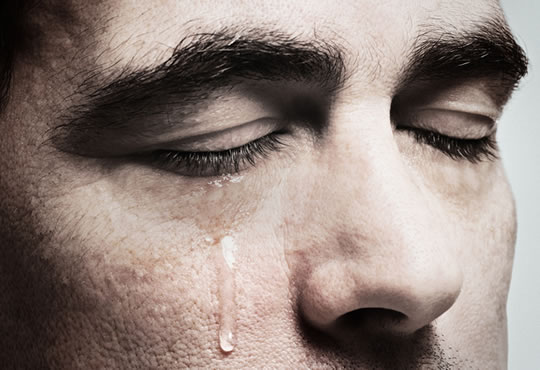
Expressing sadness or seeking protection?


You’re at a ten-pin bowling alley with some friends, you bowl your first ball – and it’s a strike. Do you instantly grin with delight? Not according to a study of bowlers, who smiled not at a moment of triumph but rather when they pivoted in their lanes, to look at their fellow bowlers.

That study provided the earliest evidence for a controversial hypothesis, the Behavioural Ecology View (BECV) of facial displays, outlined in detail in a new opinion piece in Trends in Cognitive Sciences. Carlos Crivelli at De Montfort University, Leicester, UK and Alan Fridlund at the University of California, Santa Barbara, put forward the case that facial displays are not universal, “pre-wired” expressions of emotion – a concept supported by 80 per cent of emotion researchers in a recent poll – but are flexible tools for influencing the behaviour of other people.


The same range of specific facial displays have been associated with anger, disgust, fear, joy, sadness and surprise in many different cultures. As Paul Ekman at the University of California, San Francisco – the best-known proponent of the “basic emotions theory” or BET – writes in a blog post: “The capacity for humans in radically different cultures to label facial expressions with terms from a list of emotion terms has replicated nearly 200 hundred times.”

However, Crivelli and Fridlund write in their paper: “Despite its popularity, the assumptions and prescriptions of BET are meeting unprecedented challenges.” They argue that there are “serious methodological problems” in the initial studies on indigenous societies, and point to “countervailing” data from more recent studies, also conducted on small-scale indigenous societies, one Melanesian (the Trobrianders of Papua New Guinea) and two African (the Himba of Namibia and the Mwani of Mozambique).

Data gathered in the past five years from these societies are “inconsistent with the universality thesis”, the pair write. For instance, when Trobrianders are presented with the “gasping face”, which is usually taken as expressing fear, they perceive it as a “threatening” face.

According to the BET, this is an example of an unusual local cultural influence. But Crivelli and Fridlund aren’t convinced. They point to data showing that the gasping face is used as a threat display also in several African, Amazonian and Pacific small-scale indigenous societies.

“Mismatches on the original face studies were always attributed to thin, cultural rule-governed overlays,” they write. But, they argue “Those deviations, just like the new evidence found in African and Melanesian populations may indicate fundamental [my italics] human diversity.”

It’s true that people from many different countries associate smiles with happiness (the Trobrianders are, in fact, a notable exception), but this has more to do with convergent genetic and cultural evolution, Crivelli and Fridlund argue, than to do with smiles being some kind of involuntary, hard-wired read-out of positive emotion.

How does what we know about babies’ facial displays and emotions feed into this debate? Babies often smile when they see a family member or pet. They wrinkle their nose and protrude their tongue when given food they don’t like. Their eyes open wide at loud noises. And their mouths turn down when they cry. But according to BECV, this doesn’t necessarily mean that these are expressions of the emotions of happiness, disgust, fear or sadness.

For the BECV, which holds that these displays have not evolved to provide a fixed read-out of internal states but rather to influence the behaviour of other people, common facial displays are seen as having the following communicative functions – in adults, as well (the more traditional BET interpretation of the corresponding felt emotion is in brackets):
Smile – (Happiness) – Influence interactant to play or affiliate
Pouting – (Sadness) – Recruit interactant’s succour or protection
Scowling – (Anger) – Influence interactant to submit
Gasping – (Fear) – Deflect interactant’s attack via one’s own submission or incipient retreat
Nose scrunching – (Disgust) – Reject current interaction trajectory
Neutral – (“Suppressed emotion” or no emotion) – Lead the interactant nowhere in interaction trajectory

It may well be that when we’re in a positive mood state, we’re more open to interacting and affiliating with others – and more likely to smile. But we all sometimes – or even often – smile when we’re not feeling happy. According to the BET, these are insincere smiles. But if the purpose of a smile is to encourage other people to interact and affiliate (when meeting new people for the first time, say, or walking into an important meeting), they aren’t insincere at all.

In their paper, Fridlund and Crivelli also point to a re-conceiving of animal facial (and postural) displays as an “ecology of signalling”, based on the interests of the displayers and the receivers, who all have their own histories of interaction and who must negotiate for advantages within their group and their environment.

There is some research (such as the bowling study) that finds we are more likely to use facial displays – or that the displays are more pronounced – when we’re with other people. But one criticism of the BECV approach is that we do smile, grimace and frown when we are alone. Crivelli and Fridlund argue that while we may be alone physically we are never “psychologically alone”. “Our cast of interactants may include fantasised humans, real non-humans, humans who are not proximal, or any nearby objects”, they write.

But this won’t be the BECV argument that doubters will find hardest to accept. BECV will always be a tough sell, Crivelli and Fridlund note, in part because it’s more demanding to investigate experimentally than BET, and also, they argue, because “BECV requires shaking off a romanticised view of human nature…that makes the face a battleground between an interior ‘authentic self’ and an external, impression-managed ‘social self’…Within BECV both ‘selves’ are illusory. We are unified organisms, and like our words, voices and gestures, our facial displays are part of our plans of action in social commerce.”

But it isn’t only the BET itself that BECV challenges. What about the body of work on the role of facial displays in triggering emotion contagion? Or in empathy, for that matter. The BECV is fascinating. But to call it “controversial” is probably an understatement.

SOURCE:

Thursday, 22 March 2018

How To Read Someone’s Emotions With 90% Accuracy


How neuroscientists are learning to predict emotions with increasing accuracy.


Brain scans can read human emotions with 90% accuracy, a new study finds.

Researchers have been able to predict the intensity of negative emotions to evocative images.


They found that negative emotions have a ‘neural signature’ which a computer could learn.

Dr Luke Chang, who led the study, said:


“This means that brain imaging has the potential to accurately uncover how someone is feeling without knowing anything about them other than their brain activity.

This has enormous implications for improving our understanding of how emotions are generated and regulated, which have been notoriously difficult to define and measure.

In addition, these new types of neural measures may prove to be important in identifying when people are having abnormal emotional responses — for example, too much or too little — which might indicate broader issues with health and mental functioning.”


For the research, 182 people looked at photos designed to elicit a negative response.

These included pictures of physical injuries, hate groups and acts of aggression.


Using brain scans, a computer was able to learn the ‘neural signature’ of negative emotion.


Dr Chang said:


“We were particularly surprised by how well our pattern performed in predicting the magnitude and type of aversive experience.

As skepticism for neuroimaging grows based on over-sold and -interpreted findings and failures to replicate based on small sizes, many neuroscientists might be surprised by how well our signature performed.

Another surprising finding is that our emotion brain signature using lots of people performed better at predicting how a person was feeling than their own brain data.

There is an intuition that feelings are very idiosyncratic and vary across people.

However, because we trained the pattern using so many participants — for example, four to 10 times the standard fMRI experiment — we were able to uncover responses that generalized beyond the training sample to new participants remarkably well.”


The study was published in the journal PLOS Biology (Chang et al., 2015).


SOURCE:

Monday, 21 September 2015

Why music has a hotline to our emotions


In the first of our new series answering your questions, we explore why music can be so emotionally charged.

By David Robson18 September 2015


Q: Why does music have a hotline to our emotions? What is the evolutionary advantage of this?
Philip Le Riche, via email


David Robson, BBC Future feature writer, answers:

Who hasn’t ever felt a song pulling at their heartstrings? Whether it is the feeling of euphoria in a club, or a lonely cry to a heartbreaking ballad, music can cut us to the core, expressing emotions more eloquently than words ever can.

But as our reader, Philip, points out, the reasons for this are far from obvious. “It's clear to me the appeal of rhythm, and I get all the stuff about anticipation, surprise and fulfilment of expectations. These all help to explain why music is interesting – but why it moves us at such a deep level remains a mystery to me,” he explained in an email to the BBC Future team.


Is music just “auditory cheesecake”, or does it have a deeper meaning?

Posing this question puts Philip in good company. Even the father of evolutionary theory, Charles Darwin, was stumped by our musical faculty, calling it one of “the most mysterious with which [humankind] is endowed”. Some thinkers, such as the cognitive scientist Steven Pinker, have even questioned whether it has any particular value at all. In his view, we like music because it tickles some of the more important faculties, like pattern recognition. By itself, he says, it has no value – it is mere “auditory cheesecake”.

Yet if that were true, human beings across the world would be spending an awful lot of time on an activity that has absolutely no inherent value. If you think you’re obsessed with music, consider the BaBinga people from Central Africa, who haveelaborate dances for almost every activity, from gathering honey to hunting for elephants. The anthropologist Gilbert Rouget, who lived with them in 1946, found that sleeping through the ceremonies was considered one of the greatest crimes. “It cannot be more clearly stated that singing and eating are equally necessary to stay alive,” he wrote. For this reason, many people (including myself) struggle to believe that music was simply a small, incidental soundtrack to the human story of evolution.


Long descending tones seem to have a calming effect (Credit: Alamy)


Fortunately, there are alternative theories. One popular idea was that music arose from “sexual selection”: like the peacock’s tale, it’s a sexy display that makes you stand out from your rivals. The evidence is thin, however: a study of 10,000 twins failed to show that musicians were particularly lucky in bed (though Mick Jagger and Harry Styles may disagree).

Others have proposed that music emerged as an early form of communication. Certain motifs in music may, in fact, carry some of the signatures of the emotional calls made by our ancestors; upwardly rising, staccato sounds tend to put us on edge, while long descending tones seems to have a calming effect, to give just two examples. Such patterns of sound seem to carry a universal meaning shared by adults of different cultures, young children, and even other animals. So perhaps music built on associations from ancient animal calls, helping us to express our feelings before we had words. As a form of “protolanguage”, it could have even paved the way for speech.


Ask us anything

We would like to hear what you'd enjoy reading


If you, like Philip, have something that you would like us to put our minds to, get in touch via Facebook or Twitter, or email the social media team your question at sari.zeidler@bbc.com or william.park@bbc.com.


When you move in synchrony with another person, your brain starts to blur its sense of self

What’s more, music may have helped gel human societies as we began to live in bigger and bigger groups. Dancing and singing together, seems to make groups of people morealtruistic, and to have a stronger collective identity. According to cutting-edge neuroscience, when you move in synchrony with another person, your brain starts to blur its sense of self. It is almost as if you are looking in the mirror: you think they look more like you, and that they share your opinions. And as you’ll have found with your own toe tapping, music is the best way to get people moving together.

Although it may heighten the impact, active participation in music is not absolutely necessary for these benefits: as we recently explained at BBC Future, simply listening to a song that produces pleasant musical frisson (also known as “skin orgasms”) can also increase altruism. That’s comforting for people like me, whose musical life revolves around their sofa and iPod.


It makes sense that music would tug at the heartstrings, helping us to create an emotional connection (Credit: Alamy)


With increased solidarity and less in-fighting, a group may then be better equipped to survive and thrive. This is perhaps most extensively illustrated by the BaBinga’s “musicking”. As Rouget, the anthropologist, wrote: “The engagement seems to be paired with a certain self-effacement, as each individual becomes one with the body of singers”. But music’s role as a social glue can also be seen in work songs sung by slaves, sea shanties among sailors, and soldiers’ chants. Music, it seems, really does bond us closely.

Lying at the heart of our relationships in this way, it makes sense that music would tug at the heartstrings, helping us to create an emotional connection. Each culture may then build on this rudimentary instinct, creating their own musical lexicon of certain chords or motifs that come to be associated with particular feelings.

Whatever its early origins, today we can’t help but associate certain music with the most important events in our lives. It is the soundtrack of conception, pregnancy, births and funerals, and everything in between. No wonder we all imbibe such a heady cocktail of feelings and memories whenever we hear our favourite tunes.

SOURCE:
http://www.bbc.com/future/story/20150918-why-music-has-a-hotline-to-our-emotions(accessed 21.9.15)