Sunday, 29 May 2022

Small Penises


“How do I go about navigating sex and relationships when I’ve got a small penis and people have sometimes been unkind to me about that?”

We’ve covered this in detail in a podcast here, and here’s a summary of what we had to say.

The most important thing to emphasise here is that there is a diverse range of genital sizes, and that a lot of ways of having sex don’t require genitals at all, or specific kinds of genitals. However, we can’t escape the fact that we live in a culture which does have narrow ideals about what bodies and genitals should look like, so let’s start with that.

Cultural ideals
When it comes to penises there’s a cultural ideal that they should be a certain size. We rarely see penises at all in our everyday lives, so a lot of people end up making comparisons with the ones that they see in porn. These are actually very different from most people’s penises as they tend to be chosen for being very large and capable of getting erect and ejacuating easily. There’s also a strong cultural message that big penises are more masculine, and a lot of ridicule and stigma about having a small penis, which can leave people with a lot of shame around this.

In fact if we think about all of the ways in which diverse bodies are stigmatised (e.g. fat bodies, disabled bodies, trans and queer bodies, bodies with scars or skin conditions, older bodies, etc. etc.) the majority of people are nowhere near the ideal, so perhaps it is the ideal we should be challenging rather than criticising ourselves and other people. However that is easier said than done in a culture which rates people so much on appearance.

Diverse genitals, bodies, and types of sex
In our book we talk a lot about the different kinds of sex that people can have, many of which don’t require genitals at all. Again culturally people tend to immediately think of genital penetration, but lots of people have kinds of sex which don’t involve penetration or genitals at all, for example, various forms of stroking, kissing, kink/BDSM, erotic massage, mutual masturbation, dry-humping, tantric breathwork, oral sex, etc. A lot of people find penetration painful, uncomfortable, or simply not very enjoyable, and may welcome a partner who doesn’t focus on that. Some would rather not have their genitals involved at all and prefer to keep their pants on entirely.

If you have a small penis but are into penetration there are various options. Some people find penetration with a small penis pleasurable. Others find that it can be a bit more difficult to penetrate a vagina or anus with a small penis and, like people with vulvas, find it useful to use a strap-on dildo, some of which have space for the penis to fit and be stimulated. Many people find that penetration with fingers works as well – or better – than penis penetration because fingers can be more dextrous and sensitive.

Again it is important to emphasise that genitals come in all shapes and sizes. The clitoris and the penis are basically the same organ with sizes on a spectrum, and decisions get made about whether the organ ‘counts’ as a clitoris or a penis when we’re young, based on its size. But size and shape can also vary a lot over time. In an ideal world we wouldn’t make any assumptions about what kinds of genitals a partner is going to have, but would focus on finding out what works for them because different people like different kinds of touch in different places.

Your relationship with your body
Perhaps the key thing in this area is to focus on your own relationship with your body to hopefully reach a point where you can get comfortable enough with it. It’s important to remember though how hard that can be in a culture that’s so obsessed with bodies, and with ‘being normal’, so give yourself a big break if you find it difficult. Some folk find it helpful to elicit the help of a counsellor or other professional if they feel really negatively about their body.

One of the things that works best in helping us to feel better about our bodies is to spend time focusing on how our bodies feel (from the inside) rather than how they look (from the outside). Think about the times when you feel most ‘in’ your body. It might be when you’re dancing, or sitting in nature, or laughing, or doing a sport, or soaking in water. Spending more time ‘embodied’ like this can be really helpful. One way of doing this is the body scan meditation (see resources), another is spending time on pleasurable self-touch, which we talk about a lot in our book.

Finding other people
In terms of finding other people for sex and relationships, online dating can work well, particularly on sites like OKCupid.com which are less focused on physical appearance but give you more space to talk about what you’re into. You may also find that other people who are diverse in terms of body size and shape, disability, gender, sexuality, health conditions, etc. are more accepting or enthusiastic about body diversity than folks who haven’t had to think about these things themselves.

It can also be useful to meet people outside of a dating context, for support and friendship, and because it’s easier to get to know people beforehand. There are meetup groups for all kinds of diversities where you might meet more like-minded people, and it can be great to be in spaces where diverse bodies are celebrated such as naturist venues, fat activist groups, or body diverse dance or yoga classes.

Resources
A couple of good books about your relationship with your body are:
Jenkins, E. (1999). Tongue first: Adventures in physical culture. New York: Virago.
Cooke, K. (1996). Real gorgeous: The truth about body and beauty. London: Bloomsbury

Our yoga teacher and friend Catherine has a really useful body meditation audio you can access via Helix Yoga

Justin wrote some advice about how to do online dating at Bish which includes a link to this excellent article ‘online dating tips for the fat babe’ by Arched Eyebrow

SOURCE:

Saturday, 28 May 2022

Υπερσεξουαλικότητα


Ως υπερσεξουαλικότητα ορίζεται η επαναλαμβανόμενη, έντονη ασχολία του ατόμου με σεξουαλικές φαντασιώσεις, ορμές και συμπεριφορές που έχουν αρνητικές συνέπειες στην ζωή και καθημερινότητά του. Οι τομείς που επηρεάζονται ιδιαίτερα είναι η διαπροσωπική , κοινωνική και επαγγελματική ζωή του. Στο παρελθόν αυτό το μοτίβο συμπεριφοράς έχει αποτυπωθεί ως νυμφομανία για τις γυναίκες, δονζουανισμός και σατυρομανία για τους άνδρες. Άλλοι όροι που χρησιμοποιούνται για να περιγράψουν αυτό το μοτίβο συμπεριφοράς είναι ο σεξουαλικός εθισμός, η ερωτομανία και η καταναγκαστική σεξουαλική συμπεριφορά. Αν και η υπερσεξουαλικότητα δεν είναι ακόμη διαγνωσμένη ψυχική διαταραχή, έχουν γίνει προσπάθειες εισαγωγής της στο 5ο Διαγνωστικό και Στατιστικό Εγχειρίδιο Ψυχικών Διαταραχών χωρίς επιτυχία. Επιπλέον, στο προσχέδιο της 11 έκδοσης του εγχειριδίου της Διεθνούς Ταξινόμησης των Ασθενειών, η υπερσεξουαλικότητα έχει συμπεριληφθεί ως καταναγκαστική σεξουαλική συμπεριφορά στις διαταραχές ελέγχου των παρορμήσεων μαζί με την πυρομανία, κλεπτομανία κ.α..

Η υπερσεξουαλικότητα μπορεί να εμφανίζεται μέσω:καταναγκαστικού αυνανισμού
υπέρμετρης χρήσης πορνογραφικού υλικού
σεξουαλικής συνεύρεσης με συναινούντες ενήλικες
διαδικτυακού σεξ
τηλεφωνικού σεξ
επισκέψεων σε οίκους ανοχής, strip clubs, κ.α..

Οι επιπτώσεις της υπερσεξουαλικότητας είναι πολλές φορές δυσβάσταχτες. Η διάλυση της οικογένειας, η κοινωνική απομόνωση, η απόλυση από την εργασία, η οικονομική καταστροφή και τα νομικά ζητήματα που πιθανώς προκύψουν, εμπίπτουν στο εύρος των επιπτώσεων αυτών.


Επιδημιολογία


Λόγω της έλλειψης καθιερωμένων κριτηρίων διάγνωσης η επιδημιολογική μελέτη της υπερσεξουαλικότητας είναι δύσκολη. Κάποιες έρευνες όμως, δείχνουν ότι εμφανίζεται στο 3-6% του γενικού πληθυσμού.


Αίτια


Oι αιτιολογικοί παράγοντες της υπερσεξουαλικότητας δεν είναι ακόμα γνωστοί. Κάποιες έρευνες έχουν υποδείξει το τραύμα κατά την παιδική και εφηβική ηλικία, τις δυσλειτουργικές σχέσεις με τους γονείς, κάποιες παθολογίες του εγκεφάλου και την διατάραξη του νευροβιολογικού συστήματος ως κύριους αιτιολογικούς παράγοντες της εμφάνισης της καταναγκαστικής σεξουαλικής συμπεριφοράς.


Θεραπεία


Ως ψυχολογικές μέθοδοι θεραπείας για την υπερσεξουαλική συμπεριφορά έχουν προταθεί:οι ψυχοδυναμικές προσεγγίσεις
οι γνωστικές συμπεριφοριστικές προσεγγίσεις
οι ομαδικές θεραπείες
η οικογενειακή θεραπεία
η θεραπεία ζεύγους
η θεραπεία των 12 βημάτων απεξάρτησης

Η φαρμακευτική θεραπεία, εξατομικεύεται και αξιολογείται βάσει της κλινικής εικόνας των συμπτωμάτων, της ηλικίας του ασθενούς, του χρονικού ιστορικού, της ενσυναίσθησης αλλά και της συνεργασιμότητας του ιδίου με τον θεραπευτή του.

ΠΗΓΗ:

Friday, 27 May 2022

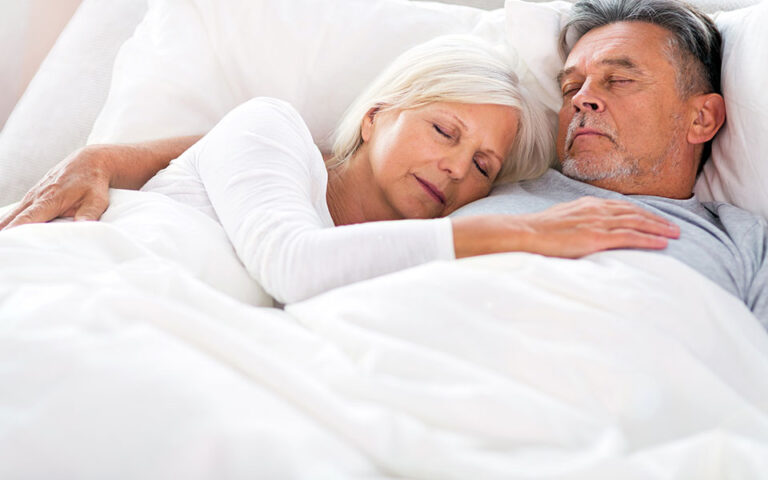
Έρευνα: Ποια είναι η ιδανική ποσότητα ύπνου για μεσήλικες και ηλικιωμένος


Ένας μεγάλος αριθμός ανθρώπων πιστεύει ότι οι ενήλικες θα πρέπει να κοιμούνται οκτώ ώρες το βράδυ κι έτσι αυτό σημαίνει ένας πλήρης ύπνος. Όμως αυτό μπορεί να μην ισχύει πλέον όταν φτάσουμε σε μια συγκεκριμένη ηλικία


Ένας μεγάλος αριθμός ανθρώπων πιστεύει ότι οι ενήλικες θα πρέπει να κοιμούνται οκτώ ώρες το βράδυ κι έτσι αυτό σημαίνει ένας πλήρης ύπνος. Όμως αυτό μπορεί να μην ισχύει πλέον όταν φτάσουμε σε μια συγκεκριμένη ηλικία.


Μια ομάδα ερευνητών από το Πανεπιστήμιο του Κέμπριτζ στο Ηνωμένο Βασίλειο και το Πανεπιστήμιο Fudan στην Κίνα ανακάλυψαν ότι οι επτά ώρες ύπνου μπορεί να είναι η ιδανική ποσότητα για μεσήλικες και ηλικιωμένους.

Σε μια μελέτη που δημοσιεύτηκε στο περιοδικό Nature Aging, οι ερευνητές λένε ότι διαπίστωσαν πως οι επτά ώρες ύπνου ήταν ό,τι καλύτερο για τη γνωστική απόδοση και την καλή ψυχική υγεία.

Επιπλέον, εξέτασαν δεδομένα από σχεδόν 500.000 συμμετέχοντες ηλικίας 38 έως 73 ετών και διαπίστωσαν ότι ο ανεπαρκής –αλλά και υπερβολικός– ύπνος συσχετίστηκε με μειωμένη γνωστική απόδοση και χειρότερη ψυχική υγεία.


Οι συμμετέχοντες στη μελέτη ανέφεραν τον τρόπο και τις συνήθειες στον ύπνο τους και απάντησαν και σε ερωτήσεις σχετικά με την ευημερία και την ψυχική τους υγεία. Ολοκλήρωσαν μια σειρά από γνωστικά τεστ που εξέταζαν την ταχύτητα με την οποία επεξεργάζονται καταστάσεις, την οπτική προσοχή, τη μνήμη και τις δεξιότητες στην επίλυση προβλημάτων. Όσοι είχαν κοιμηθεί επτά ώρες τα πήγαν καλύτερα σε όλα τα επίπεδα.

Ωστόσο, υπάρχει μια λεπτομέρεια: το 94% των συμμετεχόντων ήταν λευκοί, επομένως δεν είναι σαφές εάν τα αποτελέσματα ισχύουν για μαύρους και ανθρώπους άλλης εθνικότητας.

Ένας άλλος σημαντικός παράγοντας είναι η συνέπεια. Τα καλύτερα αποτελέσματα παρατηρήθηκαν σε άτομα που εμφάνισαν μικρές διακυμάνσεις στα μοτίβα ύπνου για μεγάλα χρονικά διαστήματα και που ο ύπνος είχε συνολική διάρκεια επτά ωρών.
Ύπνος που διακόπτεται: Κίνδυνος για άνοια

«Ο καλός ύπνος είναι σημαντικός σε όλα τα στάδια της ζωής, αλλά ιδιαίτερα όσο μεγαλώνουμε», δήλωσε η Μπάρμπαρα Σαχακιάν, καθηγήτρια στο Πανεπιστήμιο του Κέιμπριτζ και συν-συγγραφέας της μελέτης.


Οι ερευνητές λένε ότι η έλλειψη ύπνου είναι πιθανό να εμποδίσει τη διαδικασία απαλλαγής του εγκεφάλου από τις τοξίνες. Τονίζουν επίσης ότι η διαταραχή του βραδέως ή βαθέως ύπνου μπορεί να ευθύνεται για τη γνωστική «πτώση».

Όταν ο βαθύς ύπνος διακόπτεται, αυτό επηρεάζει την εδραίωση της μνήμης και μπορεί να οδηγήσει στη συσσώρευση αμυλοειδούς, μιας πρωτεΐνης που μπορεί —αν δεν λειτουργήσει όπως θα έπρεπε— να προκαλέσει «μπερδέματα» στον εγκέφαλο που είναι χαρακτηριστικά ορισμένων μορφών άνοιας.

Ο ανεπαρκής ή υπερβολικός ύπνος θα μπορούσε να αποτελέσει έναν παράγοντα κινδύνου για τη γνωστική «έκπτωση» στη γήρανση.

«Αν και δεν μπορούμε να πούμε με βεβαιότητα ότι ο ελάχιστος ή πολύς ύπνος προκαλεί γνωστικά προβλήματα, η ανάλυσή μας φαίνεται να υποστηρίζει αυτή την ιδέα», δήλωσε ο Γιανφενγκ Φενγκ, επιστήμονας του εγκεφάλου και καθηγητής στο Πανεπιστήμιο Fudan. «Αλλά οι λόγοι για τους οποίους οι ηλικιωμένοι έχουν “φτωχότερη” ποιότητα ύπνου φαίνεται να είναι περίπλοκοι, επηρεασμένοι από έναν συνδυασμό της γενετικής μας σύνθεσης και της δομής του εγκεφάλου μας».
Η διάρκεια του ύπνου επηρεάζει τη δομή του εγκεφάλου

Οι ερευνητές κοίταξαν επίσης την απεικόνιση του εγκεφάλου και τα γενετικά δεδομένα, αλλά αυτά τα δεδομένα ήταν μόνο διαθέσιμα για λιγότερο από 40.000 από τους συμμετέχοντες.

Αυτά τα δεδομένα έδειξαν ότι η ποσότητα του ύπνου θα μπορούσε να συνδεθεί με διαφορές όσον αφορά τη δομή των περιοχών του εγκεφάλου, όπως ο ιππόκαμπος, που θεωρείται το κέντρο μνήμης και μάθησης του εγκεφάλου, και ο προκεντρικός φλοιός, ο οποίος είναι υπεύθυνος για την εκτέλεση εκούσιων κινήσεων.

Δεδομένου ότι ο κίνδυνος εμφάνισης Αλτσχάιμερ και άνοιας -ασθένειες της γήρανσης που συνοδεύονται από γνωστικές «βλάβες»- έχει συνδεθεί με τη διάρκεια του ύπνου, οι ερευνητές λένε ότι χρειάζεται επιπλέον εργασία στον τομέα της επιστήμης του ύπνου.

«Η εύρεση τρόπων βελτίωσης του ύπνου για τους ηλικιωμένους θα μπορούσε να είναι ζωτικής σημασίας για να τους βοηθήσει να διατηρήσουν καλή ψυχική υγεία και ευεξία, ιδιαίτερα για ασθενείς με ψυχιατρικές διαταραχές και άνοιες», είπε η Σαχακιάν.


Με πληροφορίες από το DW

ΠΗΓΗ:

Stigmatisation of yawning could be a strategy to avoid disease, study argues


By Matthew Warren

It’s really common to start yawning after seeing someone else do it. You might even be yawning right now, just reading about it. But we also instinctively know that there’s something a bit rude about yawning: we’re less likely to show this “yawn contagion” when we’re being watched, for instance. And even when we do yawn in the presence of others, we’ll often cover our mouth.

Why does yawning carry this stigma? The obvious explanation is that yawning indicates that we are tired or bored, and we might not want to make others feel like they are the source of that boredom (even if they are!). But the authors of a new study in Personality and Individual Differences have another intriguing theory: we dislike yawning because it can be a sign of disease.

There is some evidence that yawning is related to disease, note Mitch Brown from the University of Arkansas and colleagues. Certain neurological diseases can lead to abnormal yawning, for example, and yawning may become more frequent as someone develops a fever (some researchers argue that one of the purposes of yawning is to cool the brain, though this theory is contentious). Yawns can also indicate fatigue, which is often brought on by illness. The team also points out that covering our mouth hardly hides the fact that we are yawning — in fact, it might even draw attention to it. So perhaps it is more akin to covering our mouths during a cough or sneeze: an action performed to avoid transmitting disease.

To see whether people think of yawning as a disease cue, the team asked 196 American undergraduates to complete various questionnaires. These included measures of their aversion to germs generally and fear of Covid in particular. They also indicated the extent to which they felt disgust in various scenarios, including those related to pathogens (for example, “Accidentally touching a person’s bloody cut”). Finally, participants rated how much they stigmatised yawns, as well as sneezes, coughs, and hiccoughs, by indicating how rude it was to perform that bodily function in front of others and how important it was to cover your mouth when doing it.

The team found that coughing and sneezing carried a higher degree of stigma than yawning, which in turn was stigmatised more than hiccoughing. But importantly, people’s levels of pathogen-related disgust and aversion to germs both predicted how much they stigmatised these bodily functions. Those who scored higher on these measures showed more stigmatisation of yawning, as well as coughing and sneezing (only aversion to germs was related to stigmatisation of hiccoughs).

The researchers argue that this shows we do indeed see yawning as a disease cue. The fact that people who are particularly concerned about disease and germs are more likely to stigmatise yawning — as well as clearer indicators of disease like sneezing and coughing — suggests they may see yawns as potential threats to their health. Fear of Covid didn’t further increase people’s stigmatisation of yawning, and the researchers suggest this shows that the stigma around yawning has “ancestral roots” rather than just cropping up during a pandemic.

However, there could be other explanations for the results. Perhaps people who are concerned about germs would rather avoid someone who is yawning not because it suggests they are sick, but simply because they don’t want to be breathed on. Or maybe these people have an aversion to seeing or thinking about bodily functions in general, whether or not these are actually related to disease. Further studies are needed to disentangle all of these possibilities before researchers can definitively conclude that we use yawns as a disease cue.

The study also doesn’t rule out other reasons that yawning carries a stigma. Yawning can of course indicate boredom and may be interpreted as disrespectful, so covering our mouths may simply be a non-verbal way to communicate that we’re not trying to be rude — even if it doesn’t really hide the yawn. There’s clearly a lot more work to be done to understand the purpose and meaning of this seemingly simple reflex.


SOURCE:

Monday, 23 May 2022

Hallucinations are surprisingly common and varied experiences


By Emma Young

Many mentally well people experience hallucinations. An estimated 6 – 15% of us hear, see, feel or even smell things that aren’t real. But there has been little research into what those hallucinations are like — and how they might differ from those experienced by people with psychosis. Now Mascha M.J. Linszen at Utrecht University and her colleagues report the results of a large study of more than 10,000 people aged 14 to 88. The work, published in Schizophrenia, throws up a few surprises among a host of interesting findings.

The team’s online survey was open to anyone aged over 14 who could understand enough Dutch to complete the questionnaires. In total, 10,448 participants (68.9% female) took part.

The team’s first finding was that hallucinations were common. About 80% reported having hallucinated at least once in their lifetime. About half had hallucinated within the past month and 32% within the past week. Auditory hallucinations were most common, with about 30% of the respondents saying they had experienced them in the past month, followed by visual (21.5%), tactile (about 20%) and olfactory hallucinations (about 17%). Of course, the participants were self-selecting, and not gender-balanced, and people who had hallucinated may well have been more likely to take part. It’s also worth noting that the team did not gather medical histories, so some of the participants may have had a diagnosis of psychosis. For all these reasons, it’s not possible to extrapolate these rates to the general population. But the team’s further exploration of answers given by everyone who had experienced a hallucination within the past month did lead to some unexpected results.

There were “remarkably high” percentages of people reporting characteristics of hallucinations previously associated only with schizophrenia, substance abuse and some neurological disorders. For example, almost half of this group had experienced hallucinations in more than one sense. Also, a large proportion of those who reported auditory hallucinations heard music, something previously regarded as rare.

Perhaps the most striking finding, though, was the range of content described. People reported everything from seeing shadows to hearing children crying, and from smelling food to being slapped. There was also a big spectrum of severity — from fleeting, benign experiences to minutes-long, highly distressing hallucinations. The team argues that this finding fits with the idea that psychotic symptoms fall along a continuum, ranging from isolated, minor experiences affecting people who are mentally well to those suffered by people with psychosis. (Though it’s also worth noting that the continuum idea has been challenged.)

A popular explanation for hallucinations is that, in generating these misperceptions, the brain is jumping to conclusions — it’s relying more on faster top-down predictions of what it’s perceiving than bottom-up data from the senses. According to this theory, hallucinations are more likely to happen when the quality of sense data is poor. This could be down to dim lighting, for example, for a healthy individual, or perhaps a failure of the brain to properly process sense data for someone diagnosed with schizophrenia.

As the researchers note, from an evolutionary perspective, fast top-down predictions are especially useful if they potentially aid survival or reproduction. “This might explain why the majority of the contents in our sample involved ‘warning signs’,” the team writes. For example: hearing threatening voices, sirens or footsteps; seeing shadows or figures approaching; feeling insects crawling; smelling fire, smoke or gas; perceiving social cues, such as telephones ringing, kids crying or names being called; feeling hands on shoulders; even smelling food.

To better understand the causes of various types of hallucinations, they suggest that groups of people who experience a specific type, whether they are mentally well or have a clinical diagnosis, should be studied together.

For now though, the findings do suggest that contrary to some portrayals, hallucinations are not rare, and are not necessarily distressing. This extends similar work which had argued that hearing voices, specifically, is more common than often recognised. “Overall, our findings provide a more nuanced and less severe perspective on hallucinations and other misperceptions, which are typically depicted in a negative way and often pathologized in Western news media,” the team concludes.

SOURCE: