Monday, 30 March 2020

Saturday, 28 March 2020
How Psychology Researchers Are Responding To The COVID-19 Pandemic

By Matthew Warren
The world is currently in an unprecedented state of upheaval and uncertainty. As countries fight to minimise the spread of COVID-19, everyone is adjusting to the “new normal”, remaining at home and practising social distancing. And the same is true of the psychologists whose work we report on every day at Research Digest: labs have been shut and experiments have suddenly been put on hold in the wake of the pandemic.
But many psychologists have also begun launching new research to understand how the present crisis is affecting us, and to inform our response to it. So this week, I’ve been talking to some of these researchers to find out more about their work.
Monitoring our mental health
It’s clear that the new routines that we are now following are going to be necessary for quite some time. A new study led by social epidemiologist Daisy Fancourt is asking how people are responding to these changes in lifestyle.
We already know that our mental health can be affected by isolation, says Fancourt, and there’s never been a situation where so many people have been required to remain physically separated from others. “We’ve not really had something like this in living history,” she says.
To that end, the team is examining the trajectories of people’s mental health during the pandemic — and investigating what kinds of activities can help protect against the negative effects of isolation. Any UK resident over 18 can sign-up online and fill in an initial, 10 minute survey. Then, once a week, they will automatically get sent a follow-up questionnaire asking about their experiences of COVID-19, how they’ve been spending their time, and their physical and mental health.
By tracking a large number of participants over time, the team hopes to figure out what people can do at home to protect their mental health. They will release the findings regularly to the public and to the government and health authorities, beginning from next week. And they’re in it for the long haul, says Fancourt. “As long as this pandemic is going on, and we’re having these isolation measures, we want to make sure that there is a way that we’re tracking the experiences of people.”
Fancourt emphasises that it is crucial that people stay home — doing so will save lives. And there are activities known to be good for our mental health that we can already be doing, she adds: practising music and arts, for instance, or volunteering and providing support for others in the community.
Amy Orben from the University of Cambridge is part of another team planning a large, year-long study tracking the responses of adolescents and adults during the pandemic. The researchers, who are currently in discussion with funders, plan on tracking participants’ mood and mental health through the use of an app, which will send questions to their phones on a regular basis. Importantly, this app will also record behavioural data: what other apps people are using, for instance, and how long they are spending on their phones, as well as their movement and sleep patterns.
As in Fancourt’s study, the researchers hope the work will untangle how people’s activities relate to their mental health. They also plan on looking at how any events and announcements related to the pandemic affect participants’ responses. Orben says the team is keen to rapidly share data with the research community so that it can be analysed as quickly as possible.
For Orben, whose research focuses on the psychological effects of media use, one of the key questions will be how technology is being utilised in a time where face-to-face interaction is extremely limited. “I think it will allow us to move away from just thinking about time spent online and on screens to having more nuanced conversations about … what activities on screens are people actually engaging in,” she says. “Which ones of those are beneficial and help mitigate the effects of social isolation, and which ones might actually exacerbate stress?”
Exploring messaging and behaviour
Some researchers have already conducted preliminary research and published the results — as preprints, at least. Many of these studies have attempted to examine the value of different forms of public health messaging, or determine how people are behaving during the pandemic.
Take a recent preprint which surveyed more than 1,000 Americans across two days in March. The team, led by Jim Everett at the University of Kent and Molly Crocket at Yale University, looked at how moral messages could promote public health behaviours. Participants read a Facebook post urging people to stay at home, which was either accompanied by a “deontological” argument, telling people it was their duty to protect their community; a “utilitarian” argument, asking people to think of the negative consequences of not making these sacrifices now; an appeal to virtue, reminding people that staying home is what a good person would do; or no moral argument. They then indicated how likely they would be to adopt public health-related behaviours like washing their hands after getting home, or avoiding public gatherings.
Participants were more likely to indicate they would share the deontological message — the one that appealed to their sense of duty — than a post with no moral argument or a virtue-based one. And there was some evidence that the deontological argument might increase people’s intentions to engage in health-related behaviours: participants reported a stronger intention to wash their hands after reading this message compared to the virtue-based one, for instance, although this effect did not reach statistical significance.
The study suggests that messages focused on citizens’ duties and responsibilities to others may be particularly useful. But the work is preliminary and there are important caveats: it only looks at people’s intentions rather than actual behaviour, and the effects are small and are not always significant. “What we’re very much not suggesting is that framing these judgments in more ‘deontological’ ways is unequivocally going to have huge impacts on behaviour,” acknowledges Everett. But still, the findings are consistent with past work, he says, adding that even interventions that produce small changes could, together, have an impact in the pandemic. The team is now working with other groups to see whether similar effects are found outside of the United States.
Researchers have also looked at how differences in personalities influence how likely we are to accept constraints to our quality of life (like social isolation) in order to protect ourselves or others from the virus. Ingo Zettler and colleagues from the University of Copenhagen have posted a preprint based on a survey of 799 Danish citizens who completed personality questionnaires. Participants who scored higher on the so-called “Dark Factor” — which relates to people’s willingness to pursue their own interests at the expense of others — were less likely to accept these constraints. In contrast, those who scored higher on the trait of emotionality, who tend to be more anxious and empathetic, were more likely to follow them.
Other rapid studies have included research into Americans’ perceptions of risk and behaviours early on in the pandemic, how empathy relates to social distancing, and the “optimism bias” when people consider the chance they will contract or pass on the virus. Again, it’s important to point out that most of this research consists of preprints which have not yet been peer-reviewed.
Proceeding quickly…
These studies represent just a snapshot of the work psychologists are conducting in the midst of the current crisis. J Nathan Matias from Cornell University and Alex Leavitt from Facebook Research have set up the COVID-19 Social Science Research Tracker, in which researchers can record details of projects they are working on. As of 26th March, more than 100 projects are listed, on everything from the spread of conspiracy theories to the effects of remote teaching on education.
The aim of the list is to help researchers who are planning studies find ways of working together and determine where they should be channelling their efforts, says Matias. The tracker will also ensure people are aware of new results as they become available.
Other networks are also getting involved in the response. The Psychological Science Accelerator, a network of labs which collaborate on large-scale studies, recently put out a call for “rapid and impactful studies” to understand the psychological side of the pandemic. The group has decided to go ahead with three of the proposals, including a study that will examine the behavioural benefits of framing public health information in terms of gains (e.g. lives saved) rather than losses (e.g. deaths). Several journals have also joined an initiative calling for submissions of Registered Reports on research related to COVID-19.
… but with caution
While researchers conduct rapid research and stick preprints online, there’s another key effort that scientists can get involved in, says Matias: peer-review. “As we move quickly to organise the production of new knowledge, we absolutely need people who can take the time to look through those preprints … and get us to the point of verified knowledge in time for it to be useful,” he says. Orben echoes these concerns: “Just because things are urgent doesn’t mean they shouldn’t be scrutinised.” That scrutiny itself will need to become more instantaneous, she adds. Many journals, including the British Journal of Social Psychology and the British Journal of Health Psychology are already promising expedited peer review of papers related to the pandemic.
Some psychologists have stressed that it’s also important this rapid response is informed by past work, whether that consists of studies into outbreaks specifically, or just well-grounded psychological science more generally. “The first rule of preventing harm is learning from what’s been done before,” tweeted Vaughan Bell recently. “If it’s urgent, the urgency is to do it right”.
And although many researchers are able to conduct psychological research in the midst of a pandemic, Matias emphasises that not everyone is in a position to do so. “A lot of people have been impacted themselves in ways that make it difficult to continue research. And that’s okay,” he says.
For those who do have the time or means to do so, however, it can be rewarding. “It’s easy to feel quite helpless at the moment,” says Everett. “I’m really glad I’m doing it – it makes me feel like I am perhaps able to contribute in some small part”.
SOURCE:
https://digest.bps.org.uk/2020/03/26/how-psychology-researchers-are-responding-to-the-covid-19-pandemic/#more-39388(accessed 28.3.20)
Wednesday, 25 March 2020
Should Governments Nudge Us to Make Good Choices?
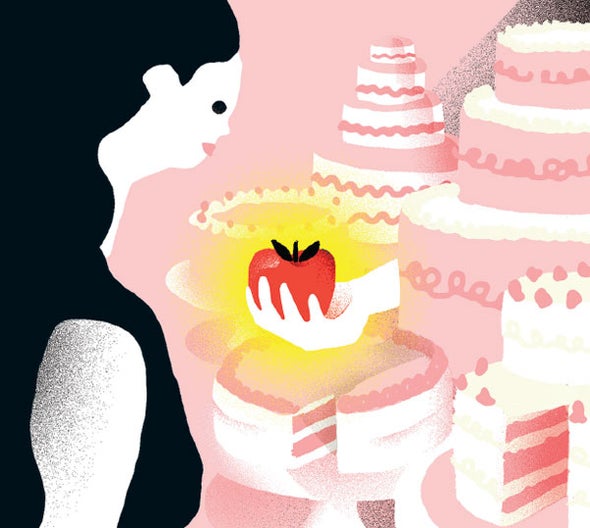
Our decisions are constantly shaped by subtle changes in our environment. Even choices that feel deliberate and conscious can be swayed by cues that we may not even notice, such as social norms or the setting of a default option. Behavioral scientists use the phrase “choice architecture” to describe the ways in which the environment influences how we decide.
In the past five years several governments have begun to guide people toward making better choices—for themselves and for society—by using behavioral science research. Scientists refer to choice architecture interventions that push people toward a certain outcome as “nudges.” Since 2010, for instance, the U.K.'s Behavioral Insights Team, or “nudge unit,” has dramatically improved on-time tax payments simply by telling people about the large number of citizens who paid their taxes on time. The team has collected an estimated £210 million in revenue. Recently the World Bank issued an extensive report that highlighted similar behavioral science initiatives around the world, and President Barack Obama has launched a new behavioral unit, which is modeled after the U.K.'s version.
Despite ample evidence showcasing the benefits of such nudges, commentators from both sides of the political spectrum have labeled them unethical. They emphasize that manipulating choice undermines our ability to choose freely, even when nudges are disclosed or implemented with good intentions. As a result, nudge initiatives to improve education, health and safety are encountering increased resistance.
ADVERTISEMENT
Advocates of choice architecture interventions, such as Cass Sunstein, a leading constitutional scholar and author of several books on nudging, point out that nudges do not force anyone to do anything. They merely reorient decisions, much as a GPS guides but does not forcefully direct travelers.
Yet this defense is insufficient. Although it is true that nudges do not eliminate our freedom to choose, critics are correct to argue that nudges can strongly and sometimes surreptitiously influence our behavior. A stronger defense must begin by acknowledging that nudging is unavoidable. From traffic lanes to the size of the popcorn bucket at the movie theater, we are continuously nudged—intentionally or not—by the government, private companies and other people.
The question, then, is not whether government has the right to nudge—invariably and inevitably, it does—but whether government should redesign the choice architecture to help citizens achieve their goals. A growing body of psychological and economic research is revealing opportunities where government can use the tools of behavioral science to help people make better choices. The findings suggest that when the choice environment significantly undermines the health and financial well-being of citizens, the government has not only the right but the obligation to improve the choice environment.
THE SCIENCE OF SWAYING CHOICES
Take Social Security, for example. Its benefits are available to any U.S. citizen who is at least 62 years old. But the earlier that people claim, the fewer benefits they receive in the long run. People who wait until they reach full retirement age, which depends on when they were born, receive the maximum amount. Delaying is usually the best economic option for people who are in good health and can therefore expect to live longer. Yet most Americans claim early—almost half claim as soon as possible—which often leads to financial problems later on.
This year a team of researchers led by Melissa Knoll, a social scientist then at the Social Security Administration, evaluated how two biases might explain this behavior. The first is present bias, the tendency to opt for immediate short-term gains at the expense of long-term gains. The second is a by-product of query theory, or how the order in which people consider options influences how they decide.
ADVERTISEMENT
The team gathered 418 participants nearing retirement and split them into two groups. Those in one group generated favorable reasons for why they should claim early, then considered why they might want to claim late. The other group performed the same tasks in reverse. Knoll and her colleagues found that when participants first considered the merits of claiming later, they more easily generated reasons for why it was a better idea than claiming early. As a result, they delayed claiming by about nine months on average, compared with participants who focused on claiming earlier first. This modest shift can mean a difference of tens of thousands of dollars for the beneficiary.
Knoll's intervention represents a potential win for citizens and government. If people who claim early fall into poverty later, the government must spend even more resources helping these individuals. Considering the number of baby boomers retiring—more than a quarter of a million Americans now turn 65 every month—it is easy to see how Knoll's intervention could save billions of federal dollars.
Another case study comes from the Affordable Care Act (ACA), which allows millions of Americans to sign up for state and federal health insurance coverage through exchange marketplaces. In 2013 Columbia University business professor Eric Johnson and his colleagues conducted six experiments with more than 1,000 participants and found that most people did not select the most cost-effective policy available in a model based on the current ACA exchanges. Instead people were overwhelmed with options, and consequently, their ability to make smart choices plummeted.
Johnson and his team then dramatically improved participants' selections in one condition by redesigning the choice architecture. They incorporated an online calculator and implemented a default option that preselected the optimal insurance plan for that individual, helping consumers save, on average, $456 every year. Johnson estimated that these small interventions could save customers and taxpayers approximately $10 billion annually. In addition, by helping people find the right plan, insurance companies can understand their clients' needs better and design improved plans at more competitive prices.
HOW TO DECIDE WITHOUT DECIDING
It is easy to see how nudges can help citizens make better decisions, prevent waste and save precious resources. How food options are framed, for instance, can affect dietary choices—such as when a grocery store provides the percentage of fat in packaged meat. One barrier to climate change is bad choice architecture. If we frame a fee as a “carbon offset” instead of a “carbon tax,” we could nudge people to make more environmentally friendly decisions.
ADVERTISEMENT
And yet this powerful new tool faces a threat. The U.S. House of Representatives recently passed legislation that includes a $140-million cut—about 45 percent—for the Directorate for Social, Behavioral and Economic Sciences, the part of the National Science Foundation that, among other roles, funds behavioral science research specifically designed to reduce government spending. It is a peculiar target for legislators aiming to save federal dollars.
Ultimately the alternative to nudging is not more personal freedom or a less intrusive government. It is bad nudging. A few years ago the Social Security Administration helped prospective beneficiaries calculate when delaying claims would offset total benefits. But by making the option of short-term money more salient, the computation aid inadvertently accelerated early claiming by 15 months.
Instead of relying on ideologically driven laws, we need rigorous experiments to test how people choose in specific situations. Once we know what works and for whom, we should persuade government officials to implement the best interventions.
There is no “neutral” world in which we make our decisions freely, autonomously and rationally. Decades of psychological research reveal that the environment influences and occasionally changes behavior. Why not use what we know about human behavior to promote wiser choices?
This article was originally published with the title "The Positive Power of Nudges" in SA Mind 26, 5, 22-23 (September 2015)
ABOUT THE AUTHOR(S)

Jon M. Jachimowicz
Jon Jachimowicz is a PhD student at Columbia Business School where he studies choice architecture and self-control. Amongst others, he works with Elke Weber and Eric Johnson. Jachimowicz works in collaboration with governments, public organizations, insurance companies, media/tech companies, the financial sector, and others.
Recent Articles
To Read Someone's Mind, Look into Their Eyes
Using Science to Make Government Work Better
Governments Need to Nudge Citizens to Make Good Choices
Sam McNerney
Sam McNerney is the behavioral science lead at Publicis. He writes at the intersection of behavioral science, market research, and culture. His has written for Scientific American, Scientific American Mind, Psychology Today, Fast Company, Fortune, BBC Focus and several other publications.
SOURCE:
https://www.scientificamerican.com/article/should-governments-nudge-us-to-make-good-choices/(accessed 25.3.20)
Friday, 20 March 2020
Αφού υπάρχουν τόσοι μόνοι... γιατί υπάρχουν τόσοι μόνοι;

Γιατί ενώ υπάρχουν τόσοι άνθρωποι που θέλουν να γνωριστούν πραγματικά με άτομα γύρω τους και να αγαπηθούν, ίσως και το μεγαλύτερο μερίδιο δεν τα καταφέρνει;
Υπάρχουν εκατομμύρια άτομα στο κόσμο που νιώθουν μοναξιά και έχουν ανάγκη να τη διώξουν δημιουργώντας στενές σχέσεις. Μια εύλογη απορία είναι “αφού υπάρχουν τόσοι μόνοι… γιατί υπάρχουν τόσοι μόνοι;”. Γιατί ενώ υπάρχουν τόσοι άνθρωποι που θέλουν να γνωριστούν πραγματικά με άτομα γύρω τους και να αγαπηθούν, ίσως και το μεγαλύτερο μερίδιο δεν τα καταφέρνει;
Η μοναξιά είναι κάτι τόσο παλιό, όσο και το ανθρώπινο είδος. Δεν πρόκειται να προσποιηθώ ότι δεν την εντείνουν οι σημερινοί ρυθμοί ζωής, από την άλλη όμως θα ήταν κουτό να πιστεύουμε ότι οι παλαιότερες γενιές δεν αντιμετώπιζαν τέτοιου είδους προβλήματα. Κάθε εποχή έχει τα δικά της δυνατά και αδύνατα σημεία.
Το παράδοξο είναι ότι ενώ σήμερα ευθύνεται για τη μοναξιά σε μεγάλο βαθμό ο βομβαρδισμός από πληθώρες πληροφοριών, σε παλαιότερες εποχές ευθυνόταν κυρίως η έλλειψη επιλογών που αντιστοιχούσαν σε κάθε άτομο. Οι προηγούμενες γενιές ακολουθούσαν έναν συγκεκριμένο και συχνά μονότονο τρόπο ζωής ο οποίος τους εγκλώβιζε σε κάτι που ίσως δεν ήθελαν, με τις ανθρώπινες σχέσεις να προκύπτουν και από ανάγκη για βοήθεια ο ένας στον άλλον ή από το αίσθημα υποχρέωσης και κοινών συμφερόντων.
Σήμερα, η καθημερινότητα έχει διευκολυνθεί κατά πολύ μέσω της τεχνολογίας, κάτι που καθιστά την ανθρώπινη επαφή μη αναγκαία για αυτό το σκοπό. Παρατηρούμε συχνά άτομα παλαιότερης γενιάς να παραπονούνται ότι αισθάνονται μόνοι τη σήμερον ημέρα. Αυτό όμως δε συμβαίνει γιατί κατ’ ανάγκη η δική τους εποχή είχε λιγότερα προβλήματα μοναξιάς, αλλά διότι οι αλλαγές στον τρόπο ζωής από τότε μέχρι σήμερα είναι ραγδαίες και ο άνθρωπος βλέπει πάντα με επιφυλακτικότητα οτιδήποτε ξένο. Η ανάπτυξη τα τελευταία χρόνια έχει κάνει τεράστια άλματα, δυσανάλογα με τον περίπου ίδιο επί αιώνες τρόπο που οι άνθρωποι συνήθιζαν να ζουν.
Είναι λοιπόν φυσικό κάποιοι, κάπου να έχουν χάσει την μπάλα, ακόμα κι όταν ανήκουν στη σημερινή γενιά. Κι αυτό διότι τα ερεθίσματα του περιβάλλοντός τους έρχονται σε σύγκρουση με όσα τους δίδαξαν οι γονείς τους. Ακόμα και εγώ παρατηρώ θεαματικές αλλαγές στον κόσμο γύρω μου όσο μεγαλώνω - πόσο μάλλον οι γονείς μου, πολύ δε περισσότερο οι παππούδες μου. Συνεπώς, είμαι απόλυτα σίγουρη ότι το περιβάλλον των απογόνων μου δε θα έχει καμία σχέση με το δικό μου. Σε κάθε εποχή λοιπόν, θα βρούμε άτομα με κόσμο γύρω τους που εξακολουθούν παρ’ όλα αυτά να νιώθουν μόνοι. Το αίσθημα της μοναξιάς λοιπόν είναι το ίδιο - αυτό που αλλάζει είναι το είδος και τα αίτια που του προκαλούν.
Γιατί όμως υπήρχε από πάντα αυτό το φαινόμενο; Αν σκεφτούμε ότι ο άνθρωπος είναι ξεκάθαρα κοινωνικό ον από την αρχή της δημιουργίας του και δρούσε ανέκαθεν σε ομάδες πρωτίστως για την επιβίωσή του, επόμενο είναι να μην αισθάνεται άνετα σε συνθήκες μοναξιάς. Επιπλέον, οι κοινωνικές συνθήκες κάθε εποχής συνέβαλλαν σε αυτό με τον δικό τους τρόπο η καθεμία.
Σήμερα, τα πολλά και διαφορετικά ερεθίσματα μας κάνουν να νιώθουμε ένα “χάσιμο” με αποτέλεσμα να μην ξέρουμε ακριβώς ούτε ποιοι είμαστε, ούτε τι θέλουμε και πού πάμε.
Αυτή η αβεβαιότητα για τον εαυτό μας επεκτείνεται και στον κόσμο γύρω μας, τον οποίο συχνά δεν ξέρουμε πώς να προσεγγίσουμε, ακόμη κι αν το θέλουμε. Ας σκεφτούμε επίσης ότι περισσότερο από κάθε άλλη, η εποχή μας όχι μόνο προσφέρει αλλά και απαιτεί κάποιες φορές την ενασχόληση με μοναχικές δραστηριότητες. Οι οποίες εν τέλει απορροφούν ίσως το μεγαλύτερο μέρος της καθημερινότητάς μας, αν δεν τις διαχειριστούμε σωστά. Ας μην ξεχνάμε επίσης και την επικοινωνία με τον έξω κόσμο πλέον μέσω διαδικτύου. Παρά τα τόσα πλεονεκτήματά της, μπορεί με την υπερβολική χρήση να μας οδηγήσει στην παραμέληση της άμεσης επικοινωνίας πρόσωπο με πρόσωπο λόγω της “ασφάλειας” που νιώθουμε πίσω από μία οθόνη.
Ως αποτέλεσμα, ο κόσμος έχει γεμίσει ανθρώπους που διψούν να συνδεθούν με τους γύρω τους, αλλά παράλληλα δεν ξέρουν ή ξεσυνήθισαν να το κάνουν. Συνειδητά ή υποσυνείδητα δεν είναι ευχαριστημένοι με αυτή την κατάσταση, όχι μόνο διότι ο άνθρωπος δεν είναι φτιαγμένος για να ζει μόνος του, αλλά διότι δεν τα έχουν βρει και με τον ίδιο τον εαυτό τους.
Το μόνο που μας εμποδίζει ουσιαστικά από το να γνωρίσουμε τους γύρω μας είναι η έλλειψη αυτογνωσίας και αυτοπεποίθησης. Διότι άπαξ και τα διαθέτουμε αυτά, γνωρίζουμε πως κι οι υπόλοιποι άνθρωποι είναι, άρα έχουν την ίδια ανάγκη με εμάς να συνδεθούν με τον κόσμο γύρω τους. Γνωρίζουμε πως δεν έχουμε να ζηλέψουμε τίποτε από κανέναν, άρα έχουμε το θάρρος να διεκδικήσουμε αυτή μας την ανάγκη.
Η έλλειψη χρόνου στις μέρες μας είναι βέβαια ένας παράγοντας που δεν μπορούμε να αγνοήσουμε, όμως εάν έχουμε χρόνο να συνειδητοποιήσουμε το πρόβλημα και να παραπονεθούμε, τότε σίγουρα μπορούμε να βρούμε χρόνο και για τη λύση του. Στην τελική, σημασία έχει η οπτική μας γωνία και με τι θα επιλέξουμε να ασχοληθούμε, ενώ πάντα υπάρχουν και πρακτικές λύσεις για τη διαχείριση του χρόνου μας, φτάνει να τις αναζητήσουμε.
Κάποιος που έχει γνωρίσει τον εαυτό του και έχει μάθει να τον αγαπά και να τον εμπιστεύεται, δεν θα νιώσει μοναξιά. Αυτό βέβαια είναι κάτι που απαιτεί χρόνο και προσπάθεια διά βίου. Πρόκειται όμως για ένα ταξίδι όμως που αξίζει τον κόπο, γιατί μπορεί να αποδειχθεί το πιο ωφέλιμο και ενδιαφέρον που θα κάνουμε ποτέ!
Συγγραφέας: Κατερίνα Κακουλάκη, Ψυχολόγος
ΠΗΓΗ:
https://www.psychologynow.gr/arthra-psyxologias/sxeseis/monaksia/7182-afoy-yparxoun-tosoi-monoi-giati-yparxoun-tosoi-monoi.html(accessed 20.3.20)
Subscribe to:
Posts (Atom)