Friday, 7 September 2018

This Situation Reveals People’s True Personality


People reveal their true selves when in this situation.


Being in hurry makes people reveal their true personalities even more clearly, new research finds.

Time pressure makes selfish people more selfish and it makes good-hearted people even nicer.


This is because, when in a rush, people tend to make the same choice they made before.

Dr Ian Krajbich, study co-author, said:


“People start off with a bias of whether it is best to be selfish or pro-social.

If they are rushed, they’ll tend to go with that bias.”

For the research, 102 people played an economic game, Dr Krajbich explained:


“The participants had to decide whether to give up some of their own money to increase the other person’s payoff and reduce the inequality between them.”

Sometimes people were given two seconds to decide, other times it was 10 seconds.

Dr Krajbich explained the results:


“We found that time pressure tends to magnify the predisposition that people already have, whether it is to be selfish or pro-social.

Under time pressure, when you have very little time to decide, you’re going to lean more heavily than usual on your predisposition or bias of how to act.”

Being forced to wait changed people’s decisions, said Dr Krajbich:


“People may still approach decisions with the expectation that they will act selfishly or pro-socially, depending on their predisposition.

But now they have time to consider the numbers and can think of reasons to go against their bias.

Maybe you’re predisposed to be selfish, but see that you only have to give up $1 and the other person is going to get $20.

That may be enough to get you to act more pro-socially.”

SOURCE:

Monday, 3 September 2018

Η ρύπανση μειώνει αισθητά την ευφυΐα μας


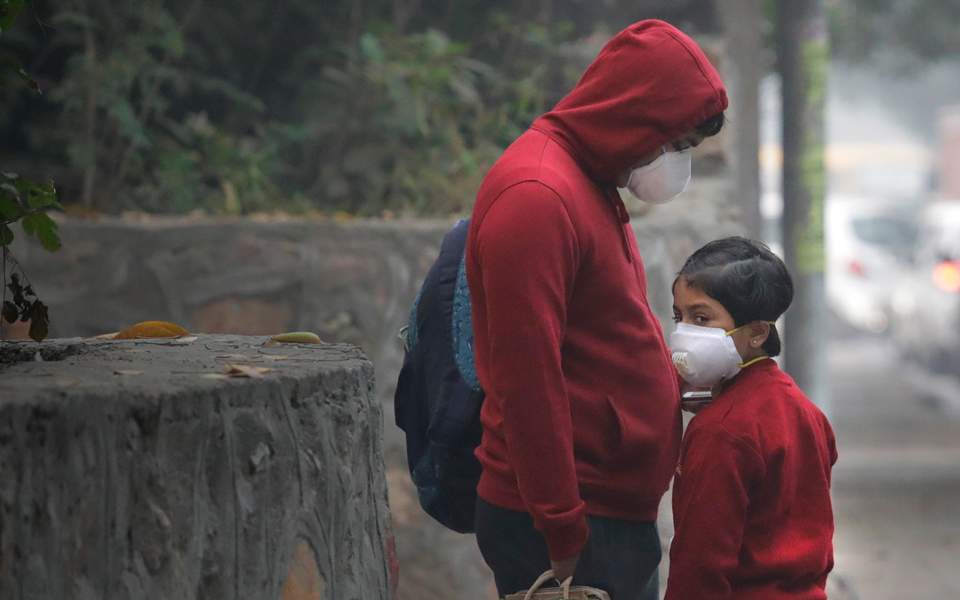
Πατέρας και κόρη προστατεύονται από την έντονη ατμοσφαιρική ρύπανση στο Νέο Δελχί με τη βοήθεια μάσκας.


ΠΕΚΙΝΟ. Την ανθρώπινη ευφυΐα περιορίζει σημαντικά η ατμοσφαιρική ρύπανση, σύμφωνα με νέα διεθνή επιστημονική μελέτη, η οποία αποδεικνύει ότι η κοινωνική ζημιά της μόλυνσης είναι ακόμη μεγαλύτερη από όσο υπολογίζαμε μέχρι σήμερα.

Η έρευνα Κινέζων επιστημόνων, οι οποίοι συνέλεξαν στοιχεία συναδέλφων τους από όλο τον κόσμο, όπως αναφέρει σε άρθρο της η εφημερίδα The Guardian, έδειξε ότι το 95% του παγκόσμιου πληθυσμού αναπνέει επικίνδυνο αέρα. Η μελέτη καταλήγει επίσης στο συμπέρασμα ότι τα υψηλά ποσοστά ατμοσφαιρικής ρύπανσης οδήγησαν σε δραστική μείωση των επιδόσεων μαθητών από όλο τον κόσμο σε εξετάσεις γλώσσας και αριθμητικής.

«Ο μολυσμένος ατμοσφαιρικός αέρας κάνει όλους μας να “μένουμε στην ίδια τάξη” για ένα χρόνο της ζωής μας. Αν το σκεφτείτε, αυτό είναι πάρα πολύ. Γνωρίζουμε επίσης ότι οι επιπτώσεις είναι χειρότερες για τους ηλικιωμένους και για τους άνδρες», λέει ο Σι Τσεν της Σχολής Δημόσιας Υγείας του αμερικανικού Πανεπιστημίου Γέιλ, που συμμετείχε στην παγκόσμια έρευνα.

Παρότι προηγούμενες μελέτες είχαν δείξει ότι η ατμοσφαιρική ρύπανση πλήττει τις γνωστικές λειτουργίες των μαθητών, αυτή είναι η πρώτη έρευνα που εξετάζει ανθρώπους κάθε ηλικίας.

Είναι γνωστό ότι η ρύπανση του αέρα προκαλεί επτά εκατομμύρια πρόωρους θανάτους τον χρόνο. Η επίδρασή της στις πνευματικές ικανότητες παρέμενε, όμως, ουσιαστικά άγνωστη μέχρι τώρα. Πρόσφατη έρευνα έδειξε έτσι ότι ο τοξικός αέρας συνδέεται άμεσα με «ιδιαίτερα υψηλή θνησιμότητα» σε άτομα με ψυχικά νοσήματα, ενώ η εισπνοή μολυσμένου αέρα έχει ήδη συνδεθεί με αυξημένα ποσοστά ψυχικών νοσημάτων σε παιδιά.

Η νέα μελέτη, που δημοσιεύθηκε στην επιστημονική επιθεώρηση Proceedings of the National Academy of Sciences, βασίστηκε σε εξετάσεις γλώσσας και αριθμητικής στις οποίες υποβλήθηκαν χιλιάδες Κινέζοι μαθητές μεταξύ 2010 και 2014. Η επιστημονική ομάδα συνέκρινε τα αποτελέσματα των εξετάσεων με τα επίπεδα διοξειδίου του αζώτου και διοξειδίου του θείου στην ατμόσφαιρα.

Γλωσσική ικανότητα

Η μελέτη έδειξε ότι, όσο μεγαλύτερη ήταν η έκθεση σε μολυσμένο ατμοσφαιρικό αέρα, τόσο πιο σημαντική είναι η ζημιά στην ευφυΐα, με τη γλωσσική ικανότητα να πλήττεται περισσότερο από ό,τι η μαθηματική δεξιότητα και τους άνδρες να υποφέρουν πιο πολύ από ό,τι οι γυναίκες. «Η ομάδα μας έδειξε ότι η ατμοσφαιρική ρύπανση συνδέεται με εκφυλιστικά σύνδρομα του νευρικού συστήματος. Εκτιμούμε, μάλιστα, ότι η ρύπανση ενδέχεται να είναι το κυριότερο αίτιο της απώλειας ευφυΐας», λέει ο Ντέρικ Χο του Πολυτεχνείου του Χονγκ Κονγκ.

Σύμφωνα με τον Παγκόσμιο Οργανισμό Υγείας, οι είκοσι πιο μολυσμένες πόλεις του πλανήτη βρίσκονται σε αναπτυσσόμενες χώρες. Η Κίνα, που φιλοξενεί πολλές από τις πόλεις αυτές, έχει κηρύξει «πόλεμο κατά της ρύπανσης» τα τελευταία πέντε χρόνια, με τα αποτελέσματα της φιλόδοξης κρατικής πρωτοβουλίας να αναμένονται με αγωνία από όλο τον πλανήτη.

ΠΗΓΗ:

For some, experiencing trauma may act as a form of cognitive training that increases their mental control


That which doesn’t kill you makes you stronger… It’s an adage that’s backed up in part by studies of people who’ve been through a trauma, such as a car accident or a robbery. While it’s true that around 7-8 per cent of trauma survivors develop chronic PTSD and experience persistent intrusive, unwanted memories of the event, most people recover quickly, and some even report better mental health than they had before (generally when the trauma has been moderate, rather than severe). But what underpins so-called “post-traumatic growth?” A new paper in the Journal of Experimental Psychology: General, argues that it has to do with trauma triggering a form of mental training that increases some survivors’ control over their own minds.


“Our findings suggest that traumatic experiences – as horrible as they may be – might naturally contribute to the adaptation of cognitive control skills, thereby improving survivors’ later resilience, at least [for] those who experienced only moderate levels of trauma,” write Justin Hulbert at Bard College, US, and Michael Anderson at the University of Cambridge. If these researchers are right, there could be implications for the treatment of PTSD.

Two studies, each of 48 students, suggested that those who had experienced a relatively high number of traumas (including witnessing or experiencing accidents, violence, and the death of significant individuals) before the age of 18 showed a greater ability to inhibit, when instructed, their memories of a word pairing they had previously learned, compared with those who reported no or little trauma.

The participants initially viewed a set of 60 word pairs, which consisted of a neutral cue word (such as “violin”) and either a neutral or a negative response word (such as “street” or “corpse”). They were given up to three training cycles to correctly recall at least half of the response words. Next, they were given a series of “Think/No Think” trials. If a cue word was presented on the screen in green, they had to say the response word as quickly as possible. But if the cue word appeared in red, they were told to avoid both thinking about and saying the response word for the next four seconds. Then came some surprise recall tests. This time they were given either the original cue word, or a new semantic cue plus the initial letter of the response word – such as “anatomy c_____” for “corpse”.

Hulbert and Anderson found that while those in the high and low trauma groups were equally good at learning the initial word associations, those in the high trauma group showed superior performance on the subsequent “No Think” trials, indicating they had a “robust ability” to forget the specific response words when required to do so. This held for both neutral and negative words, “suggesting that this effect reflects a generalised skill at suppression, regardless of valence,” the researchers write.

The data is consistent with the idea that experiencing trauma – at least for this group of people who successfully made it to university – may encourage resilience by training the ability to inhibit unwanted memories, in particular, and perhaps even a general inhibitory control mechanism, which could extend to unwanted emotions and actions, Hulbert and Anderson propose.

If these new findings are reliable – and obviously the study requires that we trust the students’ self-reports of their history of trauma – then they could have implications for how to optimise CBT treatments for trauma. Standard cognitive-behavioural therapy for PTSD encourages patients to confront reminders of their experience and the memories that are triggered by them – the idea being that over time this exposure will lead the traumatic memories to become less distressing. However, Hulbert and Anderson believe their results suggest that while it is important not to avoid reminders of the trauma, it may actually be beneficial to practice suppressing the memories that are triggered by them (mirroring what seems to happen naturally for people who experience post-traumatic growth). “Training in retrieval suppression may augment the benefits of cognitive-behavioural therapy,” Hulbert and Anderson write, “by enabling patients to confront reminders and redirect to more benign thoughts.”

People who do not recover well from a trauma and who develop chronic PTSD may perhaps have general deficits in inhibitory control, or an impaired ability to adapt control mechanisms over time, perhaps in part because of a genetic variation in cortical plasticity, Hulbert and Anderson suggest. However, the new results suggest that “… for many victims living with trauma, efforts to achieve emotional balance by down-regulating intrusive thoughts may act as a natural form of cognitive training.”

SOURCE:

Saturday, 1 September 2018

Συμπτώματα Μικρής Εκτίμησης Στον Εαυτό


Ποιές Είναι Οι ρίζες της χαμηλής Αυτοεκτιμησης;

Η χαμηλή αυτοεκτίμηση έχει τις ρίζες της σε πρώιμες καταστάσεις της πρώτης παιδικής ηλικίας. Η σχέση με τους σημαντικούς άλλους, οπως η μητερα, κυριαρχεί στα προβλήματα αυτοεκτίμησης. Σε κάποιες περιπτώσεις υποβόσκουν σημαντικά παιδικά τραύματα τα οποία είναι δυνατό να διερευνηθούν.

Σε κάποιες άλλες περιπτώσεις η χαμηλή εκτίμηση του εαυτού συνδέεται με τις απαιτήσεις του περιβάλλοντος οι οποίες δημιουργούν την αίσθηση ότι κάποιος δεν αξίζει αφού δεν μπορεί να τις ικανοποιήσει.
Ψυχοθεραπεια για την χαμηλη αυτοεκτιμηση

Η ψυχοθεραπεία βοηθάει στο να αναδειχθούν οι πραγματικές δυνατότητες του ατόμου καί να επεξεργαστούν τα φαντασιωσικά καί πραγματικά πληγώματα της αυτοεκτίμησης. Το άτομο συνειδητοποιώντας καί μαθαίνοντας καλύτερα τα συναισθήματά του, αρχίζει να εκτιμά τις δυνατότητές του καί να δραστηριοποιείται με τρόπους που μπορούν να στηρίξουν τον εαυτό του. Οι αλλαγές φαίνονται στην επιλογή νέων ικανοποιητικών σχέσεων, στην επαγγελματική ζωή, στον κοινωνικό τομέα καί στην προσωπική ικανοποίηση από τη ζωή.

ΠΗΓΗ:

This Relationship Pattern Linked To Poor Mental Health


Over 60% of people have been involved in this type of relationship.


Relationships that involve repeatedly breaking up and then getting back together are linked to poor mental health, new research finds.

These “on-again, off-again” relationships are associated with increased depression and anxiety, as well as worse communication, less commitment and more abuse.


Over 60% of adults have been involved in this type of unstable relationship.

Around one-third of cohabiting couples report breaking up and getting back together at some point.

Dr Kale Monk, the study’s first author, said:


“Breaking up and getting back together is not always a bad omen for a couple.

In fact, for some couples, breaking up can help partners realize the importance of their relationship, contributing to a healthier, more committed unions.

On the other hand, partners who are routinely breaking up and getting back together could be negatively impacted by the pattern.”

The conclusions come from a study of 545 heterosexual and homosexual couples.


The results showed that male-male relationships had the highest rate of ‘cycling’ (on-again, off-again), while female-female and heterosexual couples were similar.


However, whether heterosexual or homosexual, cycling relationships were linked to higher depression and anxiety.

Dr Monk said:


“The findings suggest that people who find themselves regularly breaking up and getting back together with their partners need to ‘look under the hood’ of their relationships to determine what’s going on.

If partners are honest about the pattern, they can take the necessary steps to maintain their relationships or safely end them.

This is vital for preserving their well-being.”

Dr Monk provides some pointers for people experiencing cycling relationships:
Consider the reasons you broke up in the first place when thinking about getting back together. Can they change or are they permanent?
Talk about what is leading to break-ups with your partner — this can be illuminating.
Why might you consider getting back together — are they the right reasons?
Remember that it is OK to end a toxic relationship.
Counselling is always an option.

SOURCE: